
Motors in the air draw attention easily, while the cable in the ground drum is often overlooked. A powered cable generates heat, and the wound state changes the heat dissipation conditions. With different deployment heights, even when the airborne load is similar, the ground portion may undergo different temperature rise processes.
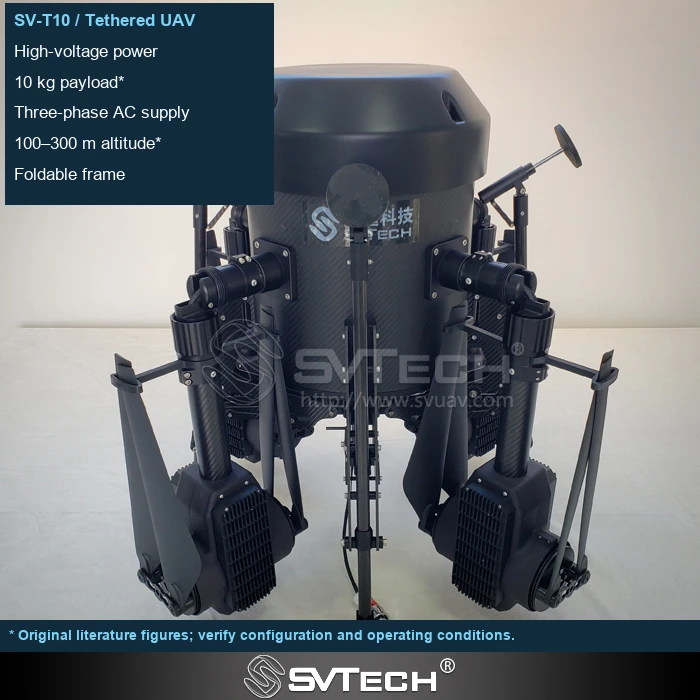
Heat accumulation depends on how the cable is placed
The heat dissipation conditions of a wound state differ from those when fully deployed, and adjacent cable layers affect each other. The current-carrying capacity in free air cannot be directly applied to a fully wound state; the drum structure and ventilation are also part of the test conditions.
A deployed cable and a tightly wound cable have different conditions for contact with air. The number of wound layers, ambient temperature and continuous power-on time all affect the internal temperature. The outer layer feeling not hot cannot replace understanding of the internal state. System design should treat different payout lengths as different operating conditions, rather than testing only the fully deployed state.
Low-altitude missions may leave more powered cable on the drum, so they are not always easier than high-altitude missions. If only the fully paid-out condition is verified, the thermal limits at full winding may be missed.
Technical Principles and Engineering Boundaries
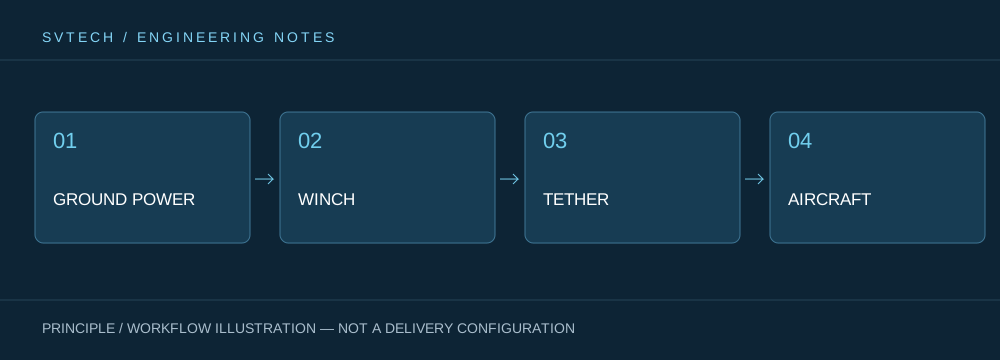
A tethered drone connects the ground power supply, retraction mechanism, cable, flight platform and mission payload into one continuous system. When designing around “Heat in the Drum: An Unobtrusive Heat Dissipation Issue in Long-Duration Tethered Operation”, power supply efficiency, cable weight, tension variation, payload heat dissipation and flight control interact with one another. The system cannot be described by maximum endurance alone; whether it can maintain stable service under specified altitude, wind conditions, payload power and personnel rotation is the more meaningful capability of a continuously powered drone.
Application Scenarios and Implementation Paths
Persistent observation, temporary communication relay, nighttime emergency lighting and security for specific areas are all missions a tethered platform may serve. Together they require the aerial position to be available over the long term, and they each place different demands on imagery, link, illumination or deployment speed. Incorporating mission objectives, ground power, operating area, weather window and exit path into the plan can turn a tethered drone system from a demo device into an on-site service that can be organized.
Project Validation and Continuous Optimization
To make this technical discussion about “Heat in the Drum: An Unobtrusive Heat Dissipation Issue in Long-Duration Tethered Operation” applicable to real projects, the verification stage should record the configuration version, environmental conditions, measurement locations and mission results together. Check temperature at different payout lengths and continuous loads; confirm the winding radius and layer neatness; follow the manufacturer's limits for drum conditions and do not stack or cover the reel on your own. This information is not supplementary documentation, but the shared basis for interpreting results, reproducing performance and continuous optimization.
Related Support from SVTECH
SVTECH provides product materials, project requirement communication and configuration boundary verification for tethered drones and related industry applications. For topics such as “Heat in the Drum: An Unobtrusive Heat Dissipation Issue in Long-Duration Tethered Operation”, you may describe the mission conditions, target results, site environment and existing equipment together, and Mr. Liu (+86 18688194199, lhc1983@gmail.com) will assist with coordination; specific models, performance and delivery scope are subject to confirmed materials and project verification.
Undeployed cable may create different heat dissipation conditions from when fully deployed. Acceptance can cover typical payout lengths and remaining wound amount, and verify the manufacturer's limits for powered winding. Do not assume on your own that the more cable left on the drum, the safer; winding layers, ventilation and operating current need to be confirmed together with the design.
Long-duration operation tests the entire energy path. Including drum and cable heat dissipation in the design fills in an easily overlooked link between the power supply and the flight platform.
