
A tether line must neither sag freely nor pull continuously on the aircraft. Takeoff, landing, gusts and horizontal drift constantly change the cable state, so the reeling system needs to maintain coordination between slack and tension. Tension control therefore bridges three domains: mechanical, electrical and flight.
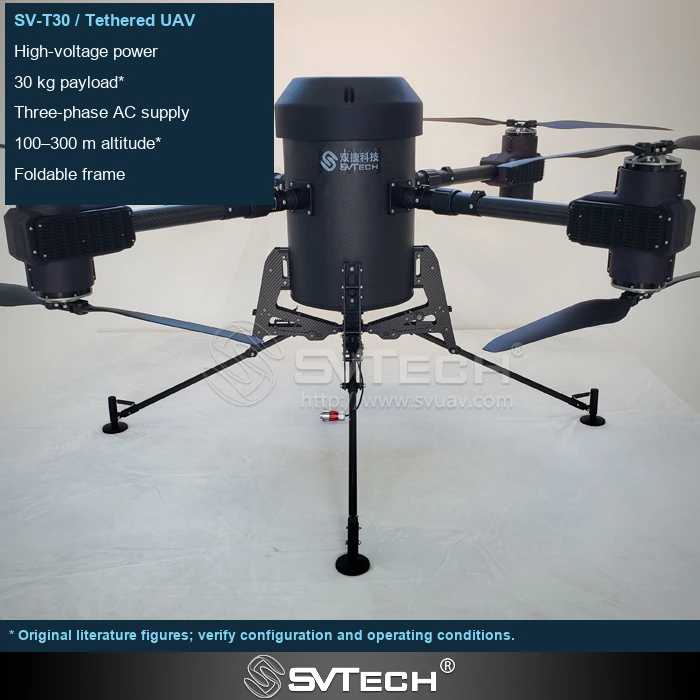
The control goal is to coordinate change
Appropriate tension helps manage the cable, but excessive tension exerts pull on the flight platform; too little may cause slack and contact hazards. The goal should be a controlled line state that conforms to the system design, not a visually taut line.
A cable that is too slack increases the chance of tangling and contact hazards, while one that is too tight can become an external disturbance to the flight platform. Sensor feedback, reel response and control parameters together determine dynamic behaviour. Observing tension changes during ascent and descent reveals more about whether the system is coordinated than checking a static state alone. Good control should also allow a bounded, compliant response.
Lateral movement of the aircraft and the reel's ascent/descent pay-out and take-up place different demands on the system, and gusts also change cable forces. Whether a single static tension setting is suitable must be verified against the control logic and the actual route on site.
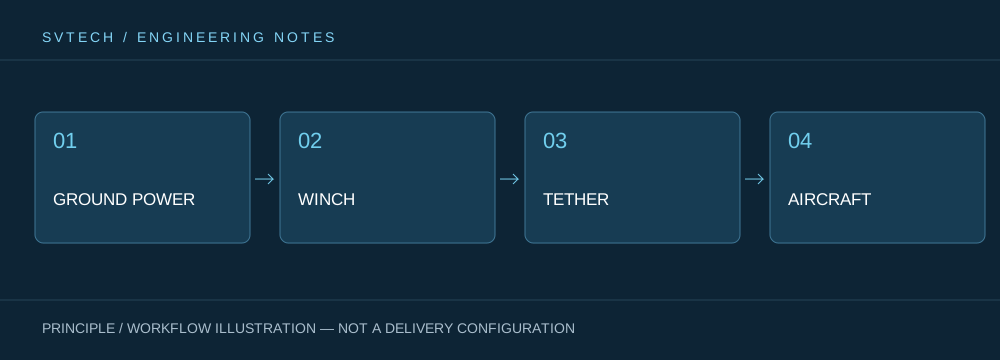
Technical principles and engineering boundaries
A tethered drone connects ground power, the reeling mechanism, the cable, the flight platform and the mission payload into one continuous system. When designing around "Flexible Connection in Tethered Drones: Tension Control Keeps the Reeling System in Step with Flight", power supply efficiency, cable weight, tension variation, payload heat dissipation and flight control all influence one another. The system cannot be described by maximum endurance alone; whether it can maintain stable service at a specified altitude, wind condition, payload power and crew rotation is what makes a continuously powered drone genuinely meaningful.
Application scenarios and implementation paths
Persistent observation, temporary communication relay, nighttime emergency lighting and security for specific areas are all missions a tethered platform can serve. They all require a long-term usable aerial position, yet each places different demands on imagery, links, illumination or deployment speed. Bringing mission objectives, ground power, operating area, weather window and exit path into the plan together can turn a tethered drone system from a demo device into a service that can be organised on site.
Project verification and continuous optimisation
To ground this technical discussion of "Flexible Connection in Tethered Drones: Tension Control Keeps the Reeling System in Step with Flight" in real projects, the verification stage should record configuration version, environmental conditions, measurement locations and mission results together. Confirm that tension measurement, protection thresholds and abnormal responses belong to the delivered configuration; observe controlled ascent, hover and recovery; do not arbitrarily add counterweight or increase traction to suppress oscillation. This information is not supplementary documentation — it is the shared basis for interpreting results, reproducing performance and continuous optimisation.
Related support from SV Tech
SV Tech provides product documentation, project requirement discussions and configuration boundary checks for tethered drones and related industry applications. For topics such as "Flexible Connection in Tethered Drones: Tension Control Keeps the Reeling System in Step with Flight", you can describe the mission conditions, target outcomes, site environment and existing equipment together, and Mr. Liu (+86 18688194199, lhc1983@gmail.com) will assist with the connection; specific models, performance and delivery scope are subject to confirmed documentation and project verification.
Tension settings should account for cable sag, wind, aircraft attitude and reeling response. Field tests can observe three phases — takeoff, altitude hold and landing — rather than only checking whether the line is taut during a stable hover. If the system repeatedly tightens and slackens, troubleshoot the control and route issues according to the approved procedure; do not simply raise the setpoint to mask the fluctuation.
The value of cable management lies in reducing extra burden. Letting the reeling mechanism understand the rhythm of flight allows the tethered platform to maintain smoother operation in a changing environment.
