
The drum must rotate, yet power has to pass through continuously. Slip rings and other rotary interfaces provide this connection, but they also introduce contact, wear and temperature rise. They are inconspicuous in a ground station, yet they affect the consistency of long-term operation.
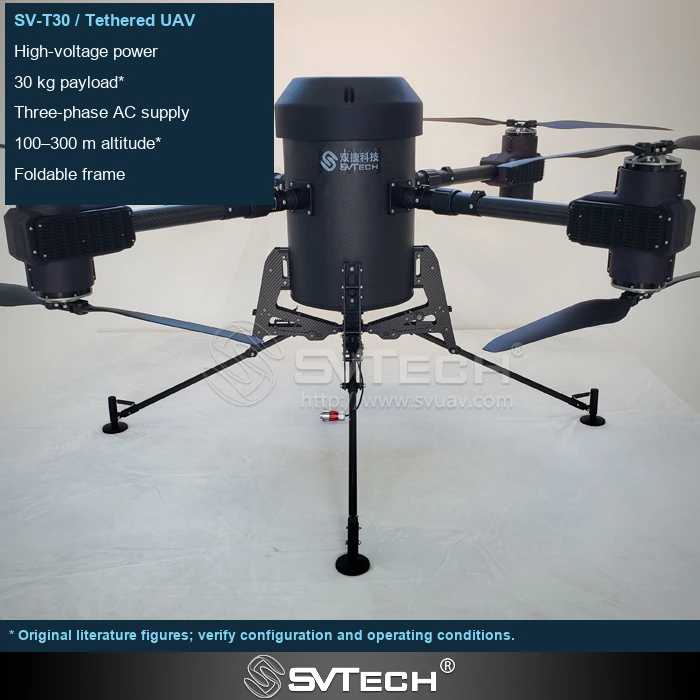
Dynamic contact differs from fixed wiring
If the system uses a slip ring, voltage, current, rotational speed, contact condition and environment must all be considered together. Slip-ring ratings are related to the heat dissipation and installation of the complete winch, so long-term suitability cannot be judged from a static continuity test alone.
Good continuity at standstill does not fully indicate how the interface will behave under rotation and sustained load. Speed, current-carrying capacity, contact condition and environment all play a role. If signals are transmitted at the same time, the interaction between signal quality and the power channel must also be considered. Module selection should match the actual duty cycle.
If intermittent alarms occur during rotation, the contact, connections and mechanical condition may need to be inspected. Symptoms can also originate from other components, so a slip-ring fault cannot be judged merely because the winch is turning.
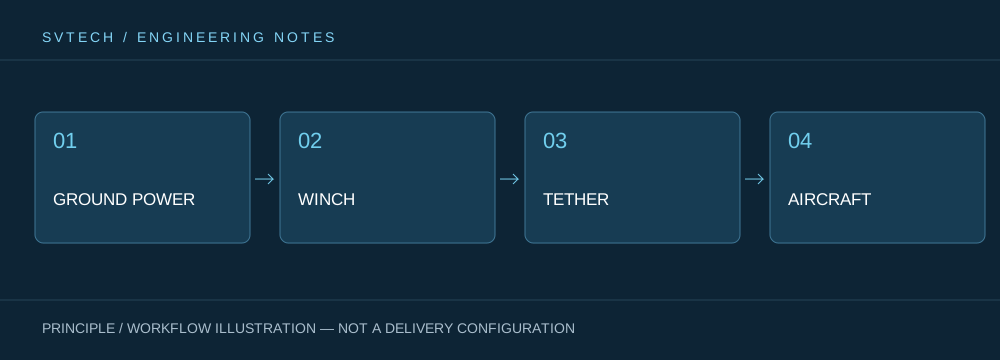
Technical principles and engineering boundaries
A tethered drone links ground power, the deploy-and-retrieve mechanism, the cable, the flight platform and the mission payload into one continuous system. When designing around "Continuous Power Across a Rotating Joint: Understanding the Electrical Interface of a Tethered Drone Winch", power efficiency, cable weight, tension variation, payload heat dissipation and flight control all interact. A system cannot be described by maximum endurance alone; whether it can maintain stable service at a specified altitude, wind condition, payload power and personnel rotation is the more meaningful capability of a continuously powered drone.
Application scenarios and implementation paths
Persistent observation, temporary communication relay, nighttime emergency lighting and security in specific areas are all missions a tethered platform may serve. They all require the aerial position to remain available over the long term, while each places different demands on imagery, link, illumination or deployment speed. Incorporating mission objectives, ground power, operating area, weather window and exit path into the plan together can turn a tethered drone system from a demonstration device into a service that can be organized on site.
Project verification and continuous optimization
To ground this technical discussion of "Continuous Power Across a Rotating Joint: Understanding the Electrical Interface of a Tethered Drone Winch" in real projects, the verification stage should record the configuration version, environmental conditions, measurement locations and mission results together. First confirm whether the delivered system uses this structure, then inspect it according to the supplier's maintenance procedure; record the time relationship between rotation and anomalies; replacements must use confirmed specifications and assembly methods. This information is not supplementary documentation but a shared basis for interpreting results, reproducing performance and continuously optimizing.
Related support from Zhuhai SV Tech Co. Ltd.
Zhuhai SV Tech Co. Ltd. provides product documentation, project requirement discussions and configuration boundary checks for tethered drones and related industry applications. For topics such as "Continuous Power Across a Rotating Joint: Understanding the Electrical Interface of a Tethered Drone Winch", you can describe the mission conditions, target outcomes, site environment and existing equipment together, and Mr. Liu (+86 18688194199, lhc1983@gmail.com) will assist with the connection; specific models, performance and delivery scope are subject to confirmed documentation and project verification.
Beyond voltage and current, rotational speed, contact stability, temperature rise and signal transmission requirements must also be checked. Normal continuity at standstill does not prove equal reliability during rotation. Replacing a slip ring involves system interfaces and maintenance procedures, so manufacturer-confirmed components should be used, and dynamic inspection and records should be completed according to the applicable conditions.
A reliable connection must hold while in motion. Understanding the operating conditions of the rotary interface helps explain why maintenance and long-term verification of tethered equipment are necessary.
