
In emergency applications, time is often spent on carrying equipment, connecting power, deploying cables and confirming site conditions. The take-off itself is only one part of it. Rapid deployment truly means that the entire preparation process is clear and that different personnel can work together to complete it.
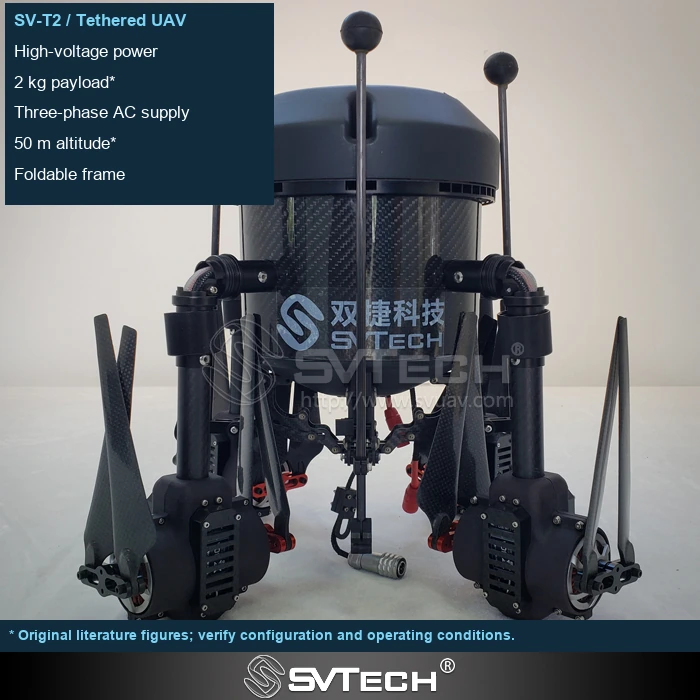
Reducing waiting is more valuable than shortening actions
Deployment time may be calculated only from unpacking to take-off, or it may include site inspection, power supply, isolation and system self-checks. Because the definition varies, the figures are difficult to compare. What buyers really care about is the total time from mission preparation to stable output.
Modular layout, connection labeling and accessory storage can reduce searching and repeated operations. Clarifying the division of labor in advance helps site preparation and equipment inspection proceed in parallel in a reasonable way. Timing should start from a consistent starting point and end at the same operational state, so that the most time-consuming steps can be identified. Skipping necessary checks does not create sustainable efficiency.
A first deployment on site usually requires confirming the ground station position and cable route, and familiar-venue demonstration results cannot be applied directly. Recovery, cleaning and transport preparation should also be recorded separately.
Technical principles and engineering boundaries
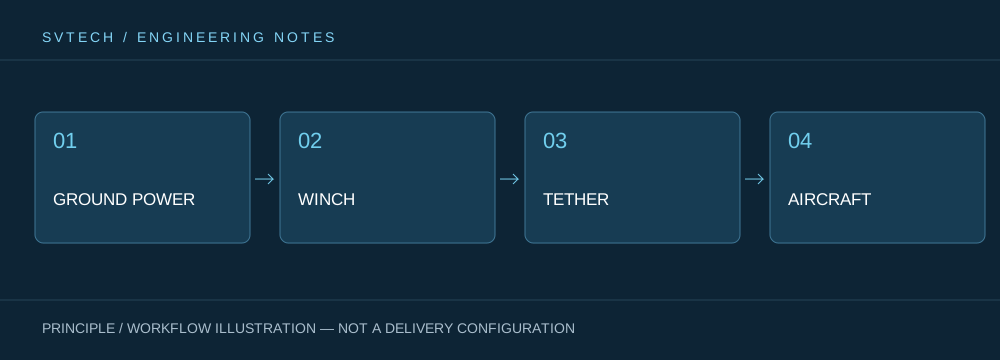
A tethered drone connects ground power, the tether winch mechanism, the cable, the flight platform and the mission payload into one continuous system. When designing around “Behind Rapid Deployment: The Full Process of a Tethered Drone from Arrival to Operational Readiness,” power supply efficiency, cable weight, tension variation, payload heat dissipation and flight control all affect one another. The system cannot be described only by its maximum endurance time; whether it can maintain stable service at a specified altitude, under given wind conditions, with a given payload power and with personnel rotation is what makes a persistently powered drone meaningful in practice.
Application scenarios and implementation paths
Persistent observation, temporary communication relay, nighttime emergency lighting and security in specific areas are all missions that a tethered platform may serve. They all require the aerial position to remain available for long periods, while also placing different demands on imagery, links, illumination or deployment speed. Incorporating mission objectives, ground power, operating area, weather window and exit route into the plan together can turn a tethered drone system from a demonstration device into a service that can be organized on site.
Project validation and continuous optimization
To ground this technical discussion of “Behind Rapid Deployment: The Full Process of a Tethered Drone from Arrival to Operational Readiness” in real projects, the validation phase should record the configuration version, environmental conditions, measurement locations and mission results together. Clearly define the timing start point, end point, number of personnel and preconditions; measure first-time and repeat deployments separately; and record the time spent handling exceptions. Compare different solutions using the complete mission process. This information is not supplementary documentation but a shared basis for interpreting results, reproducing performance and continuously optimizing.
Related support from SV Tech
Zhuhai SV Tech Co. Ltd. provides product documentation, project requirement discussions and configuration boundary checks for tethered drones and related industry applications. For topics such as “Behind Rapid Deployment: The Full Process of a Tethered Drone from Arrival to Operational Readiness,” you can describe the mission conditions, target outcomes, site environment and existing equipment together, and Mr. Liu (+86 18688194199, lhc1983@gmail.com) will assist with coordination; specific models, performance and delivery scope are subject to confirmed documentation and project validation.
Deployment timing can start from unloading and include site isolation, power supply inspection, cable layout, self-checks and mission confirmation. If promotional material measures only equipment unfolding, that boundary should be stated clearly. Customers care more about the time from first arrival on site to an executable mission, so demonstrations are best accompanied by two separate sets of data: equipment unfolding and full operational preparation.
Deployment efficiency is the result of system design. Only by optimizing equipment structure and personnel processes together can a tethered platform enter actual service more quickly.
