
A power switchover may look like nothing more than a transfer from the main supply to the battery, yet the onboard equipment can experience voltage changes within a very short interval. Flight control, communications and payloads tolerate interruptions to different degrees, so the switching process itself is an important part of overall system capability.
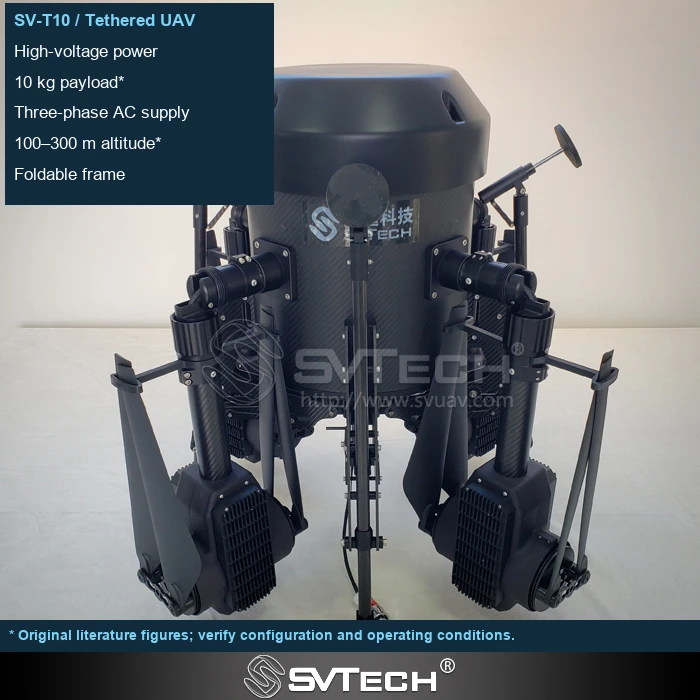
Continuous operation requires every device to withstand the transition
The fact that the backup supply can eventually deliver power does not mean there was no voltage dip or control restart at the moment of switching. Different loads tolerate brief interruptions differently, and onboard control, communications and mission equipment should all be included in verification.
Confirming only that the aircraft did not lose power immediately cannot show whether the payload restarted or whether logs were lost. The voltage during switching, the protection actions and the recovery process need to be observed under real loads. Different battery states and mission power levels may change the outcome. Complete verification also covers whether the system can reach its intended state after the main supply is restored.
Testing needs to record the fault trigger time, bus state, flight control logs and payload recovery. Checking only that the "system is online" after switching may miss brief loss of control or data interruption.
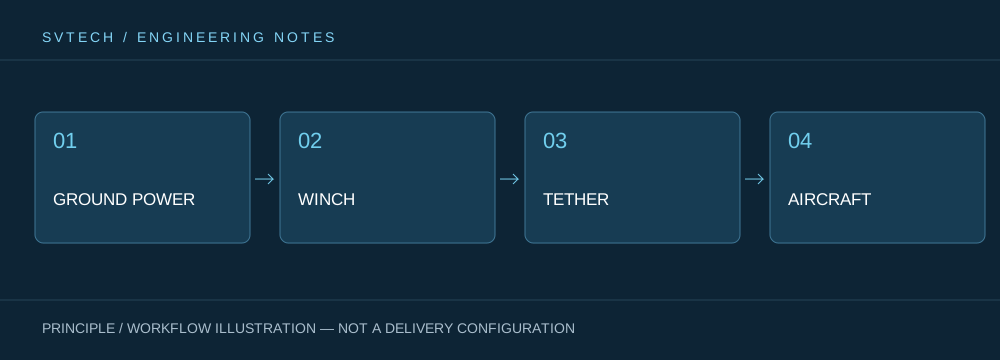
Technical Principles and Engineering Boundaries
A tethered drone connects the ground power supply, tether management mechanism, cable, flight platform and mission payload into one continuous system. When designing around "Millisecond-Level Continuity: The Engineering Value of Power Switching in Tethered Systems", power supply efficiency, cable weight, tension variation, payload cooling and flight control all interact. The system cannot be described by maximum endurance alone; whether it can maintain stable service at a specified altitude, wind condition, payload power and personnel rotation is the more meaningful capability of a continuously powered drone.
Application Scenarios and Implementation Paths
Persistent observation, temporary communications relay, night-time emergency lighting and security for specific areas are all missions a tethered platform may serve. They share a requirement for long-term availability of the aerial position, while each places different demands on imagery, link, illumination or deployment speed. Incorporating mission objectives, ground power, operating area, weather window and exit path into the plan together can turn a tethered drone system from a demonstration device into a service that can be organized on site.
Project Verification and Continuous Optimization
To ground this technical discussion of "Millisecond-Level Continuity: The Engineering Value of Power Switching in Tethered Systems" in real projects, the verification phase should record configuration version, environmental conditions, measurement locations and mission results together. Verify multiple load states according to an approved controlled test plan, and confirm alarm and backup landing logic. Fault injection should be organized by a professional team; power must not be cut at random during an unisolated live mission. This information is not supplementary documentation but the common basis for interpreting results, reproducing behavior and continuous optimization.
Related Support from SV Tech
Zhuhai SV Tech Co. Ltd. (SVTECH) provides product documentation, project requirement discussions and configuration boundary checks for tethered drones and related industry applications. For topics such as "Millisecond-Level Continuity: The Engineering Value of Power Switching in Tethered Systems", mission conditions, target outcomes, site environment and existing equipment can be described together, with Mr. Liu (+86 18688194199, lhc1983@gmail.com) assisting with coordination; specific models, performance and delivery scope are subject to confirmed documentation and project verification.
During inspection, fault occurrence, alarms, switching and flight status should be placed on a common timeline. A successful final landing does not mean there were no out-of-limit transients in between. The test plan must be approved by the equipment supplier and appropriate precautions taken, verifying foreseeable faults step by step rather than replacing controlled testing with arbitrary power disconnection on site.
A smooth transition often goes unnoticed by users, yet it determines the experience during an anomaly. Only by making power switching a verifiable process can continuous power supply become more reliable.
