
The tether supplies continuous power but does not automatically solve all communication problems. Control, status feedback and payload data may travel over different channels and may be interrupted at different times. The system needs to know which part of the information has been lost and choose reasonable behavior accordingly.
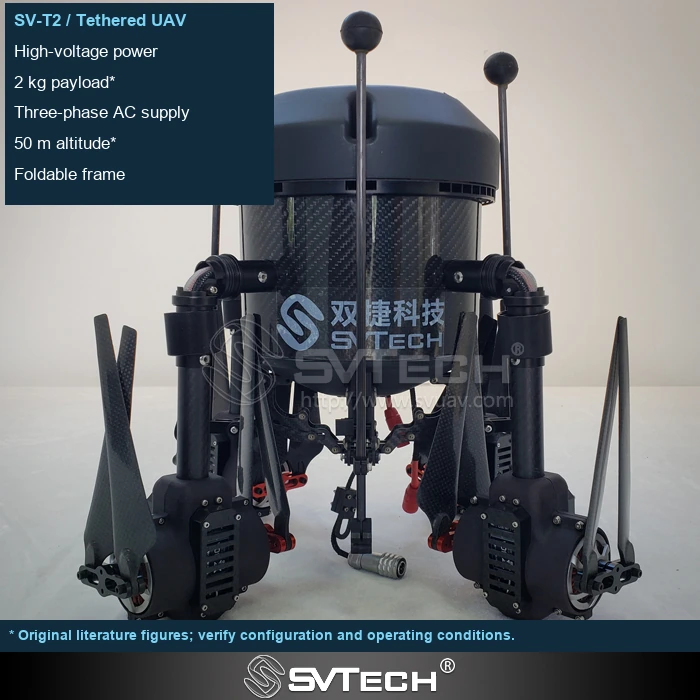
Degradation actions should match the actual deployment
Loss-of-link handling depends on the platform, ground station, tether and site constraints. Return-to-home, hover or land are not appropriate in all tethered scenarios, especially where fixed obstacles and tether constraints may invalidate the default free-flight strategies.
Safe exit paths may differ between open sites and areas near buildings, and ground personnel also need timely awareness of the current state. Mission design should clearly define loss-of-link criteria, platform actions and recovery procedures, avoiding multiple control modules issuing conflicting commands simultaneously. The value of abnormal-condition drills lies in getting people and equipment to share the same understanding.
If the flight controller prepares to move while the winch remains stationary, new tension problems may arise. Therefore, the coordinated response of flight control and tether management to the same fault should be checked, rather than only verifying individual device alarms.
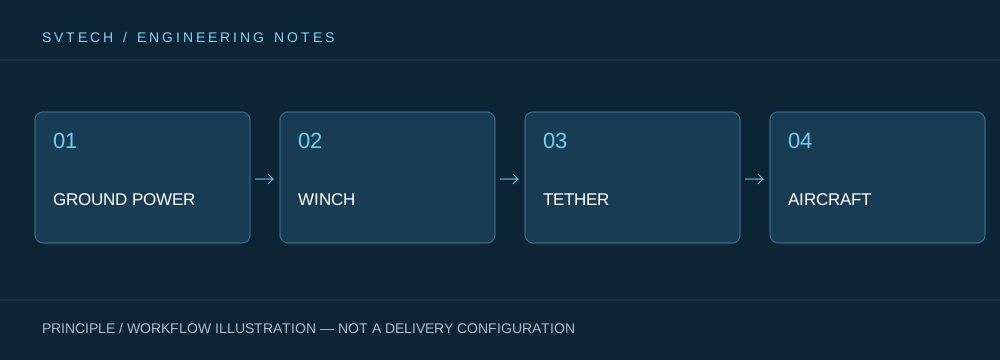
Technical principles and engineering boundaries
A tethered drone connects ground power, the winch mechanism, tether, flight platform and mission payload into one continuous system. When designing around “After Communications Loss: Mission Degradation Design for Tethered Drones,” power efficiency, tether weight, tension variation, payload cooling and flight control interact with one another. The system cannot be described by maximum endurance alone; whether it can maintain stable service at a specified altitude, wind condition, payload power and personnel rotation is the more meaningful capability of a continuously powered drone.
Application scenarios and implementation paths
Persistent observation, temporary communication relay, night emergency lighting and security in specific areas are all missions that tethered platforms may serve. They all require long-term availability of the aerial position, while placing different demands on imagery, links, lighting or deployment speed. Incorporating mission objectives, ground power, operating area, weather windows and exit paths into the plan can turn a tethered drone system from a demonstration device into an organizable on-site service.
Project verification and continuous improvement
To make this technical discussion on “After Communications Loss: Mission Degradation Design for Tethered Drones” applicable to real projects, the verification phase should record configuration versions, environmental conditions, measurement locations and mission results together. In the operating plan, clarify loss-of-link identification, state retention and recovery responsibilities; check flight controller configurations against the tethered interface; and confirm procedures through controlled verification, without defaulting to non-tethered mode settings. This information is not supplementary documentation but the common basis for interpreting results, reproducing performance and continuously improving.
Related support from SV Tech
Zhuhai SV Tech Co. Ltd. provides product documentation, project requirement communication and configuration boundary verification for tethered drones and related industry applications. For topics such as “After Communications Loss: Mission Degradation Design for Tethered Drones,” mission conditions, target outcomes, site environment and existing equipment can be described together, with Mr. Liu (+86 18688194199, lhc1983@gmail.com) assisting with coordination; specific models, performance and delivery scope are subject to confirmed documentation and project verification.
The loss-of-link state needs to be defined in conjunction with tether constraints, backup energy and site obstacles, and default return-to-home actions from free flight cannot be directly copied. Before delivery, the judgment criteria and priorities of the flight controller and ground station should be checked separately. The operations manual should make clear to personnel the observable alarms and when to execute pre-confirmed handling procedures.
A reliable system is not only good at normal operation but can also explain how it will act when communications are limited. Clear degradation logic is an important support for long-duration missions.
