
Power in a tethered system passes through multiple modules and connection points; the protection capability of any single component must be understood within the context of the complete chain. Grounding, insulation and fault protection play distinct roles and together form the foundation of the energy system.
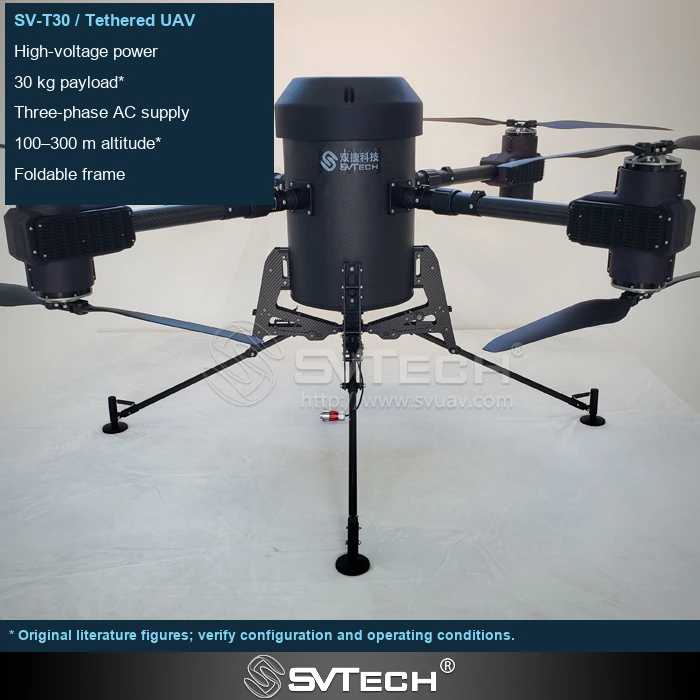
Protection capability depends on the connected whole
Ground power supplies, conversion equipment, cabinets and accessible conductive parts may have different protection requirements. A single grounding wire cannot replace a complete power distribution and protection design, and grounding conditions after portable deployment will also vary with the site.
Interfaces exist between the on-site power source, extension cables, ground station and airborne equipment, and each connection can alter previously assumed conditions. Protective design must be implemented by personnel with the appropriate competence in accordance with equipment requirements and applicable standards, not pieced together from ad-hoc experience. A clear system diagram helps different teams understand their respective areas of responsibility.
When using a generator, building supply or portable power station, the system grounding method may differ. The site should not simply copy the wiring of another project, and frequent alarms must never be resolved by disabling protection.
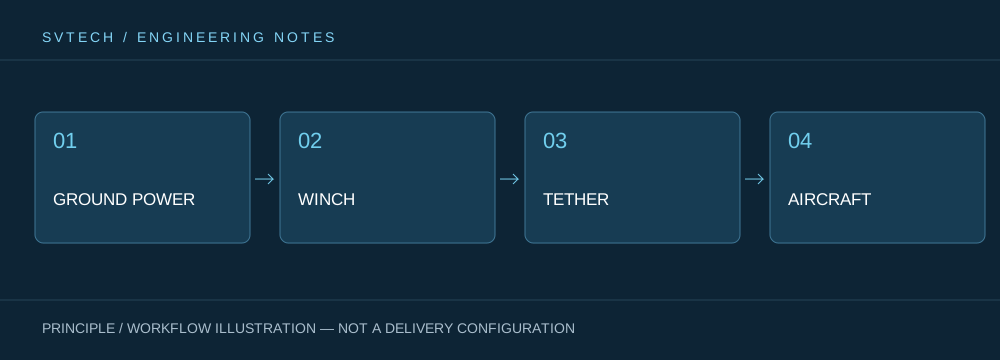
Technical principles and engineering boundaries
A tethered drone connects the ground power supply, tether management mechanism, cable, flight platform and mission payload into one continuous system. When designing around "A System View of Tethered Power: Keeping the Protection Path Continuous from Ground to Air," power efficiency, cable weight, tension variation, payload heat dissipation and flight control all interact. A system cannot be described by maximum endurance alone; whether it can maintain stable service at a specified altitude, wind condition, payload power and personnel rotation is the capability that gives a persistently powered drone real practical meaning.
Application scenarios and implementation paths
Persistent observation, temporary communication relay, nighttime emergency lighting and security for specific areas are all missions a tethered platform may serve. They share a common requirement for long-term availability of an aerial position, while each places different demands on imagery, link, illumination or deployment speed. Incorporating mission objectives, ground power, operating area, weather window and exit path into the plan together allows a tethered drone system to evolve from a demonstration device into an on-site, organizable service.
Project verification and continuous optimization
To ground this technical discussion of "A System View of Tethered Power: Keeping the Protection Path Continuous from Ground to Air" in real projects, the verification phase should record the configuration version, environmental conditions, measurement locations and mission results together. Qualified electrical personnel should confirm the plan in accordance with equipment documentation and local standards; check protective devices, connection integrity and maintenance records. All verification should be completed within the prescribed safety procedures. This information is not supplementary documentation but the shared basis for interpreting results, reproducing performance and driving continuous improvement.
Related support from SV Tech
Zhuhai SV Tech Co. Ltd. provides product documentation, project requirement discussion and configuration boundary verification for tethered drones and related industry applications. For topics such as "A System View of Tethered Power: Keeping the Protection Path Continuous from Ground to Air," mission conditions, target outcomes, site environment and existing equipment can be described together, with Mr. Liu (+86 18688194199, lhc1983@gmail.com) assisting with coordination; specific models, performance and delivery scope are subject to confirmed documentation and project verification.
The protection relationships among the power supply, ground station, power distribution and enclosure should be clearly documented and comply with applicable installation requirements. Temporary power and fixed sites may differ, and confirming that "there is a grounding wire" is not sufficient. Measurements and corrective work should be carried out by personnel with the appropriate qualifications, and measurement conditions and protective device configurations should be recorded for subsequent review.
Long-term reliable operation depends on a complete electrical foundation. Keeping the protection design consistent with the actual deployment reduces gaps overlooked during integration.
