
The same motor speed does not always produce the same line retrieval speed. Winding the cable layer by layer changes the effective radius, so mechanical geometry enters the control algorithm. This seemingly small variation directly affects whether the cable and the platform can stay synchronized during takeoff and landing.
A changing radius demands changing control
Line speed equals angular speed multiplied by effective radius. As winding layers accumulate, the radius grows, and the same rotational speed corresponds to a faster line speed. This affects length estimation and tracking performance; the entire mission cannot be calculated using only the empty-drum radius.
At the same angular speed, a larger radius moves the cable faster; for the same output torque, the resulting cable tension also changes. If the controller only fixes rotational speed, the response may vary throughout the winding process. Practical designs need to account for speed, tension and layer variation together, rather than tuning parameters at a single drum diameter.
If motor revolutions are used to estimate payout length, confirm whether the system compensates for layer count or uses an independent length-measurement method. Calibrating only over the first few turns may not cover the error from a full drum to an empty one.
Technical principles and engineering boundaries
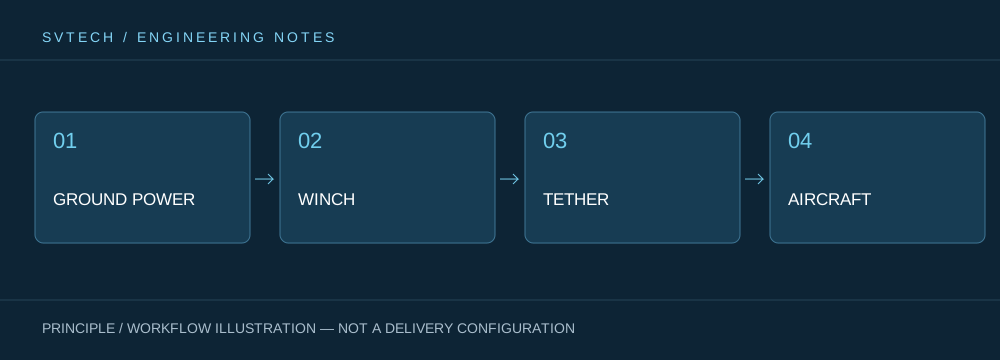
A tethered drone links ground power, the winch mechanism, the cable, the flight platform and the mission payload into one continuous system. When designing around "From Drum Rotation to Cable Speed: Control Details of the Tethered Winch Mechanism", power efficiency, cable weight, tension variation, payload heat dissipation and flight control all interact. The system cannot be described by maximum endurance alone; whether it can maintain stable service at a specified altitude, wind condition, payload power and crew rotation is the capability that matters more for a persistently powered drone.
Application scenarios and implementation paths
Persistent observation, temporary communication relay, nighttime emergency lighting and security in specific areas are all missions a tethered platform may serve. They share a requirement for long-term availability of an aerial position, while each places different demands on imagery, link, illumination or deployment speed. Bringing mission objectives, ground power, operating area, weather window and exit path into the plan together can turn a tethered drone system from a demonstration device into a service that can be organized on site.
Project verification and continuous optimization
To ground this technical discussion of "From Drum Rotation to Cable Speed: Control Details of the Tethered Winch Mechanism" in real projects, the verification phase should record configuration version, environmental conditions, measurement positions and mission results together. Check length measurement against the actual path across representative winding states; inspect whether cable spooling is neat; confirm the calibration method and allowable error. Do not treat drum revolutions as altitude without correction. This information is not supplementary documentation but the shared basis for interpreting results, reproducing performance and continuous optimization.
Related support from SV Tech
Zhuhai SV Tech Co. Ltd. provides product documentation, project requirement discussions and configuration boundary checks for tethered drones and related industry applications. For topics such as "From Drum Rotation to Cable Speed: Control Details of the Tethered Winch Mechanism", mission conditions, target outcomes, site environment and existing equipment can be described together, with Mr. Liu (+86 18688194199, lhc1983@gmail.com) assisting with coordination; specific models, performance and delivery scope are subject to confirmed documentation and project verification.
Line speed can be understood as angular speed multiplied by effective radius; as winding layers change, the same rotational speed corresponds to different line retrieval speeds. System verification should cover conditions near an empty drum and a relatively full drum. If the display only shows motor speed, confirm whether length or tension feedback is also available; constant cable speed cannot be inferred from motor speed alone.
Mechanical structure and software control were never separate tasks. Understanding drum diameter variation helps explain why a tethered system needs to verify performance across the complete deploy-and-retrieve cycle.
