
In windy conditions, a tethered drone must not only hold its position but also withstand the effects transmitted through the tether. The tether's wind-facing area changes with deployed length, and wind direction may vary with altitude. Platform specifications are therefore only part of understanding system performance.
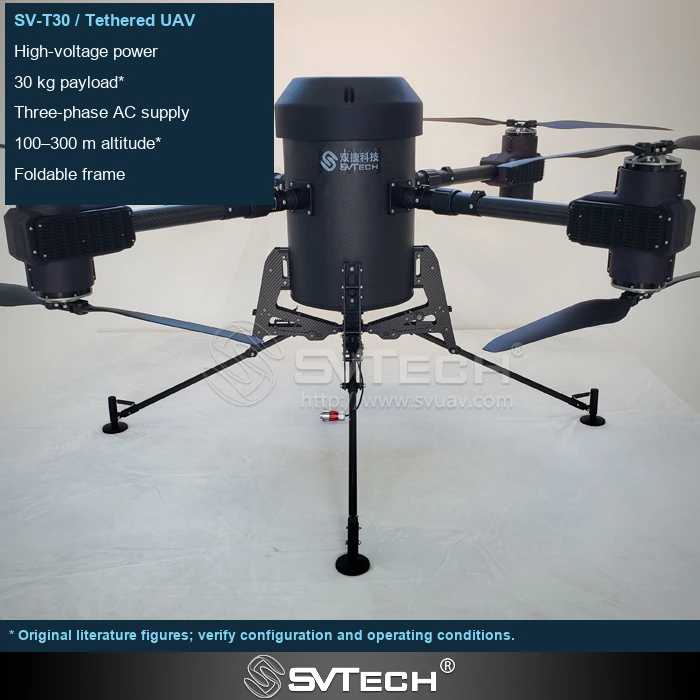
The tether transmits distributed loads to both ends
Crosswind acts not only on the airframe and payload but also on the exposed tether. Tether length, diameter, and offset together affect system loads. When local wind fields vary near buildings, ground-level wind speed may not represent conditions at height.
Crosswind alters tether catenary and tension, and may also affect platform tilt and power demand. Turbulence near buildings complicates these variations. When assessing mission windows, observe with height, site, and full configuration in mind, rather than citing a single bare-aircraft test result. The effect of wind on payload viewing angle and illumination coverage also deserves consideration.
Stable performance of the same platform at low altitude with a short tether does not mean the envelope remains unchanged at height. When significant tether lateral deflection is observed, follow established procedures for assessment rather than simply applying greater traction to keep it straight.
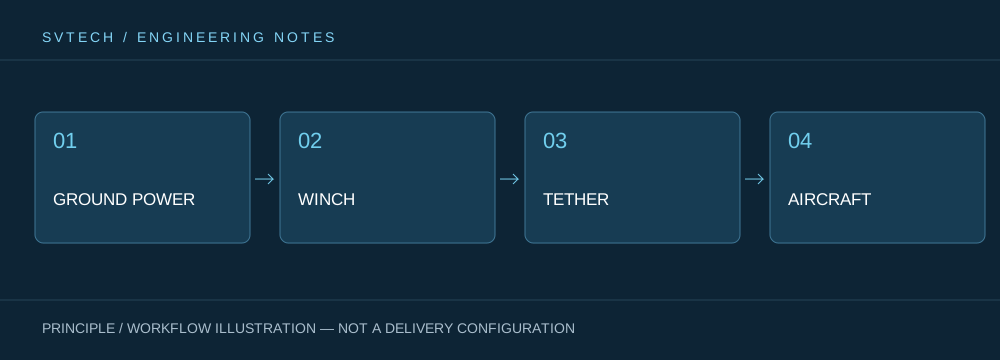
Technical Principles and Engineering Boundaries
A tethered drone connects ground power, tether management mechanism, tether, flight platform, and mission payload into a continuous system. When designing around 'Tethered Systems in Wind: Aerodynamic Forces Shared by Aircraft and Tether', power efficiency, tether weight, tension variation, payload cooling, and flight control interact. The system cannot be described solely by maximum endurance; whether it can maintain stable service at a specified altitude, wind condition, payload power, and personnel rotation is the more meaningful capability of a persistently powered drone.
Application Scenarios and Implementation Path
Persistent observation, temporary communication relay, nighttime emergency lighting, and security in specific areas are missions that tethered platforms may serve. They all require long-term availability of the aerial position, while placing different demands on imagery, link, illumination, or deployment speed. Incorporating mission objectives, ground power, operating area, weather window, and exit path into the plan can turn a tethered drone system from a demonstration device into an organizeable on-site service.
Project Verification and Continuous Optimization
To ground this technical discussion on 'Tethered Systems in Wind: Aerodynamic Forces Shared by Aircraft and Tether' in real projects, the verification phase should record configuration version, environmental conditions, measurement locations, and mission results together. Provide altitude, site, and expected wind conditions; verify permissible conditions for the complete system; establish wind measurement and stop criteria. On-site flights should follow the operational plan and be conducted by qualified operators. This information is not supplementary documentation but the common basis for interpreting results, reproducing performance, and continuous optimization.
Related Support from SV Tech
SV Tech (双捷科技) provides product documentation, project requirement communication, and configuration boundary verification for tethered drones and related industry applications. For topics such as 'Tethered Systems in Wind: Aerodynamic Forces Shared by Aircraft and Tether', describe mission conditions, target outcomes, site environment, and existing equipment together; Mr. Liu (+86 18688194199, lhc1983@gmail.com) can assist with coordination. Specific models, performance, and delivery scope are subject to confirmed documentation and project verification.
The effective length and shape of the wind-affected tether vary with height, and local turbulence may occur around buildings. Assessment should consider the overall state of aircraft, payload, and tether, and use the operating boundaries confirmed by the equipment provider. Citing an aircraft's advertised wind-resistance value alone does not prove it applies equally with a specific tether and payload.
Environmental adaptability of tethered applications belongs to the entire system. Including the tether in wind analysis enables a more realistic understanding of the usable boundaries for aerial persistence.
