
Turning the aircraft can change the camera view, and it can also transmit rotation to the cable. A single small-angle maneuver has limited effect, but repeated rotation in the same direction over a long period accumulates. Tethered missions therefore need to consider attitude changes together with the state of the connection.
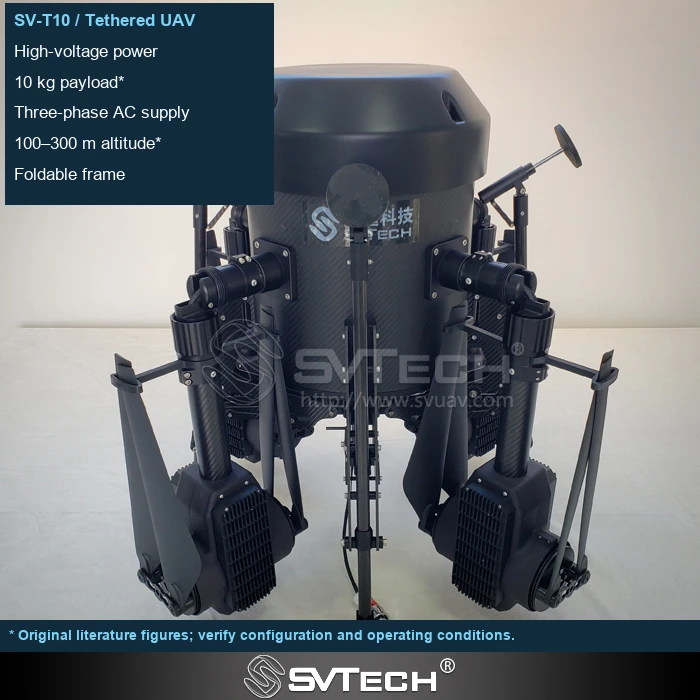
Trajectory planning can reduce mechanical load
Changes in platform heading and the deployment/retrieval process can cause the cable to twist; the actual behavior depends on the connection structure and the permitted rotation method. Twist affects line condition, retrieval and jacket stress, and cannot always be eliminated automatically by relaxing tension.
The cable's torsional capacity, the connection structure and the routing path determine the permissible conditions. Sensible arrangement of viewing directions, turning methods and between-mission straightening can reduce meaningless accumulated twist. The jacket looking normal does not mean the internal structure is always in an ideal state.
If a mission continuously adjusts heading in the same direction, check whether the system permits such continuous rotation. If the cable still tends to coil after a mission ends, that is a clue worth recording and checking.
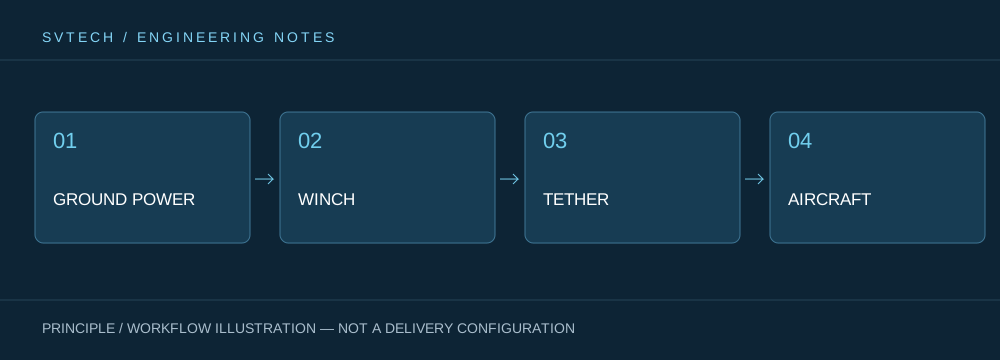
Technical principles and engineering boundaries
A tethered drone connects ground power, the deployment/retrieval mechanism, the cable, the flight platform and the mission payload into one continuous system. When designing around "Cumulative Effects in Rotation: Tethered-Line Twist and Mission Trajectory Design", power supply efficiency, cable weight, tension variation, payload cooling and flight control all interact. A system cannot be described by maximum endurance alone; whether it can maintain stable service at a specified altitude, wind condition, payload power and crew rotation is the more meaningful capability of a persistently powered drone.
Application scenarios and implementation paths
Persistent observation, temporary communications relay, nighttime emergency lighting and security for specific areas are all missions a tethered platform may serve. They all require a long-term available aerial position, while each places different demands on imagery, link, illumination or deployment speed. Incorporating mission objectives, ground power, operating area, weather window and exit path into the plan together can turn a tethered drone system from a demonstration device into an organizable on-site service.
Project verification and continuous optimization
To make this technical discussion of "Cumulative Effects in Rotation: Tethered-Line Twist and Mission Trajectory Design" applicable to real projects, the verification phase should record the configuration version, environmental conditions, measurement locations and mission results together. Follow the manufacturer's specified heading, connection and untwisting procedures; check the state before line retrieval; do not manually twist the cable while it is powered and under load, and do not add unverified rotary joints on your own. This information is not supplementary documentation but the common basis for interpreting results, reproducing behavior and continuously optimizing.
Related support from Zhuhai SV Tech Co. Ltd.
Zhuhai SV Tech Co. Ltd. (SVTECH) provides product documentation, project requirement discussions and configuration boundary checks for tethered drones and related industry applications. For topics such as "Cumulative Effects in Rotation: Tethered-Line Twist and Mission Trajectory Design", describe the mission conditions, target outcomes, site environment and existing equipment together; Mr. Liu (+86 18688194199, lhc1983@gmail.com) will assist with coordination. Specific models, performance and delivery scope are subject to confirmed documentation and project verification.
Mission path planning can record rotation direction and cumulative rotation, and arrange untwisting operations according to the equipment instructions. If the cable forms loops or shows abnormal resistance, do not continue forcing retrieval. Daily checks that record the locations and conditions where twist is likely help determine whether the path design, guide structure or method of use needs improvement.
Continuous work requires attention to the total amount of change. Designing mission trajectories with the cable state in mind helps link flight control with mechanical durability.
