
Nozzles determine the water-jet pattern; wear or clogging over time can alter coverage, flow rate and uniformity. Water still spraying does not mean the equipment is still working to its original process.
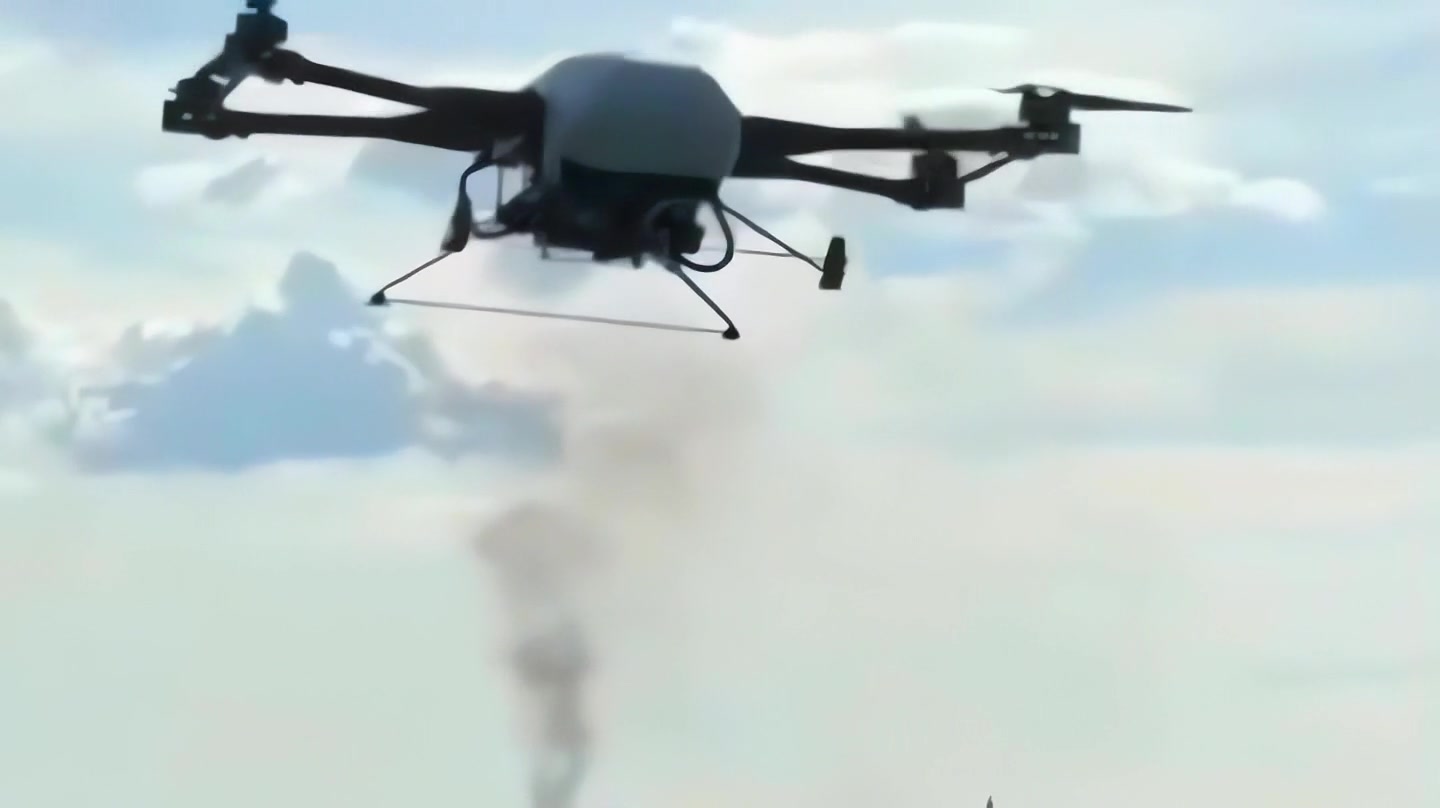
Spray consistency needs continuous observation
Worn orifices or deposits change flow rate and spray pattern, causing uneven coverage. A pressure gauge may look normal while the effect on the surface still changes; differing conditions across multiple nozzles can also affect the loads on the whole system.
Differences between nozzles create streaks or local shortfalls, which operators may try to offset by slowing down, increasing time and water use. Including spray pattern and actual flow rate in maintenance helps detect changes earlier. After replacement, the corresponding configuration should be restored, not merely checked for whether the fitting mounts.
If streaks or local missed areas appear along the same path, check spray pattern, clogging and installation angle. Simply increasing the number of passes masks the cause and raises water use.
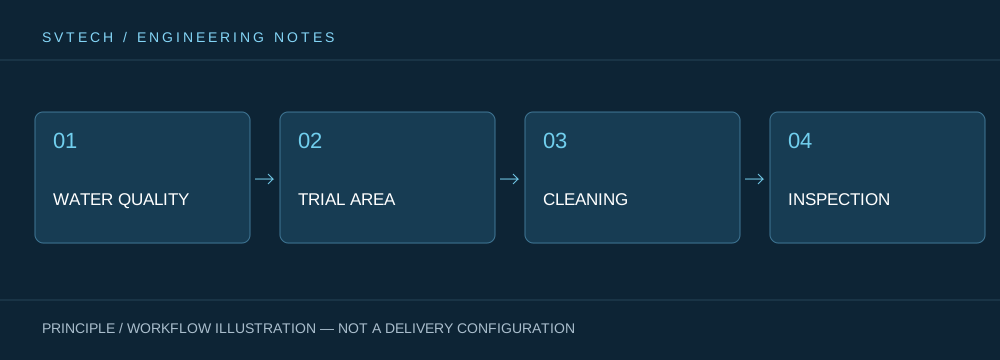
Technical principles and engineering boundaries
Drone cleaning brings flight, water supply, spraying and surface-material maintenance into a single process. In discussing “The nozzle lifecycle: how small changes affect large-area cleaning,” the changes in water flow between pump station, piping, nozzles and the cleaned surface combine with platform attitude, wind conditions and path coverage to determine the outcome. For PV modules and building facades, cleaning performance should not be judged only by appearance immediately after spraying, but also by the surface state after drying, material requirements and reviewable quality records.
Application scenarios and implementation paths
PV cleaning drones are best discussed together with plant zoning, soiling trends, water supply conditions and O&M windows; facade cleaning drones require an understanding of building form, drainage, surrounding access and property coordination. Automated equipment can change how high-altitude work is organized, but it cannot replace on-site process judgment. Validating paths, spraying and acceptance methods in a representative area before scaling to a larger area often helps build a stable intelligent cleaning solution.
Project validation and continuous optimization
To ground this technical discussion of “The nozzle lifecycle: how small changes affect large-area cleaning” in real projects, the validation stage should record configuration versions, environmental conditions, measurement locations and task results together. Inspect nozzles according to the supplier's method and use matching spare parts; record replacement times and water quality; recheck spray distance and coverage. Acceptance is not just about whether water comes out, but whether distribution meets the process requirements. This information is not supplementary documentation; it is the shared basis for interpreting results, reproducing performance and continuously optimizing.
Related support from SV Tech
Zhuhai SV Tech Co. Ltd. (SVTECH) provides product documentation, project requirement discussions and configuration-boundary reviews for drone cleaning and related industry applications. For topics such as “The nozzle lifecycle: how small changes affect large-area cleaning,” describe the task conditions, target outcomes, site environment and existing equipment together; Mr. Liu (+86 18688194199, lhc1983@gmail.com) can help with coordination. Specific models, performance and delivery scope are subject to confirmed documentation and project validation.
Changes in spray pattern, increased flow rate and uneven coverage are all clues worth recording, but they should be investigated together with pressure and filtration status. For maintenance, compare against a confirmed baseline nozzle. Do not enlarge or clear orifices with hard objects at will, as this alters nozzle characteristics; after replacement, reconfirm the process parameters.
Small components affect large-area results. Keeping nozzle condition consistent is an important foundation for stable cleaning quality and cost.

