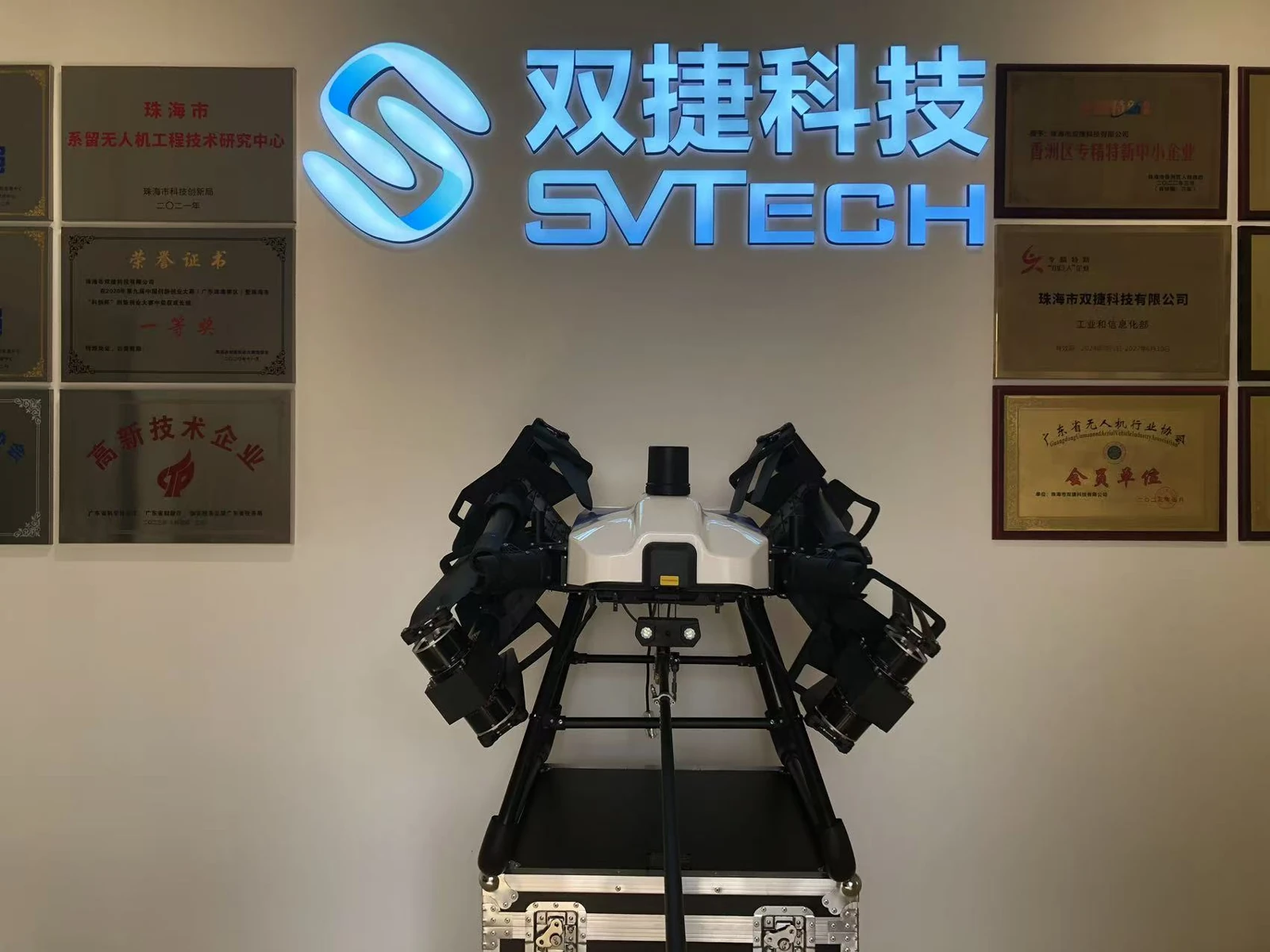
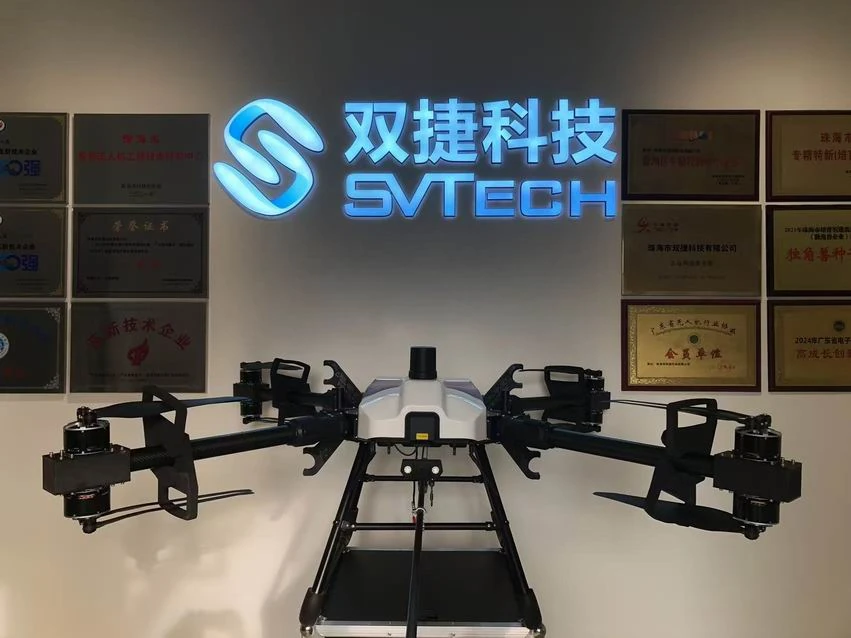
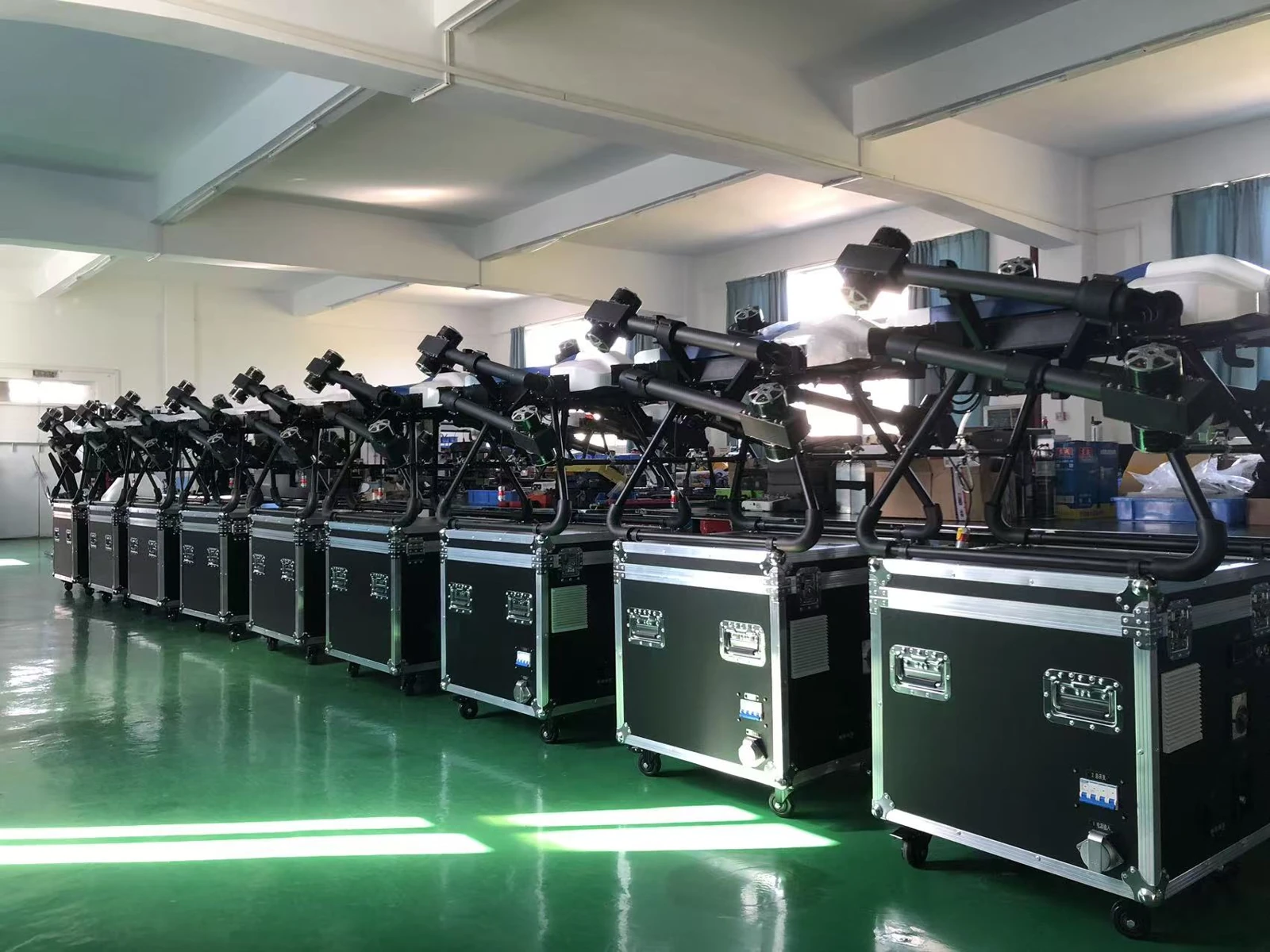
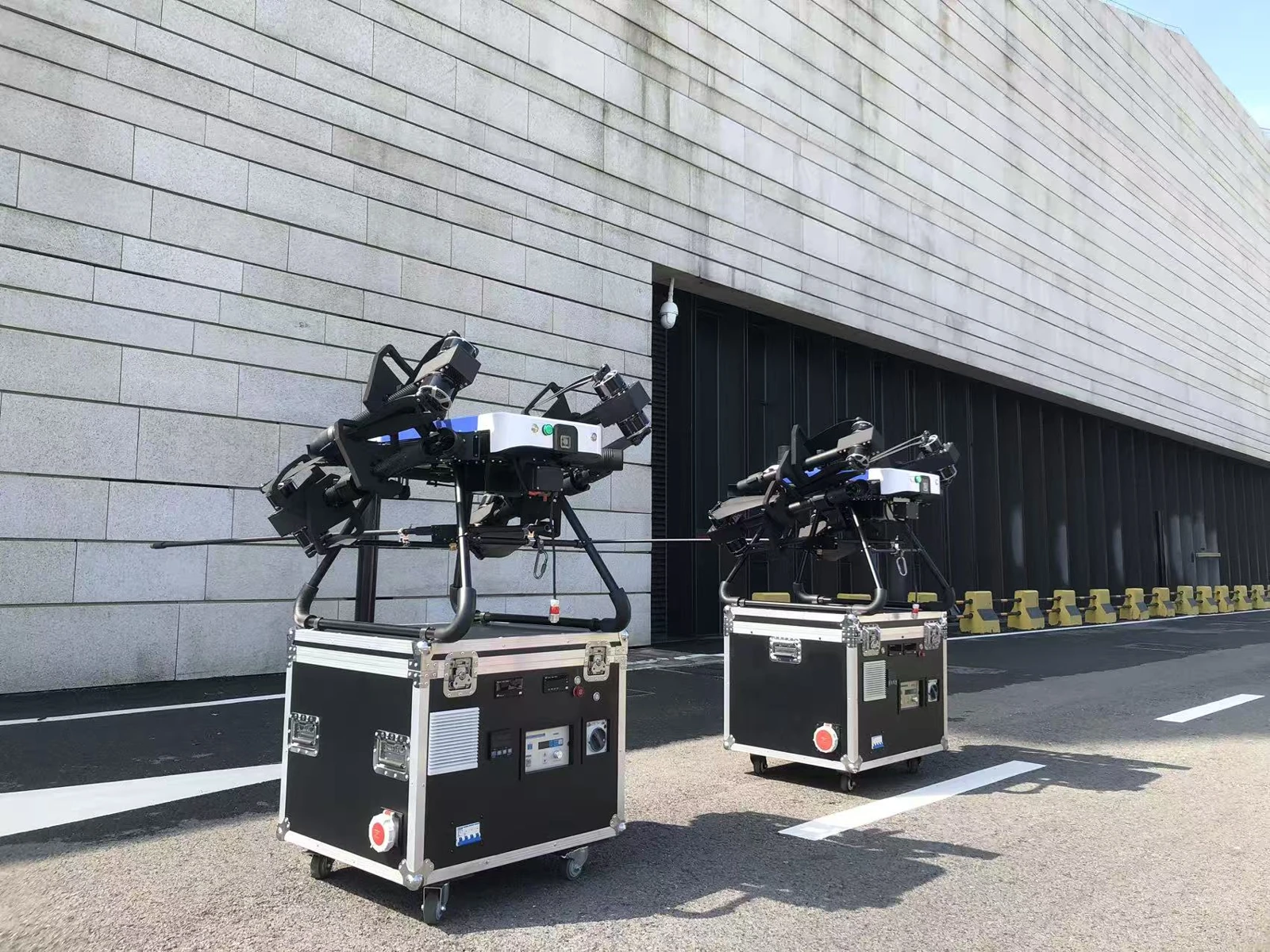
T30/W30 Tethered façade-cleaning system
INTEGRATED WORKING SYSTEMS

T30/W30Tethered façade-cleaning system

T30/W30 combines an aircraft, continuous ground power, automatic cable handling, cleaning payload and ground control for glass curtain walls, high-rise façades and complex building surfaces. A 30 kW rated ground supply and 100 m tether support project-specific configurations.

Propulsion configuration
8 motors; maximum output per motor 6000 W
Airframe mass
36 kg
Rated payload
30 kg

Operation video

This edited demonstration illustrates the cleaning method and equipment arrangement. A verified filming date, customer identity and complete operating records are not supplied; the clip does not establish cleaning productivity or project acceptance.

Overview

T30/W30 Tethered façade-cleaning system

Façade cleaning requires coordination of hover control, tether handling, water supply and nozzle reaction force. This project configuration uses 30 kW ground power and a 100 m tether, with an automatic reel to manage payout as height changes. The site plan must also address setbacks, glazing joints, ground exclusion and runoff collection.

Final configuration depends on operating conditions and the agreed specification.

Key benefits

Key benefits

01

30 kW rated ground supply for sustained work at height

02

100 m tether with automatic cable handling

03

Configured for façade material, building height, wind and water supply

04

Deployment, training and technical support

T30/W30

Selection and application guide

Design and application value

A cleaning solution combines aircraft, cleaning payload, water supply, mission planning and site organization. Suitable paths and spray coverage can reduce repeated passes, but results depend on soiling, surface material, water quality and settings. Define the cleaning objective before matching equipment and process.

Choosing the right configuration

Survey array or façade dimensions, materials, joints and obstacles; confirm power, water and exclusion areas. Check permitted cleaning methods for PV modules. For façades, assess nozzle reaction, hose mass and corners. Validate reference productivity on a representative trial area.

Installation and integration

Begin with a low-risk trial area and verify water delivery, hover stability, standoff and coverage before adjusting path and speed. Settings must suit the surface or module manufacturer’s requirements. Define withdrawal routes and ground-team roles for water loss, power loss or changing wind.

Operation and maintenance

Record before-and-after images, residual soil and surface condition for acceptance. Track flight, refilling, relocation and setup separately. After work, flush filters and nozzles, inspect hoses and electrical connections, and dry as required. Evaluate productivity using total working time, not spray time alone.

Specifications

Specifications

Final configuration depends on operating conditions and the agreed specification.

ModelT30/W30
CategoryIntegrated working systems
Propulsion configuration8 motors; maximum output per motor 6000 W
Airframe mass36 kg
Rated payload30 kg
Ground power input380 V AC, 50-60 Hz
Ground power output500 V DC, 30 kW
Tether length100 m
Automatic winch speed1 m/s
Nominal powered flight duration8 hours; subject to operating conditions and procedures
Customisation optionsCleaning payload, water supply, ground station, communications and safety configuration
Downloads

Downloads

Documentation covers dimensions, performance data and operating requirements. Contact Mr. Liu for selection advice or after-sales support.

Find the right equipment and propulsion for your project

Final configuration depends on operating conditions and the agreed specification.

Get selection advice

SV TECH / PRODUCT ENGINEERING

Operation documents, product photographs and engineering

Existing selection guides are retained; complete operating chapters are added. Chinese and English controller procedures differ; use the procedure confirmed for the fitted controller.

Chinese rated thrust of 16 kg and English maximum thrust of 25 kg are different definitions, not one common rating.

Continuous ground power and onboard redundancy

A tethered mission keeps the primary energy source on the ground and supplies the aircraft through a cable. Onboard backup power supports controlled response to a supply interruption. Extended airborne operation must be validated for the complete configuration.

Documents and engineering resources ↗ · All recognition and source images ↗