
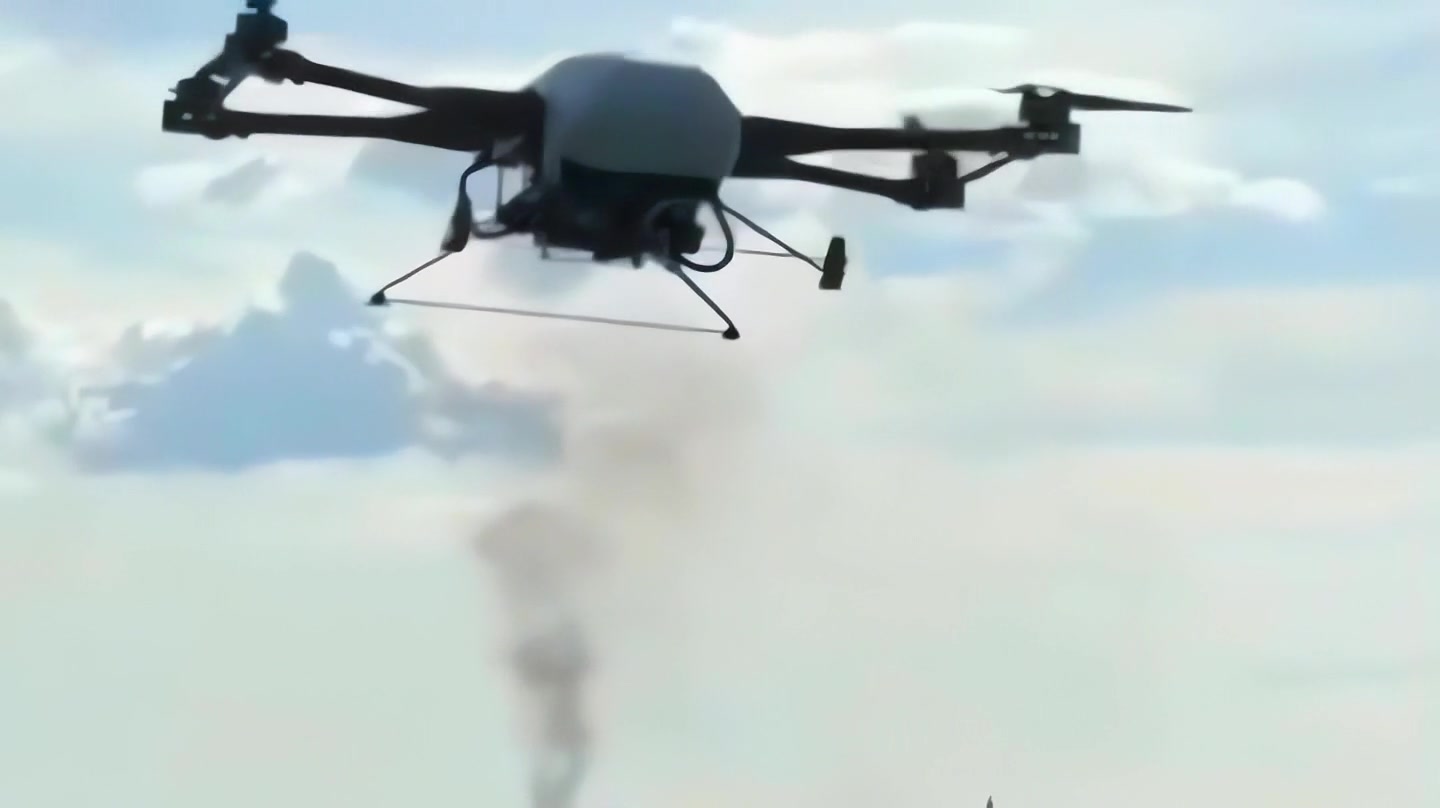
Start with the pressure measurement point
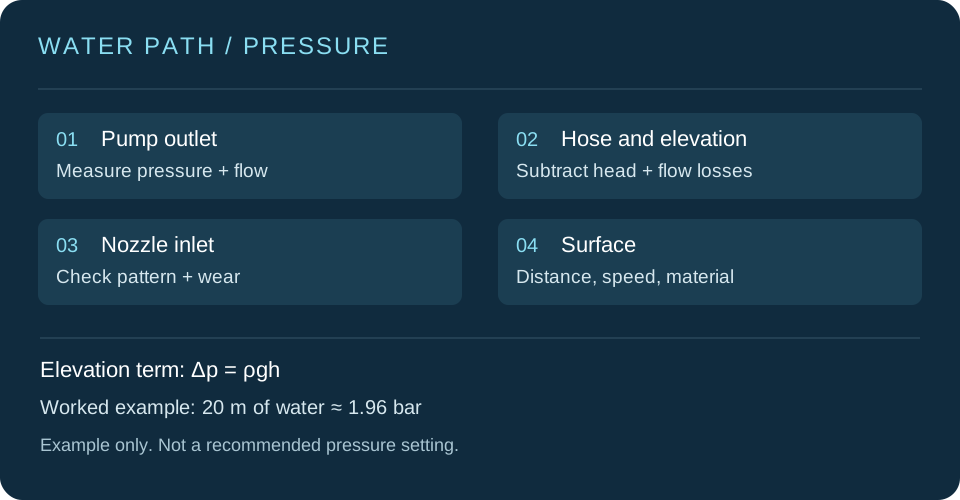
A system that cleans well at ground level may deliver a weaker or uneven spray higher up a facade. First establish where pressure is measured: at the pump outlet, before the hose reel or near the nozzle. These readings are not interchangeable. Pump pressure describes the supply; nozzle inlet pressure is more relevant to the spray. When comparing drone cleaning systems, record the measurement point, flow, hose bore, deployed length and working height. Pressure figures become useful only when these conditions are comparable.
Separate elevation head from pipe losses
For steady water flow, nozzle inlet pressure can be approximated as pump outlet pressure minus pipe losses and the pressure needed to overcome elevation; significant changes in flow velocity also require an energy correction. The elevation term is Δp = ρgh. For an illustrative water density of 1000 kg/m³, g = 9.81 m/s² and a 20 m rise, elevation alone requires about 196200 Pa, or 1.96 bar. This is a calculation example, not a recommended product setting. Hoses, fittings, filters and reels introduce additional losses. A smaller bore or greater flow generally makes these losses more significant; restrictions and kinks can also move the operating point away from the design value.
The nozzle shapes the cleaning action
At the same inlet pressure, orifice size and spray pattern affect flow, coverage and local impact. A narrow jet concentrates water, but may be unsuitable for glazing joints, sealants or PV module edges. Stand-off distance changes both the jet and where it lands. Before raising pressure, check the nozzle model, wear and filtration, then establish trial limits using the material manufacturer's cleaning instructions. Nozzle wear can alter flow and make the spray uneven without an obvious warning on the pressure gauge.
If the pattern changes suddenly, compare outlets and inspect filter pressure drop, leaking fittings and local hose deformation. Recheck the operating point after replacing a nozzle: a different orifice changes both flow and system pressure. Persistent pressure fluctuations call for investigation of supply and regulation; an average reading does not establish stable spraying. Recording nozzle replacement and cleaning helps distinguish gradual wear from intermittent blockage.
Connect coverage to travel speed
Coverage depends on effective spray width, travel speed and overlap. As an illustration, a 1 m width, 0.3 m/s travel speed and 20% overlap give a geometric coverage rate of 1 × 0.3 × (1 − 0.20) × 3600 = 864 m²/h. This excludes turns, obstacles, repeat passes, replenishment and downtime. It is not a productivity rating for the SV-M30 or any other system. Increasing speed reduces exposure time, so establish acceptable cleaning first. One fast pass and several slower passes may use different amounts of water and produce different results on stubborn deposits.
Make the cleaning trial repeatable
Choose a representative area and photograph it before cleaning. Record the deposit type, substrate, wind, water source and equipment configuration. Change one variable at a time where practicable, such as stand-off distance or speed, and record the available pressure and flow measurements near the nozzle. Let the surface dry before checking residue, streaking, joints and material condition. A surface that looks clean while wet has not yet passed a dry-surface inspection. Apply the relevant material requirements separately to facades and PV modules; a successful setting on one sample does not establish suitability for every building or module.
Prepare the information needed for selection
Build a water-path specification covering pump output, hose bore and length, elevation, nozzle, target flow, substrate requirements and coverage method. Also evaluate hose tension, spray reaction and the effect of supply changes on aircraft attitude. The calculations here organise the variables; they do not replace equipment validation. Zhuhai SV Tech Co. Ltd. can help check configurations against current documentation for the SV-M30 PV cleaning drone and T30/W30 facade cleaning system. A site brief containing these details is more useful than a maximum-pressure target alone.
Business enquiries: Mr Liu, +86 18688194199, lhc1983@gmail.com.

