
Specialized robots extend people out of high-risk, hard-to-reach or repetitive work positions. The Passage Problem Beyond Door Width: Designing Turning Space for Robots brings this question back to the task site, where the connections among equipment, environment and personnel often become visible.
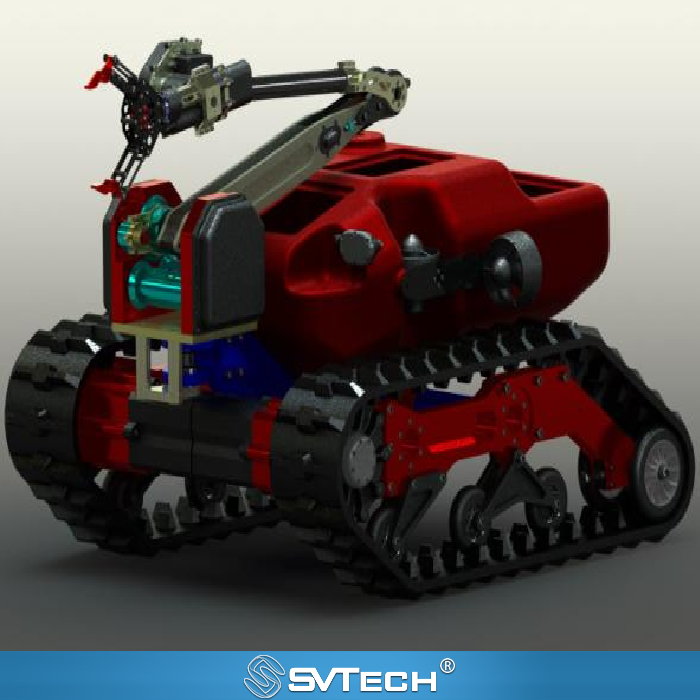
The Passage Problem Beyond Door Width: Designing Turning Space for Robots
Practical passage requires consideration of the turning envelope, payload overhang, connectors, hoses and floor thresholds. Static width is only one geometric input; narrow corners in particular demand whole-path analysis.
Truly usable robot capability comes from coordination among mechanics, perception, control and on-site personnel. From this starting point, technical choices come closer to the outcomes users actually care about. Measure the full assembled dimensions and the path, and carry out controlled passage trials; define the areas that cannot be reached; review the route before purchase rather than discovering the limits after delivery.
A machine may pass straight through a door yet be unable to turn once beyond it. On-site personnel also need space to operate and recover the robot, so verifying the dimensions of an empty shell alone is not enough.
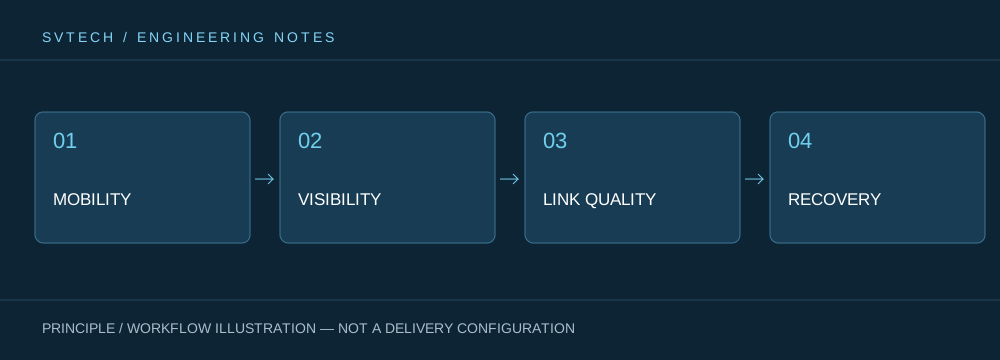
Technical principles and engineering boundaries
Specialized robots bring the mobile chassis, actuators, sensors, communications and human-machine interface into a single on-site system. The Passage Problem Beyond Door Width: Designing Turning Space for Robots reminds us that product parameters must be understood together with ground conditions, payload state, operator position and task duration. Speed, gradeability, endurance or ingress protection are not absolute conclusions detached from the environment; a robot's capability boundary has engineering meaning only under a specified route, obstacles, temperature and control method.
Application scenarios and implementation path
Firefighting, hazardous-environment inspection, industrial inspection and emergency rescue are the application directions where specialized robots deliver the most value. Their shared goal is to extend personnel perception and operating range and, under suitable conditions, to reduce the risk of direct approach. Before deployment, the task area, communication conditions, entry and recovery paths, personnel responsibilities and information handover should all be designed together, so that robot intelligence truly serves on-site decisions rather than merely demonstrating individual motions.
Project validation and continuous optimization
To ground this technical discussion of The Passage Problem Beyond Door Width: Designing Turning Space for Robots in real projects, the validation phase should record the configuration version, environmental conditions, measurement locations and task results together. Measure the full assembled dimensions and the path, and carry out controlled passage trials; define the areas that cannot be reached; review the route before purchase rather than discovering the limits after delivery. This information is not supplementary documentation but the shared basis for interpreting results, reproducing performance and enabling continuous optimization.
Related support from Zhuhai SV Tech Co. Ltd.
Zhuhai SV Tech Co. Ltd. provides product documentation, project requirement discussions and configuration boundary checks for specialized robots and related industry applications. For topics such as The Passage Problem Beyond Door Width: Designing Turning Space for Robots, the task conditions, target outcomes, site environment and existing equipment can be described together, with Mr. Liu (+86 18688194199, lhc1983@gmail.com) assisting with coordination; the specific model, performance and delivery scope are subject to confirmed documentation and project validation.
Use an outline drawing of the full assembly to check the corner beyond the door, then re-verify through a controlled on-site drill. Sensor brackets, cable connectors and protective parts are the items most easily omitted from dimension tables. If the payload must be removed to pass, the disassembly and reassembly time, permissions and restoration verification should be built into the task, rather than still claiming direct passage.
Only by continuously accumulating this experience can teams make similar tasks increasingly reliable.
