
Special-purpose robots extend human presence from high-risk, hard-to-reach, or repetitive work positions. "Stairs Are Not an Obstacle: The Holistic Challenge of Robots Traversing Complex Spaces" reminds engineering teams to first understand the phenomenon, then discuss configurations and solutions.
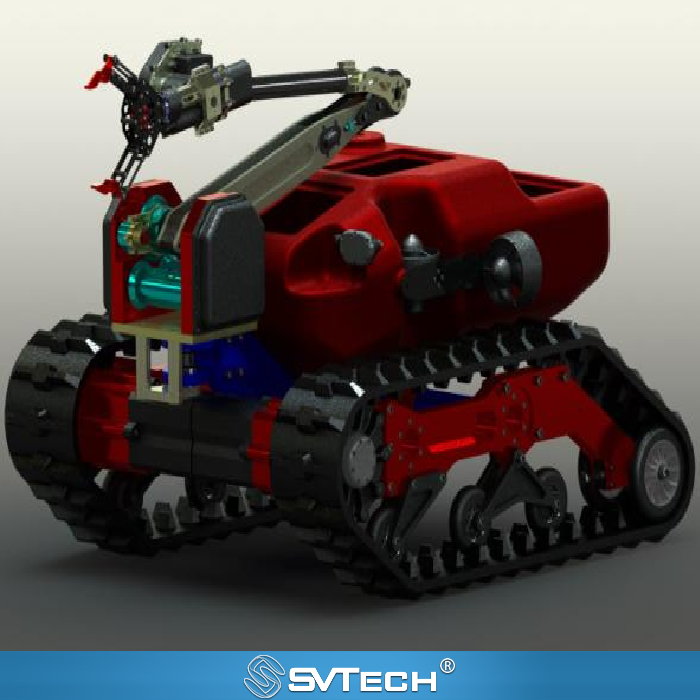
Stairs Are Not an Obstacle: The Holistic Challenge of Robots Traversing Complex Spaces
Step dimensions, slope, landings, width, and edge materials together determine the conditions for passage. Clearing a single step does not prove that the robot can complete a full ascent, turn, and descent.
Truly usable robot capability arises from coordination among mechanics, perception, control, and on-site personnel. Establishing a shared vocabulary around this topic can reduce misunderstandings and rework during later integration. Measure the actual route and verify it against the equipment's permissible range; have a professional team conduct controlled verification; clearly identify areas that cannot be traversed and the recovery method. Never schedule tasks based solely on promotional images.
When the stair landing has insufficient space, even adequate climbing capability may not allow the robot to reorient. Payload or hoses further alter posture and traction.
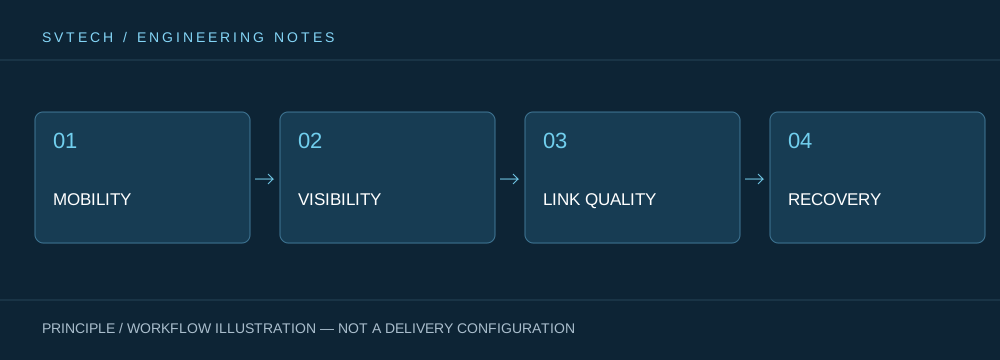
Technical Principles and Engineering Boundaries
Special-purpose robots bring the mobile chassis, actuators, sensors, communications, and human-machine interface into a single on-site system. "Stairs Are Not an Obstacle: The Holistic Challenge of Robots Traversing Complex Spaces" reminds us that product specifications must be understood in the context of ground conditions, payload state, operator position, and task duration. Speed, climbing ability, endurance, or ingress protection are not absolute conclusions detached from the environment; a robot's capability boundary has engineering meaning only under a specified route, obstacles, temperature, and control mode.
Application Scenarios and Implementation Paths
Firefighting, hazardous-environment inspection, industrial inspection, and emergency rescue are the application areas where special-purpose robots deliver the greatest value. Their common goal is to extend human perception and operating reach and, under suitable conditions, reduce the risk of direct approach. Before deployment, the task area, communication conditions, entry and recovery paths, personnel responsibilities, and information handover should all be designed together, so that robot intelligence truly serves on-site decisions rather than merely demonstrating an isolated action.
Project Verification and Continuous Optimization
To bring this technical discussion of "Stairs Are Not an Obstacle: The Holistic Challenge of Robots Traversing Complex Spaces" into real projects, the verification stage should record the configuration version, environmental conditions, measurement positions, and task results together. Measure the actual route and verify it against the equipment's permissible range; have a professional team conduct controlled verification; clearly identify areas that cannot be traversed and the recovery method. Never schedule tasks based solely on promotional images. This information is not supplementary documentation but the shared basis for interpreting results, reproducing performance, and achieving continuous optimization.
Related Support from SV Tech
SV Tech (SVTECH) provides product documentation, project requirement discussions, and configuration boundary checks for special-purpose robots and related industry applications. For topics such as "Stairs Are Not an Obstacle: The Holistic Challenge of Robots Traversing Complex Spaces", you can describe the task conditions, target outcomes, site environment, and existing equipment together; Mr. Liu (+86 18688194199, lhc1983@gmail.com) will assist with the coordination. Specific models, performance, and delivery scope are subject to confirmed documentation and project verification.
Route measurement should not omit the transition zones at the top and bottom. If the robot does not have enough flat surface to adjust its posture after climbing the last step, the task may still fail. For a continuous staircase, the direction of the next flight, communication obstructions, and the holding state after stopping must also be considered; none of these are included in a single step height.
Placing local problems within a complete understanding of the task makes every project step better grounded.
