
Special-purpose robots extend people out of high-risk, hard-to-reach or repetitive work positions. In Control Signals Through Obstacles: How Robot Communications Cope with Real Buildings, what matters is not a single parameter but whether consistent performance can be maintained under varying conditions.
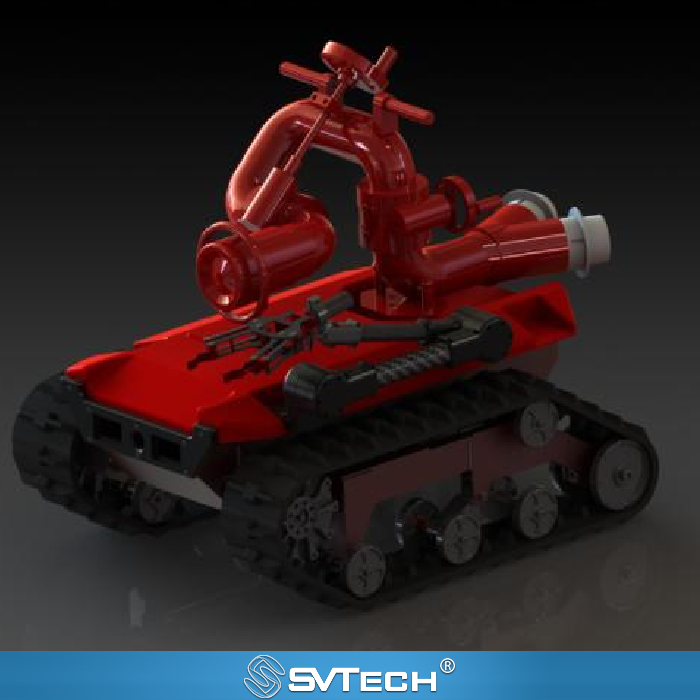
Control Signals Through Obstacles: How Robot Communications Cope with Real Buildings
Walls, metal structures, corners and equipment all alter wireless propagation, so a maximum range measured in open ground cannot represent conditions inside a building. Control and video may also be affected at different times and under different conditions.
Genuinely usable robot capability comes from the coordination of mechanics, perception, control and on-site personnel. This is also an important starting point for judging whether a solution can operate stably over the long term. Test on representative routes and record latency, packet loss and interruptions; verify that the communication configuration is lawful; and accept the system on actual task reliability rather than substituting a one-off long-distance demonstration.
If the image degrades after entering a corner, the answer is not simply to drive through faster. The task should define link-degradation and loss-of-contact procedures in advance.
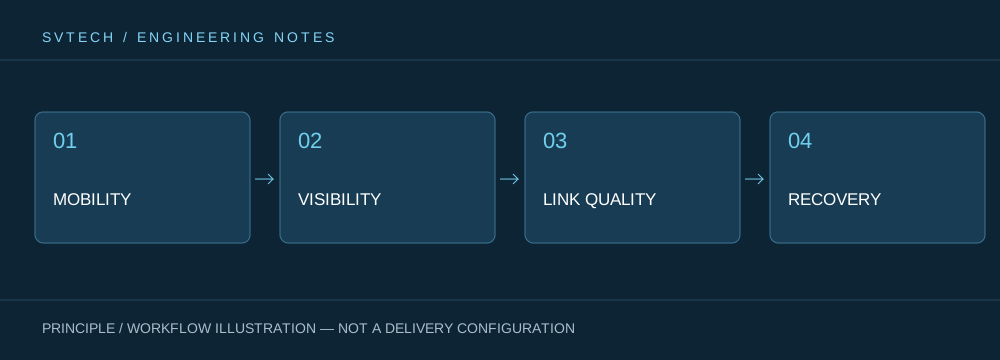
Technical Principles and Engineering Boundaries
Special-purpose robots bring the mobile chassis, actuators, sensors, communications and human-machine interface together into a single on-site system. Control Signals Through Obstacles: How Robot Communications Cope with Real Buildings reminds us that product parameters must be understood in relation to ground conditions, payload state, operator position and task duration. Speed, gradeability, endurance and ingress protection are not absolute conclusions divorced from the environment; a robot's capability boundary has engineering meaning only under a specified route, obstacle set, temperature and control method.
Application Scenarios and Implementation Paths
Firefighting, hazardous-environment inspection, industrial inspection and emergency rescue are the most valuable application areas for special-purpose robots. Their common goal is to extend personnel perception and working range and, under suitable conditions, to reduce the risk of direct approach. Before deployment, the task area, communication conditions, entry and recovery paths, personnel responsibilities and information handover should all be designed together, so that robot intelligence truly serves on-site decisions rather than merely demonstrating a single action.
Project Validation and Continuous Improvement
To ground this technical discussion of Control Signals Through Obstacles: How Robot Communications Cope with Real Buildings in real projects, the validation phase should record configuration version, environmental conditions, measurement positions and task results together. Test on representative routes and record latency, packet loss and interruptions; verify that the communication configuration is lawful; and accept the system on actual task reliability rather than substituting a one-off long-distance demonstration. This information is not supplementary documentation but the shared basis for interpreting results, reproducing performance and driving continuous improvement.
Related Support from SV Tech
Zhuhai SV Tech Co. Ltd. provides product documentation, project requirement discussions and configuration-boundary checks for special-purpose robots and related industry applications. For topics such as Control Signals Through Obstacles: How Robot Communications Cope with Real Buildings, task conditions, target outcomes, site environment and existing equipment can be described together, with Mr. Liu (+86 18688194199, lhc1983@gmail.com) assisting with coordination; specific models, performance and delivery scope are subject to confirmed documentation and project validation.
Test points with clearly defined positions can be set along the planned route, recording the image and control performance at each point. For interruptions, the time of occurrence and recovery should be retained, not merely "connected" or "not connected." If additional communication equipment is used, its model, position and power supply should also form part of the acceptance configuration.
This on-site-oriented understanding is the prerequisite for turning equipment capability into customer value.

