
Special-purpose robots extend people beyond high-risk, hard-to-reach, or repetitive work positions. Understanding the boundaries of "Let the Sensor Smell the Scene: Gas Detection Sampling Location and Response Time" helps bring new technology from demonstration into daily work.
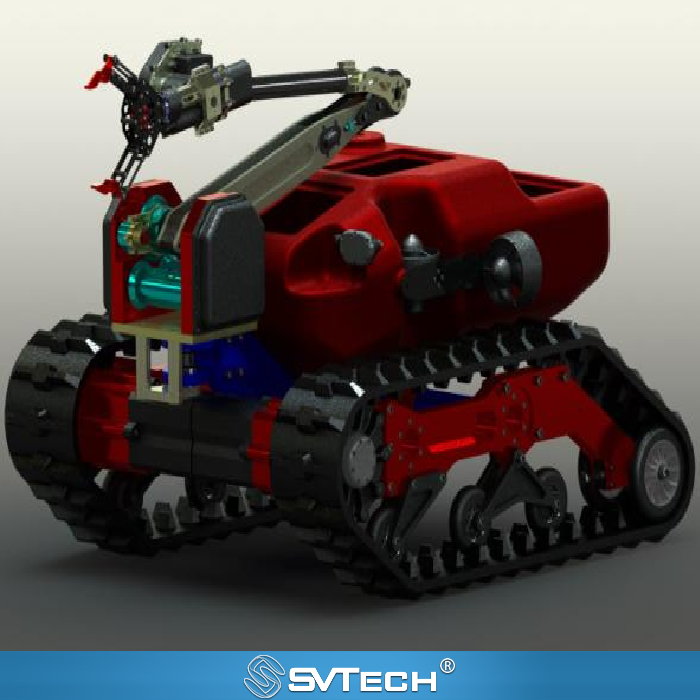
Let the Sensor Smell the Scene: Gas Detection Sampling Location and Response Time
Sensor readings depend on gas type, concentration range, sampling method, location, and response time. Airflow near the chassis, water spray, or contamination may affect results; fitting a probe does not amount to full detection capability.
Truly usable robot capability comes from coordination among mechanics, perception, control, and on-site personnel. The key lies not in a single parameter but in whether consistent performance can be maintained under different conditions. Have a detection specialist confirm sensor suitability, calibration, and maintenance; verify post-installation response and logs; a single reading must not be used as the basis for clearing an environment as safe.
When the robot moves, the sampling point and the displayed time may diverge; some environments also present cross-interference. It must be clear how data are located and interpreted.
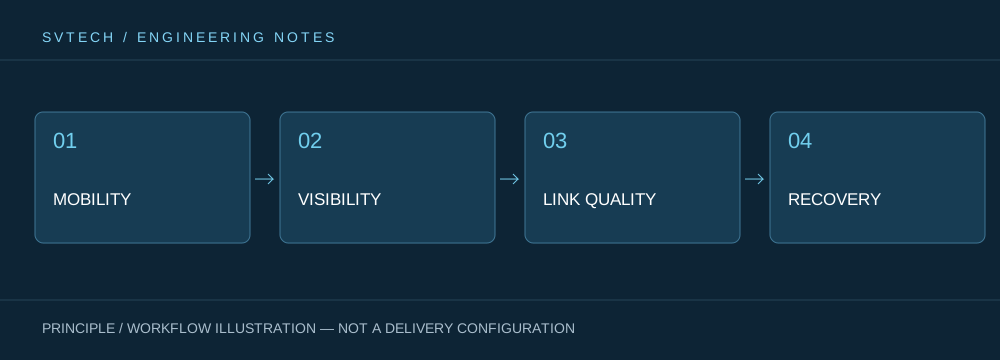
Technical Principles and Engineering Boundaries
Special-purpose robots bring the mobile chassis, actuators, sensors, communications, and human-machine interface into a single on-site system. "Let the Sensor Smell the Scene: Gas Detection Sampling Location and Response Time" reminds us that product specifications must be understood together with ground conditions, payload state, operator position, and task duration. Speed, gradeability, endurance, or ingress protection are not absolute conclusions independent of the environment; only under a specified route, obstacles, temperature, and control method do a robot's capability boundaries take on engineering meaning.
Application Scenarios and Implementation Paths
Firefighting, hazardous-environment inspection, industrial inspection, and emergency response are the most valuable application directions for special-purpose robots. Their common goal is to extend personnel perception and operating range and, under suitable conditions, reduce the risk of direct approach. Before deployment, the task area, communication conditions, entry and recovery paths, personnel responsibilities, and information handover should be designed together, so that robot intelligence truly serves on-site decisions rather than merely demonstrating a single action.
Project Validation and Continuous Optimization
To bring this technical discussion of "Let the Sensor Smell the Scene: Gas Detection Sampling Location and Response Time" into real projects, the validation phase should record the configuration version, environmental conditions, measurement locations, and task results together. Have a detection specialist confirm sensor suitability, calibration, and maintenance; verify post-installation response and logs; a single reading must not be used as the basis for clearing an environment as safe. This information is not supplementary documentation but the shared basis for interpreting results, reproducing performance, and continuous optimization.
Related Support from SV Tech
Zhuhai SV Tech Co. Ltd. (SVTECH) provides product documentation, project requirement communication, and configuration boundary checks for special-purpose robots and related industry applications. For topics such as "Let the Sensor Smell the Scene: Gas Detection Sampling Location and Response Time," task conditions, target outcomes, on-site environment, and existing equipment can be described together, with Mr. Liu (+86 18688194199, lhc1983@gmail.com) assisting with coordination; specific models, performance, and delivery scope are subject to confirmed documentation and project validation.
Data records should preferably include sampling point location, time, and robot motion. Stopping, turning, and moving may correspond to different sampling states, and post-hoc analysis requires this context. Sensor calibration, response verification, and whole-machine suitability are separate items; passing probe calibration does not justify omitting a system check.
Placing a local issue within a complete task understanding makes every project step better grounded.
