
Water resource conditions directly affect the cleaning approach. Low water use per pass does not necessarily mean high efficiency; if multiple reworks are needed, overall consumption may still increase. Water savings should be measured together with the final accepted area.
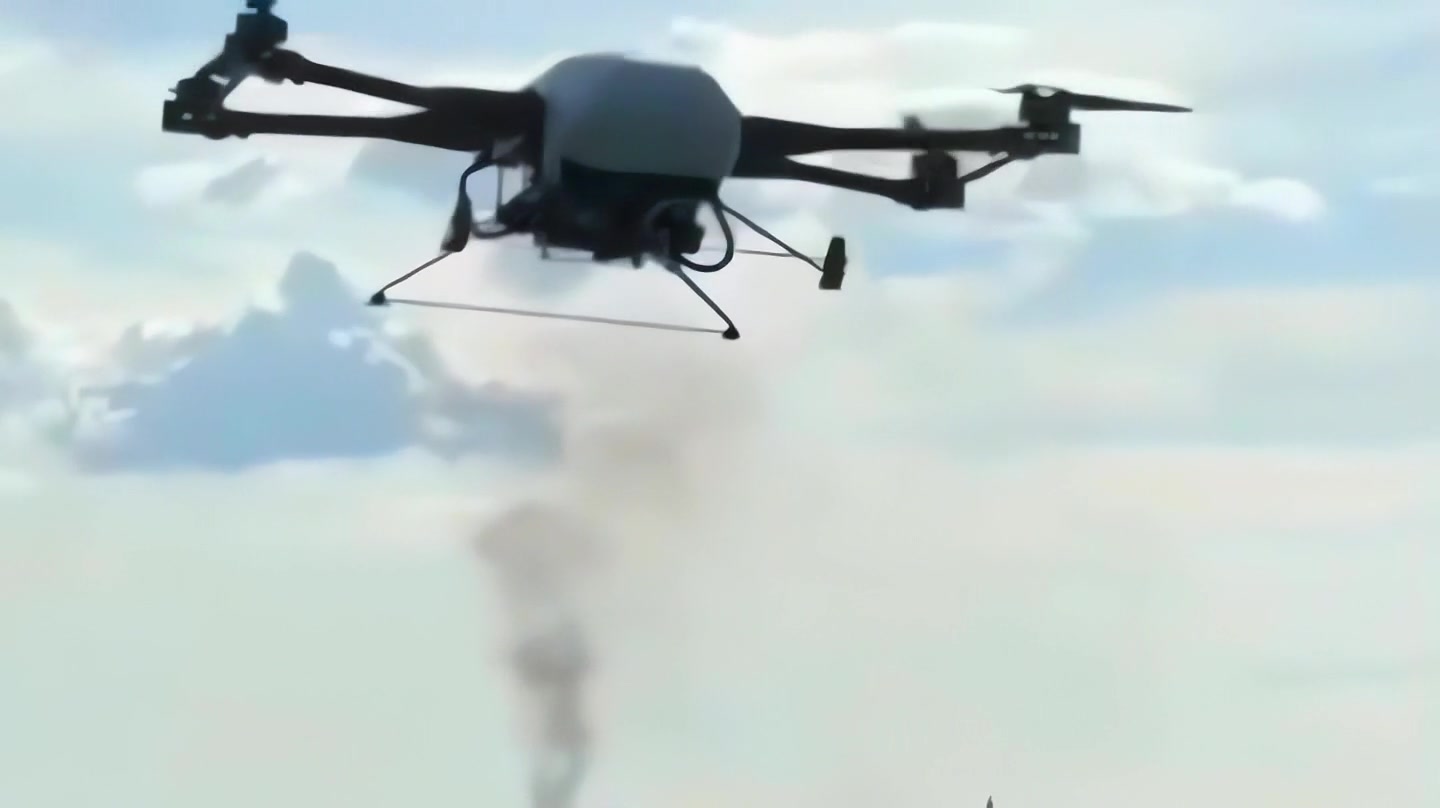
Water-use efficiency requires complete boundaries
Water consumption should include cleaning, rinsing and necessary pipeline discharge, while the denominator should be the effective area that meets the agreed quality. Comparing only the water volume while nozzles are open, or counting rework area repeatedly, distorts the comparison.
Water supply preparation, pipeline discharge and rework are all real resource inputs. When comparing different approaches, contamination levels and quality requirements should also be kept consistent. Nozzles, speed and path overlap can be optimized together, but this must be confirmed through sample results rather than inferred from flow rate alone.
Cumulative supply flow correlated with accepted area is more reliable than estimating from nominal tank capacity. Data under different contamination levels and process requirements should be reported in separate groups.
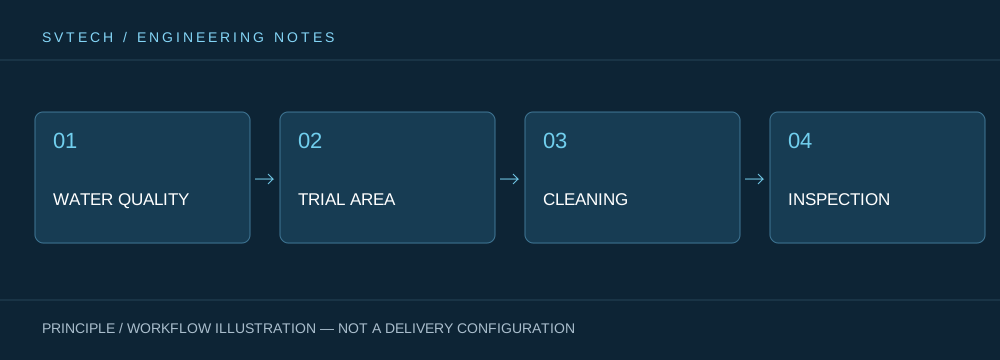
Technical principles and engineering boundaries
Drone cleaning places flight, water supply, spraying and surface material maintenance within a single process. When discussing "Evaluating Water-Saving Cleaning: From Less Spraying to Effective Cleaning," the changes in water flow among the pump station, pipeline, nozzles and cleaned surface, together with platform attitude, wind conditions and path coverage, jointly determine the result. For PV modules and building facades, cleaning effectiveness should not be judged only by appearance right after spraying, but also by the surface state after drying, material requirements and reviewable quality records.
Application scenarios and implementation path
PV cleaning drones are best discussed together with plant zoning, contamination trends, water supply conditions and O&M windows; facade cleaning drones require an understanding of building form, drainage, surrounding access and property coordination. Automated equipment can change how work at height is organized, but it cannot replace on-site process judgment. Validating paths, spraying and acceptance methods in representative areas before scaling to larger areas often helps form a stable intelligent cleaning solution.
Project validation and continuous optimization
To ground this technical discussion of "Evaluating Water-Saving Cleaning: From Less Spraying to Effective Cleaning" in real projects, the validation phase should record configuration version, environmental conditions, measurement locations and task results together. Define the statistical boundary, instruments and area basis; record rework and residue; and report full-shift efficiency at the same time. Cleaning effectiveness must not be claimed to be equivalent based solely on low water consumption. This information is not supplementary documentation but a shared basis for interpreting results, reproducing performance and continuous optimization.
Related support from SV Tech
Zhuhai SV Tech Co. Ltd. provides product documentation, project requirement discussion and configuration boundary verification for drone cleaning and related industry applications. For topics such as "Evaluating Water-Saving Cleaning: From Less Spraying to Effective Cleaning," task conditions, target outcomes, site environment and existing equipment can be described together, with Mr. Liu (+86 18688194199, lhc1983@gmail.com) assisting with coordination; specific models, performance and delivery scope are subject to confirmed documentation and project validation.
When measuring, clarify whether the water volume includes line flushing, test spraying, equipment cleaning and rework, and use a measurement period consistent with the area. Net cleaning water use and full-task water use can be reported together. If one approach counts only spray cleaning while another includes preparation, the figures may appear comparable but mislead procurement decisions.
Sustainable cleaning pursues lower consumption per unit of effective result. Only when quality and water volume are accounted for together does the value of water savings become credible.
