
Ground-mounted PV plants are not always flat, regular rectangles. Slopes, access roads and array height differences all change how flights, water supply and repositioning are carried out. Cleaning routes therefore need to reflect the site's three-dimensional structure.
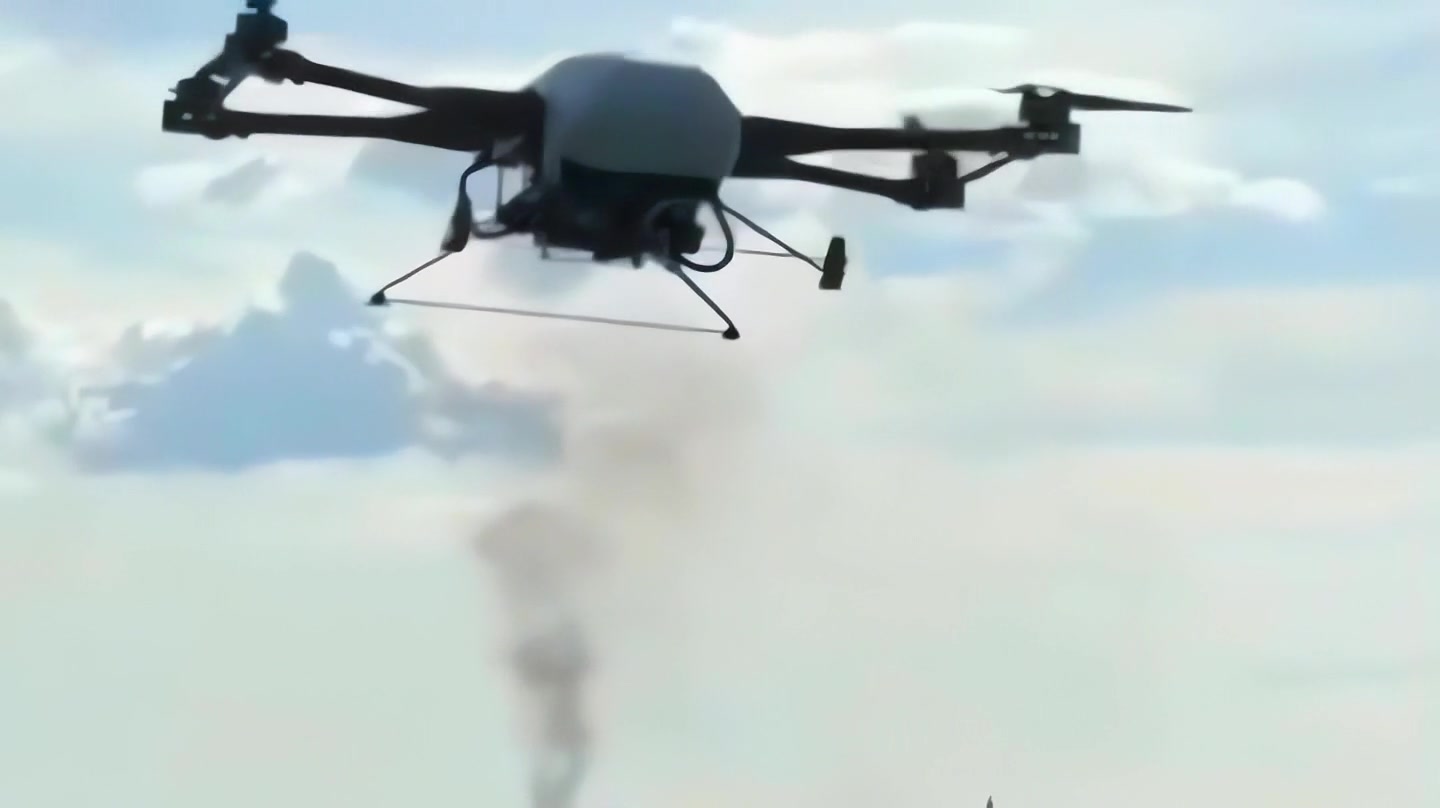
Terrain affects more than flight altitude
Slopes, drainage ditches and array height differences change hose routing, personnel movement and working distances. Estimating shift productivity on the basis of a flat site can underestimate the time needed for repositioning and re-setup.
Water source distance and elevation differences change supply conditions, while access routes affect equipment movement. A large contiguous cleaning area may in practice be split by terrain into several work units. Organizing zones according to the site's structure can reduce unproductive repositioning and bring resource allocation closer to actual requirements.
Adjacent arrays may look close together, yet the ground-level passage between them may require a long detour. Zoning should follow the routes actually available, not straight-line distances measured on a satellite image.
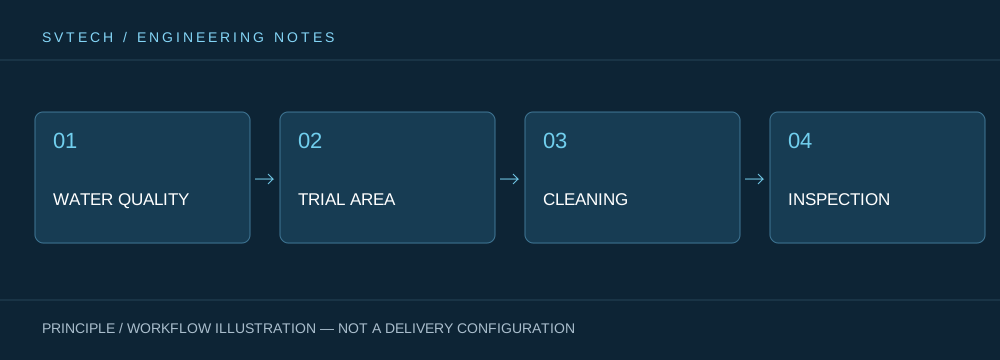
Technical principles and engineering boundaries
Drone cleaning brings flight, water supply, spraying and surface material care into a single process. When discussing "PV Cleaning on Undulating Terrain: Adapting Paths to Array Layout and Ground Conditions", the behavior of water flow between pump station, hoses, nozzles and the cleaned surface combines with platform attitude, wind conditions and path coverage to determine the outcome. For PV modules and building facades, cleaning effectiveness should not be judged only by appearance while the surface is still wet; it should also take into account the surface state after drying, material requirements and reviewable quality records.
Application scenarios and implementation paths
PV cleaning drones are best discussed alongside plant zoning, soiling trends, water supply conditions and O&M windows; facade cleaning drones likewise require an understanding of building form, drainage, surrounding access and property coordination. Automated equipment can change how work at height is organized, but it cannot replace on-site process judgment. Validating paths, spraying and acceptance methods in a representative area before scaling to larger areas generally helps establish a stable intelligent cleaning solution.
Project validation and continuous optimization
To ground this technical discussion of "PV Cleaning on Undulating Terrain: Adapting Paths to Array Layout and Ground Conditions" in real projects, the validation phase should record configuration version, environmental conditions, measurement locations and task results together. Survey slopes and access routes and confirm ground equipment reachability; record deployment and repositioning times by zone; revise productivity estimates after trial runs. Efficiency should be calculated on a whole-shift basis. This information is not supplementary documentation but a shared basis for interpreting results, reproducing performance and driving continuous optimization.
Related support from SV Tech
Zhuhai SV Tech Co. Ltd (SVTECH) provides product documentation, project requirement discussions and configuration boundary checks for drone cleaning and related industry applications. For topics such as "PV Cleaning on Undulating Terrain: Adapting Paths to Array Layout and Ground Conditions", task conditions, target outcomes, site environment and existing equipment can be described together, with Mr. Liu (+86 18688194199, lhc1983@gmail.com) assisting with coordination; specific models, performance and delivery scope are subject to confirmed documentation and project validation.
A survey map can mark elevation differences, roads, slope faces and water supply points and estimate the workload of repositioning and hose re-setup. Two sites of equal area may differ markedly in efficiency because of differences in accessibility. Quotations should estimate actual cleaning and on-site movement separately, rather than relying only on area-based speed figures from a flat test site.
Adapting to terrain is part of efficiency. Only when routes, water supply and ground support are planned together can cleaning equipment better serve complex sites.
