
Cleaning drones are bringing high-elevation and large-area maintenance into more precisely organized operations. In "Spray Reaction Forces and Flight Stability: Dynamic Balance in Cleaning Drones," the key lies not in any single parameter but in whether consistent performance can be maintained under varying conditions.
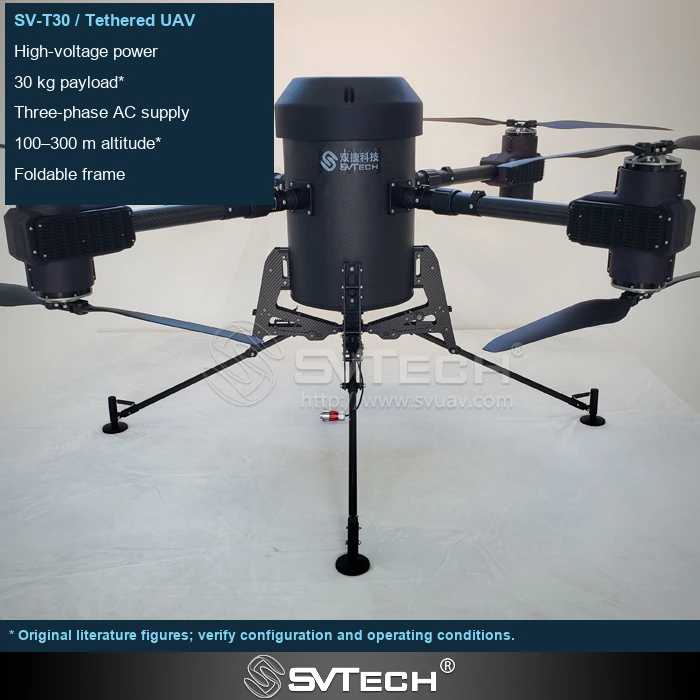
Spray Reaction Forces and Flight Stability: Dynamic Balance in Cleaning Drones
When water flow changes momentum, it produces a reaction force; nozzle orientation and mounting position determine the resulting forces and moments on the airframe. Spray activation and shutoff can also introduce transient changes, so unloaded flight is not representative of the cleaning state.
Surface maintenance is not merely about removing dirt; it is about finding a reliable balance among materials, resources and on-site workflow. This is also an important angle for judging whether a solution can operate stably over the long term. Validate under the final nozzle and water supply conditions, recording the activation, shutoff and turning processes; inspect the mounting structures; any nozzle modification should update the configuration and be re-tested.
When left and right nozzle flow rates differ, the platform may require additional attitude compensation. If higher flow is used to pursue greater coverage, payload, power and control limits must also be re-checked.
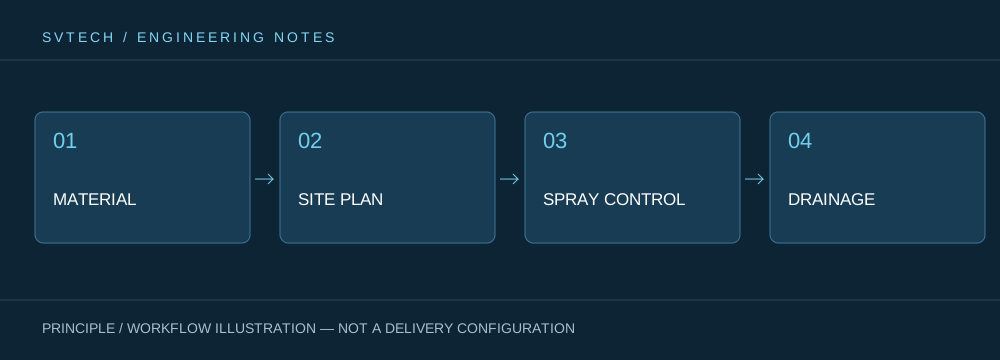
Technical Principles and Engineering Boundaries
Drone cleaning combines flight, water supply, spraying and surface material maintenance into a single process. When discussing "Spray Reaction Forces and Flight Stability: Dynamic Balance in Cleaning Drones," the changes in water flow among the pump station, piping, nozzles and the surface being cleaned, together with the flight platform's attitude, wind conditions and path coverage, jointly determine the outcome. For PV modules and building facades, cleaning effectiveness should not be judged only by appearance immediately after spraying; it should also account for the surface state after drying, material requirements and reviewable quality records.
Application Scenarios and Implementation Paths
PV cleaning drones are best discussed alongside plant zoning, soiling trends, water supply conditions and O&M windows; facade cleaning drones require an understanding of building form, drainage, surrounding access and property coordination. Automated equipment can change how high-elevation work is organized, but it cannot replace on-site process judgment. Validating paths, spraying and acceptance methods in a representative area before scaling to larger surfaces often helps establish a stable intelligent cleaning solution.
Project Validation and Continuous Optimization
To ground this technical discussion of "Spray Reaction Forces and Flight Stability: Dynamic Balance in Cleaning Drones" in real projects, the validation phase should record configuration versions, environmental conditions, measurement positions and task results together. Validate under the final nozzle and water supply conditions, recording the activation, shutoff and turning processes; inspect the mounting structures; any nozzle modification should update the configuration and be re-tested. This information is not supplementary documentation but the shared basis for interpreting results, reproducing performance and driving continuous optimization.
Related Support from SV Tech
Zhuhai SV Tech Co. Ltd. provides product documentation, project requirement discussions and configuration boundary checks for drone cleaning and related industry applications. For topics such as "Spray Reaction Forces and Flight Stability: Dynamic Balance in Cleaning Drones," task conditions, target outcomes, site environment and existing equipment can be described together, with Mr. Liu (+86 18688194199, lhc1983@gmail.com) assisting with coordination; specific models, performance and delivery scope are subject to confirmed documentation and project validation.
Changes in flow rate, spray direction and pressure alter reaction forces, and line movement can also affect attitude. Integration validation should cover the water-on, steady-spray and water-off processes, not just continuous spraying. Mechanical installation and control parameters should be confirmed by the equipment provider; do not arbitrarily raise pump pressure on site to achieve greater spray distance.
This field-oriented understanding is the prerequisite for turning equipment capability into customer value.
