
Dust and sand bring not only shading but also particles of varying size and hardness. When these particles meet the water stream, brushes or the surface, they can act in different ways. Cleaning methods therefore need to account for the physical characteristics of the contamination.
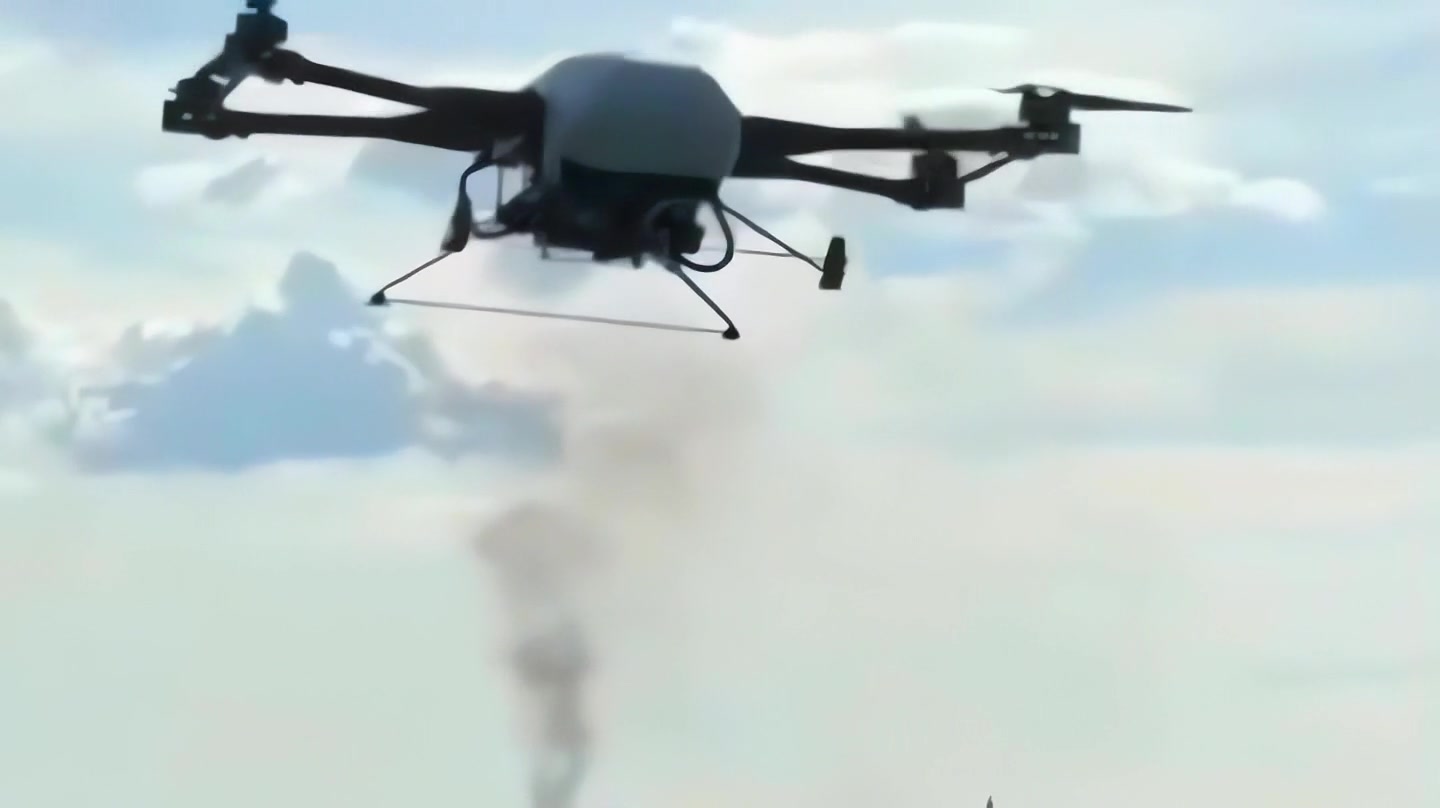
Particle removal must also protect the material surface
Particles can cause abrasion as they move across the surface or contact tools. Cleaning effectiveness is not determined by spray intensity alone; it also depends on pre-treatment, the particle removal path and the methods the material can tolerate.
Adding friction or localized impact before the process is confirmed may introduce additional risk. The methods the material allows, the state of the particles and trial-cleaning results should jointly determine the procedure. Dusty environments also affect filters, nozzles and ground equipment, so maintenance must cover the entire system.
If recirculated water is used, insufficient filtration may carry particles back onto the surface; if contact tools are used, check whether they trap sand grains. A clean appearance does not mean the process is wear-free.
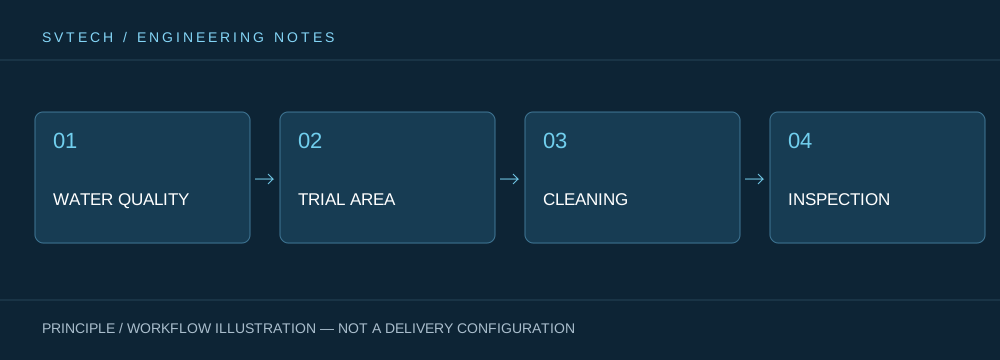
Technical principles and engineering boundaries
Drone cleaning brings flight, water supply, spraying and surface material care into a single process. When discussing "PV Maintenance in Dusty Environments: How Particles Affect the Cleaning Process", the behavior of the water stream between the pump station, hoses, nozzles and the cleaned surface, together with the flight platform's attitude, wind conditions and path coverage, jointly determine the outcome. For PV modules and building facades, cleaning quality should not be judged only by the appearance right after spraying; it should also consider the surface state after drying, material requirements and reviewable quality records.
Application scenarios and implementation path
PV cleaning drones are best discussed alongside plant zoning, contamination trends, water supply conditions and O&M windows; facade cleaning drones also require an understanding of building geometry, drainage, surrounding access and property coordination. Automated equipment can change how work at height is organized, but it cannot replace on-site process judgment. Validating paths, spraying and acceptance methods in a representative area before scaling to larger areas often helps establish a stable intelligent cleaning solution.
Project validation and continuous improvement
To ground this technical discussion of "PV Maintenance in Dusty Environments: How Particles Affect the Cleaning Process" in real projects, the validation phase should record configuration versions, environmental conditions, measurement locations and task results together. Follow the module manufacturer's procedures and verify filter and tool condition; run small-scale trials and record surface changes; stop promptly if anomalies appear, and avoid rolling out unvalidated processes across the entire site. This information is not supplementary documentation but the shared basis for interpreting results, reproducing performance and continuously improving.
Related support from SV Tech
Zhuhai SV Tech Co. Ltd. (SVTECH) provides product documentation, project requirement discussions and configuration boundary checks for drone cleaning and related industry applications. For topics such as "PV Maintenance in Dusty Environments: How Particles Affect the Cleaning Process", you can describe the task conditions, target outcomes, site environment and existing equipment together, and Mr. Liu (+86 18688194199, lhc1983@gmail.com) will assist with coordination; specific models, performance and delivery scope are subject to confirmed documentation and project validation.
Particle hardness and adhesion state affect process selection. Trial cleaning on sample panels should check for scratches and confirm whether mechanical contact is permitted. Sites with persistent airborne dust should also schedule cleaning windows and maintain equipment filters; higher speed or pressure does not necessarily reduce wear risk and should be optimized within the limits the material allows.
A solution suited to dusty environments should address both cleaning effectiveness and surface protection. Treating particles as a process variable makes equipment use more targeted.
