
Drones can change how crews approach PV modules, but water supply, takeoff and landing, and personnel movement still happen on site. The efficiency of a rooftop project depends on whether the aerial path can be coordinated with building use and ground resources.
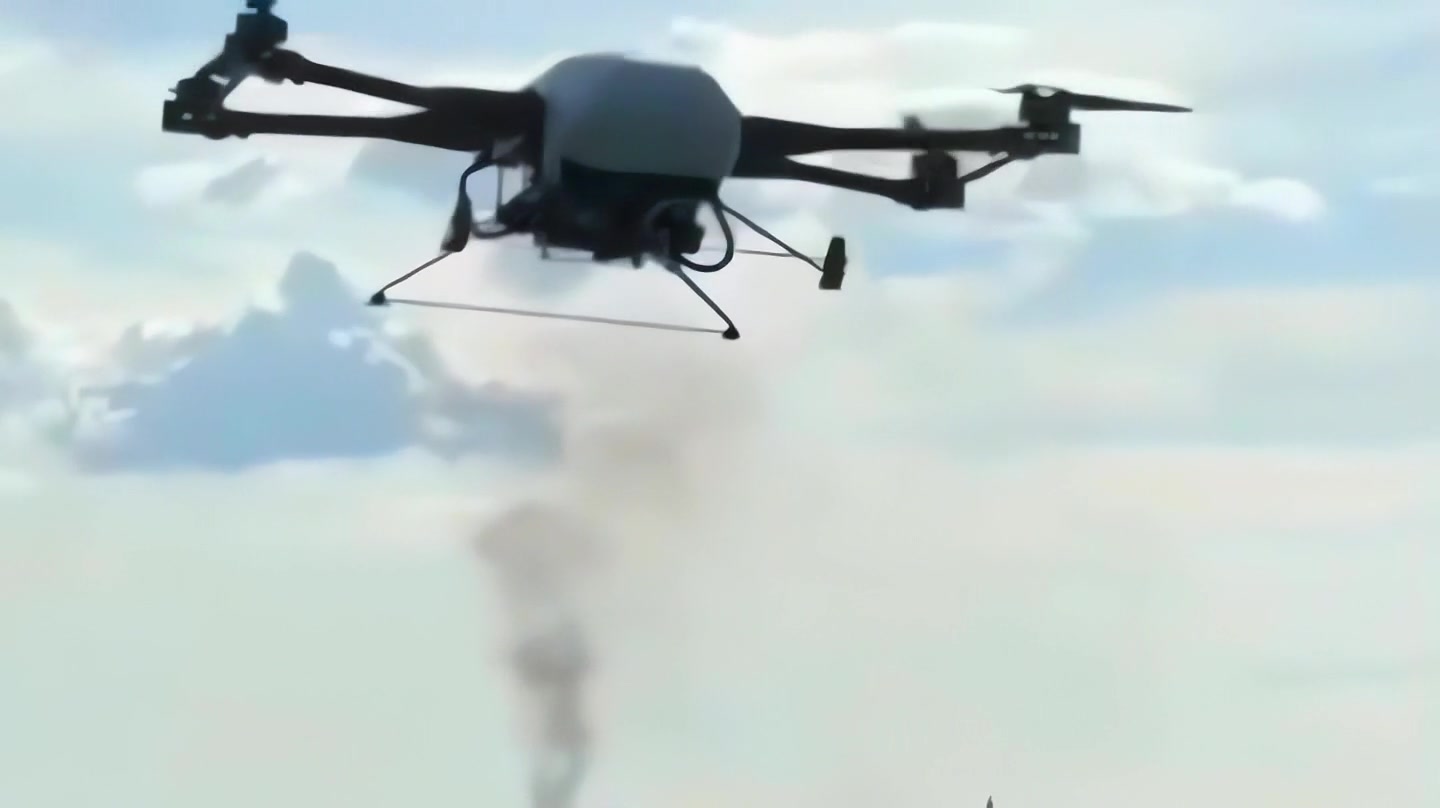
Spatial Organization Sets the Work Rhythm
Drones reduce some of the need for manual access to modules, but water supply, equipment layout, isolation, and exception handling still require access routes. Roof load-bearing capacity, edges, and equipment-dense areas also affect crew operations.
Rooftop equipment, access routes, and drainage affect task scheduling, while material handling and water supply distances also consume time. Early communication can identify suitable work windows and reduce overlap with production and logistics. The drone's flexibility translates into real advantage only once these conditions are clear.
If water hoses pass through narrow passages or equipment racks, the flight area may be open, but the actual task can still be constrained by dragging and wear. The entire path from the starting point to the work face should be verified.
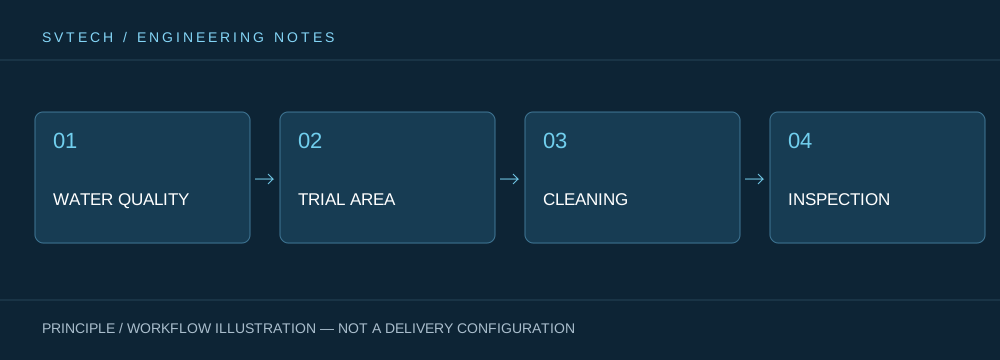
Technical Principles and Engineering Boundaries
Drone cleaning brings flight, water supply, spraying, and surface material maintenance into a single process. When discussing "Drone Cleaning on Commercial and Industrial Rooftops: Designing Aerial Operations and Ground Organization Together," the changes in water flow among the pump station, piping, nozzle, and cleaned surface, together with the flight platform's attitude, wind conditions, and path coverage, jointly determine the outcome. For PV modules and building facades, cleaning effectiveness should not be judged solely by the appearance immediately after spraying, but should also consider the surface state after drying, material requirements, and reviewable quality records.
Application Scenarios and Implementation Paths
PV cleaning drones are best discussed alongside plant zoning, soiling trends, water supply conditions, and O&M windows; facade cleaning drones require simultaneous understanding of building geometry, drainage, surrounding access, and property coordination. Automated equipment can change how work at height is organized, but it cannot replace on-site process judgment. Validating paths, spraying, and acceptance methods in a representative area before scaling to a larger area is often more conducive to forming a stable intelligent cleaning solution.
Project Validation and Continuous Optimization
To ground this technical discussion on "Drone Cleaning on Commercial and Industrial Rooftops: Designing Aerial Operations and Ground Organization Together" in real projects, the validation phase should record the configuration version, environmental conditions, measurement locations, and task results together. On-site professionals should confirm structural and access requirements; map equipment and piping layouts; and preserve exit and rescue routes. Unmanned equipment cannot replace on-site safety organization. This information is not supplementary documentation but the shared basis for interpreting results, reproducing performance, and continuously optimizing.
Related Support from SV Tech
SV Tech (SVTECH) provides product documentation, project requirement discussions, and configuration boundary verification for drone cleaning and related industry applications. For topics such as "Drone Cleaning on Commercial and Industrial Rooftops: Designing Aerial Operations and Ground Organization Together," task conditions, target outcomes, site environment, and existing equipment can be described together, with Mr. Liu (+86 18688194199, lhc1983@gmail.com) assisting with coordination; specific models, performance, and delivery scope are subject to confirmed documentation and project validation.
Roof planning should specify equipment layout, water and power supply, maintenance access, and no-entry areas. Drones reduce some manual access needs, but piping management and emergency handling remain on site. The owner should confirm roof structure and access restrictions to avoid occupying critical facility space for temporary water access or cabling.
Rooftop cleaning is a complete on-site service. Only by connecting aerial capabilities with ground processes can customers receive a smooth delivery experience.
