
Whether cleaning expenditure is justified depends on soiling losses, operating costs and plant operating conditions. A flattering payback figure often conceals assumptions about frequency of use and revenue; only by laying these assumptions open does the number become useful for decisions.
Sensitive variables deserve separate scrutiny
Annualizing the short-term gain from a single trial wash tends to overstate the benefit. Re-soiling, rainfall, electricity price, available working hours and maintenance costs all affect the result; it is not enough to count only equipment price and theoretical power recovery.
Results can differ markedly when electricity price, the duration of effective improvement and annual workload change. Equipment depreciation, maintenance and personnel input should also enter the model. Comparing different scenarios helps customers understand which conditions determine whether a project holds up, rather than treating a single estimate as a commitment.
Three scenarios can be built — conservative, neutral and higher utilization — each listing recovered energy, operating cost and equipment utilization count. Where data are lacking, ranges should be given rather than a precise payback date.
Technical principles and engineering boundaries
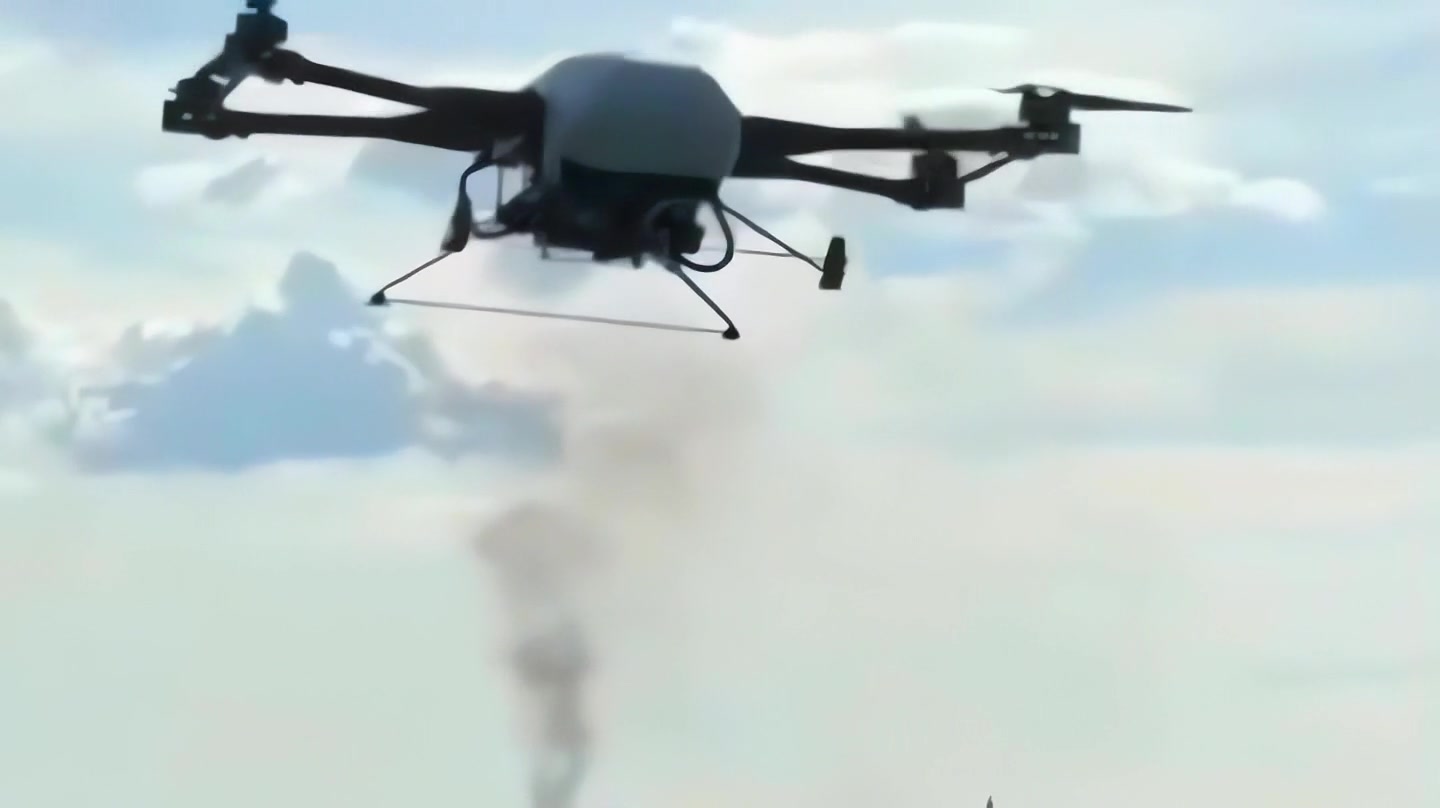
Drone cleaning places flight, water supply, spraying and surface material care within a single process. When discussing "The Economics of PV Cleaning: Making the Assumptions Behind ROI Calculations Visible", the behavior of water flow between pump station, piping, nozzles and the cleaned surface, together with platform attitude, wind conditions and path coverage, jointly determine the outcome. For PV modules and building facades, cleaning effectiveness should not be judged only by appearance immediately after spraying, but also by the surface state after drying, material requirements and a reviewable quality record.
Application scenarios and implementation path
PV cleaning drones are best discussed together with plant zoning, soiling trends, water supply conditions and O&M windows; facade cleaning drones, in turn, require an understanding of building form, drainage, surrounding access and property coordination. Automated equipment can change how work at height is organized, but it cannot replace on-site process judgment. Verifying path, spraying and acceptance methods in a representative area first, then extending to a larger area, generally helps form a stable intelligent cleaning solution.
Project verification and continuous improvement
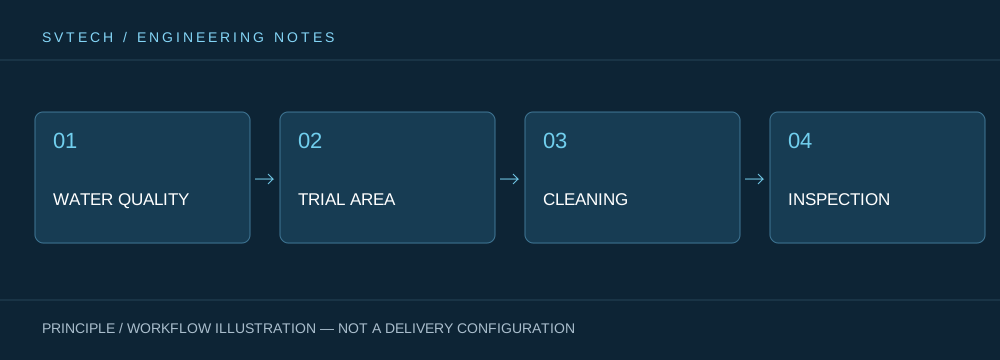
To ground this technical discussion of "The Economics of PV Cleaning: Making the Assumptions Behind ROI Calculations Visible" in real projects, the verification stage should record configuration version, environmental conditions, measurement locations and task results together. Use real plant records to update assumptions; include water treatment, personnel, transport and downtime; and state the boundaries of benefit attribution. Procurement decisions should rest on a traceable model. This information is not supplementary documentation but the shared basis for interpreting results, reproducing performance and continuously improving.
Related support from Zhuhai SV Tech Co. Ltd.
Zhuhai SV Tech Co. Ltd. provides product documentation, project requirement discussions and configuration boundary checks for drone cleaning and related industry applications. For topics such as "The Economics of PV Cleaning: Making the Assumptions Behind ROI Calculations Visible", describe the task conditions, target outcomes, site environment and existing equipment together, and Mr. Liu (+86 18688194199, lhc1983@gmail.com) will assist with coordination; specific models, performance and delivery scope are subject to confirmed documentation and project verification.
Calculations can separately list electricity price, soiling loss assumptions, duration of effective improvement, task cost and equipment utilization. Where benefits have not yet been measured, a sensitivity analysis should be provided rather than only the most optimistic payback month. Customers can first obtain data from a small-scale project before deciding whether to expand equipment procurement and the annual cleaning scope.
Economic analysis need not be complex, but it must be transparent. Only when assumptions can be adjusted and results reviewed can a cleaning solution better serve investment decisions.
Sources
- NREL / Best Practices for Operation and Maintenance of Photovoltaic and Energy Storage Systems, 3rd Edition
