
Cleaning drones are bringing high-elevation and large-area maintenance into more precisely organized operations. The Boundaries of Water Mist: How Facade Drone Cleaning Accounts for the Surrounding Environment is also an important starting point for judging whether a solution can operate stably over the long term.
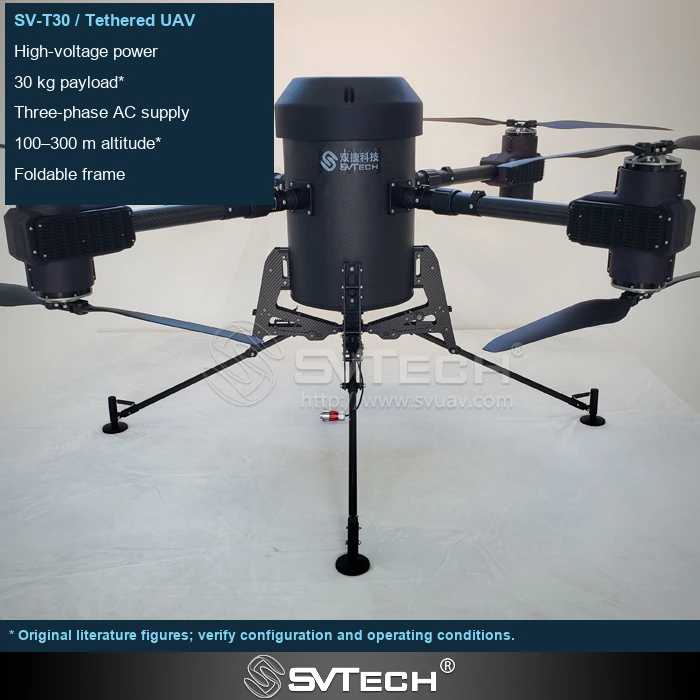
The Boundaries of Water Mist: How Facade Drone Cleaning Accounts for the Surrounding Environment
Spray is affected by wind, spray pattern and distance, and may reach vehicles, pedestrian walkways or nearby equipment. A clean target facade does not mean the impact on the entire site is under control; boundaries should include drift and drainage.
Surface maintenance is not only about removing stains; it is about finding a reliable balance among materials, resources and site rhythm. It appears to concern a single component, but in practice it affects the pace and quality of the entire service process. Survey sensitive areas and public flow, and set isolation and stop conditions according to site requirements; record wind conditions and spray settings; confirm vehicle, door/window and equipment protection arrangements with property management.
Local wind at building corners may differ from ground measurements. When increased drift is observed, it is not advisable to rely on ad hoc operator adjustments to continue and complete all areas.
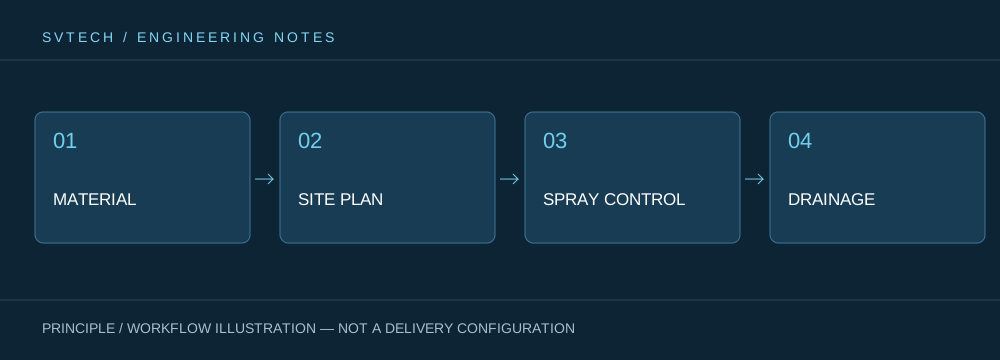
Technical Principles and Engineering Boundaries
Drone cleaning integrates flight, water supply, spraying and surface material maintenance into a single process. When discussing "The Boundaries of Water Mist: How Facade Drone Cleaning Accounts for the Surrounding Environment," the changes in water flow among the pump station, piping, nozzles and the surface being cleaned, together with the flight platform's attitude, wind conditions and path coverage, jointly determine the outcome. For PV modules and building facades, cleaning effectiveness should not be judged only by appearance immediately after spraying, but also by the surface state after drying, material requirements and reviewable quality records.
Application Scenarios and Implementation Paths
PV cleaning drones are best discussed together with plant zoning, soiling trends, water supply conditions and O&M windows; curtain wall cleaning drones, meanwhile, require an understanding of building geometry, drainage, surrounding traffic and property coordination. Automated equipment can change how high-elevation work is organized, but it cannot replace on-site process judgment. Validating paths, spraying and acceptance methods in representative areas before expanding to larger areas often helps form a stable intelligent cleaning solution.
Project Validation and Continuous Optimization
To ground this technical discussion of "The Boundaries of Water Mist: How Facade Drone Cleaning Accounts for the Surrounding Environment" in real projects, the validation phase should record configuration versions, environmental conditions, measurement locations and task results together. Survey sensitive areas and public flow, and set isolation and stop conditions according to site requirements; record wind conditions and spray settings; confirm vehicle, door/window and equipment protection arrangements with property management. This information is not supplementary documentation but the shared basis for interpreting results, reproducing performance and continuous optimization.
Related Support from SV Tech
SV Tech provides product documentation, project requirement communication and configuration boundary verification for drone cleaning and related industry applications. For topics such as "The Boundaries of Water Mist: How Facade Drone Cleaning Accounts for the Surrounding Environment," task conditions, target outcomes, site environment and existing equipment can be described together, with Mr. Liu (+86 18688194199, lhc1983@gmail.com) assisting with coordination; specific models, performance and delivery scope are subject to confirmed documentation and project validation.
The plan should identify locations that may be affected, such as the public, vehicles, nearby equipment and open windows, and set control measures in conjunction with wind direction. The water-mist range may be larger than the actual cleaning area. Coordinate timing and isolation with the site owner before cleaning; the fact that the aircraft will not collide does not mean the operational impact is already controllable.
Only by continuously accumulating this experience can teams make similar tasks increasingly reliable.
