
The taller the building, the greater the elevation the water flow must overcome, and pipe resistance also consumes part of the energy. A complete pressure budget therefore exists between the ground pump and the aerial nozzle.
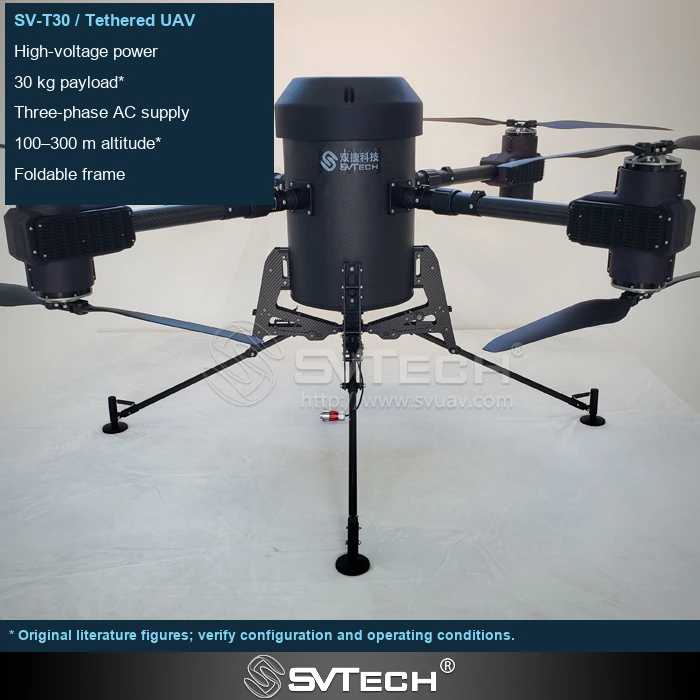
Elevation and flow rate must be considered together
Lifting water to a higher position requires overcoming gravity, and pipe friction and fitting losses consume additional pressure. Pump outlet parameters do not equal the conditions at the elevated nozzle; pipe diameter and flow rate also affect the result.
Static head describes the demand of lifting water, while along-the-run losses vary with pipe diameter, length and flow rate. The nozzle also needs suitable operating conditions to produce the intended spray. Simply choosing a larger pump does not automatically solve all problems; pipe layout and the water hose burden the platform can bear are equally important.
The same pump may perform well in a ground spray test but behave differently once connected to a long hose and raised. Calculations should be built on the actual height and piping, then verified by measurement, rather than simply increasing pump pressure.
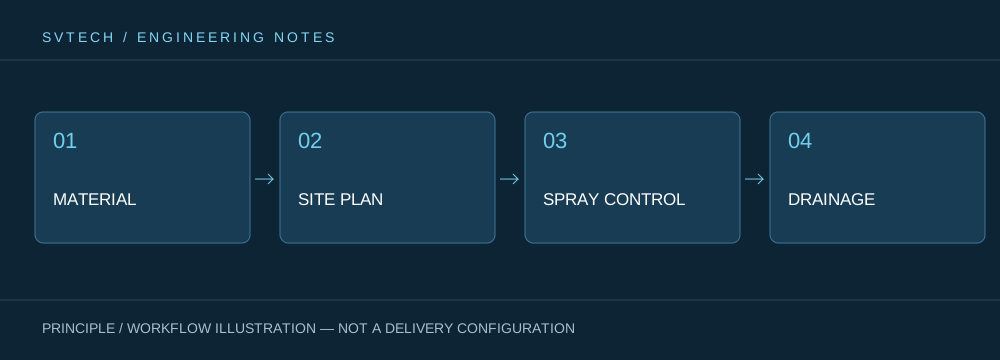
Technical principles and engineering boundaries
Drone cleaning brings flight, water supply, spraying and surface material maintenance into a single process. When discussing "How Water Reaches Heights: Energy Distribution in Cleaning Drone Water Supply Systems," the changes in water flow between the pump station, hose, nozzle and the surface being cleaned, together with the flight platform's attitude, wind conditions and path coverage, jointly determine the result. For PV modules and building facades, cleaning effectiveness should not be judged only by appearance immediately after spraying, but also by the surface state after drying, material requirements and reviewable quality records.
Application scenarios and implementation paths
PV cleaning drones are best discussed together with plant zoning, soiling trends, water supply conditions and O&M windows; facade cleaning drones require an understanding of building form, drainage, surrounding access and property coordination. Automated equipment can change how work at height is organized, but it cannot replace on-site process judgment. Validating paths, spraying and acceptance methods in a representative area first, then extending to larger areas, often helps build a stable intelligent cleaning solution.
Project validation and continuous optimization
To ground this technical discussion of "How Water Reaches Heights: Energy Distribution in Cleaning Drone Water Supply Systems" in real projects, the validation phase should record configuration version, environmental conditions, measurement locations and task results together. Define nozzle requirements, hose length, hose diameter and height; check the pump curve against the system operating point; confirm that all components can withstand the pressure and are protected. Selection is determined by the complete water supply scheme. This information is not supplementary documentation but the shared basis for interpreting results, reproducing performance and continuous optimization.
Related support from SV Tech
Zhuhai SV Tech Co. Ltd. provides product documentation, project requirement discussions and configuration boundary checks for drone cleaning and related industry applications. For topics such as "How Water Reaches Heights: Energy Distribution in Cleaning Drone Water Supply Systems," describe the task conditions, target outcomes, site environment and existing equipment together, and Mr. Liu (+86 18688194199, lhc1983@gmail.com) will assist with coordination; specific models, performance and delivery scope are subject to confirmed documentation and project validation.
Water must overcome static head across the elevation difference, and there are also along-the-run and local losses. Estimates can be used for preliminary pump selection, but the target nozzle flow rate and actual piping should be provided to the solution provider. The pump's maximum head must not be promised together with its maximum flow rate; check the corresponding operating curve and continuous operating conditions.
Cleaning at height depends on the combined coordination of water supply and flight. Understanding how energy is distributed along the path allows for more rational equipment configuration.
