
On-site weather affects more than whether the aircraft can take off; it also affects imagery, energy consumption and the quality of deliverables. Wind, light, temperature and humidity together determine the conditions for a mission. For projects that require repeatable data collection or continuous service, choosing the operating window sensibly is an important way to improve efficiency.
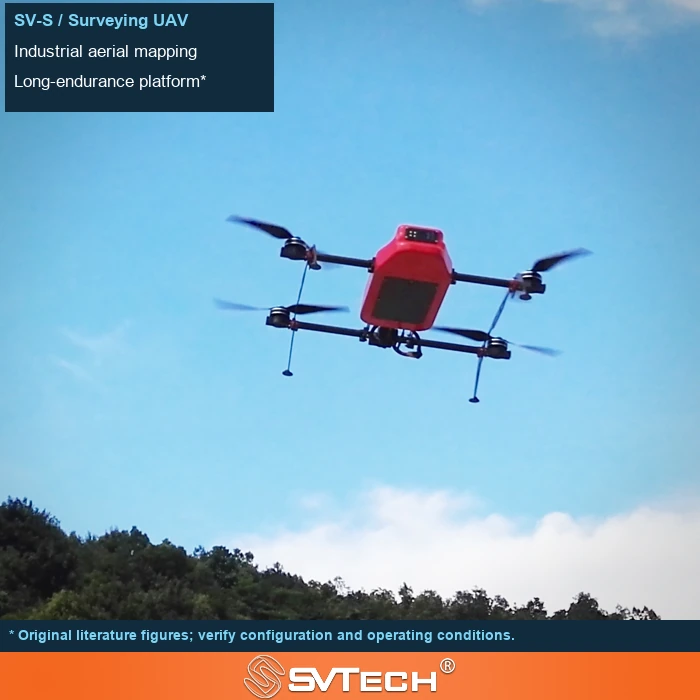
Weather Conditions Must Match Mission Objectives
Wind, temperature, visibility, cloud cover and the local environment all affect a mission. Surveying may be affected by changes in lighting, inspection by reflections or by the temperature difference of the target, and flight limits and data-quality limits must be considered separately.
Surveying focuses on imaging and geometric quality; thermal inspection is also affected by the thermal state of the environment; transport places more weight on round-trip energy and on-site conditions. The same weather means different things for different missions. Linking weather records to deliverable quality can help teams gradually identify more suitable operating periods, rather than relying on "it isn't raining" as the sole criterion.
Weather in which the equipment can operate is not necessarily weather in which data meeting the contract can be collected. Scheduling should allow room for rescheduling and re-collection.
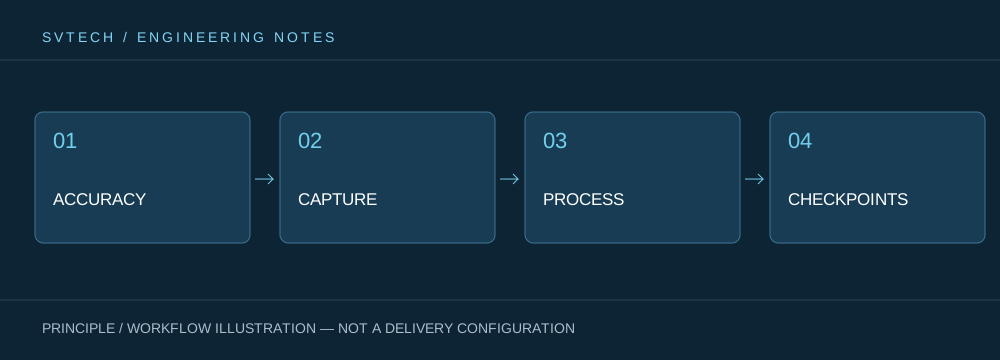
Technical Principles and Engineering Boundaries
The capability of an industrial UAV is jointly constituted by the flight platform, propulsion, sensing payload, communications and data workflow. The phenomena discussed in "Reading the Operating Window: How Industrial UAVs Adapt to Real Weather" often occur at the interfaces between these elements: a platform flying stably does not mean the data is necessarily deliverable, and an algorithm being able to identify a target does not mean the mission can proceed without human supervision. Only by placing performance back into the complete mission chain can a distinction be drawn between a demonstration, repeatable validation and long-term operation.
Application Scenarios and Implementation Paths
UAV inspection, 3D modeling, emergency response and asset management are all driving the low-altitude economy into industrial sites. Different applications require different flight paths, data quality, on-site coordination and compliance preparation. If the target objects, deliverable formats, operating frequency, site constraints and exception handling can be clarified early in a project, industrial UAV applications can more easily select suitable platforms and payloads and establish a sustainable data collection process.
Project Validation and Continuous Optimization
To ground this technical discussion of "Reading the Operating Window: How Industrial UAVs Adapt to Real Weather" in real projects, the validation phase should record configuration versions, environmental conditions, measurement locations and mission results together. Define the window according to the platform, payload and local requirements; check on-site weather; record actual conditions and deliverable quality. Do not treat the ingress protection rating as a basis for operating in all weather. This information is not supplementary documentation but a shared basis for interpreting results, reproducing performance and continuously improving.
Related Support from SV Tech
Zhuhai SV Tech Co. Ltd. provides product documentation, project requirement discussions and configuration boundary checks for industrial UAVs and related industry applications. For topics such as "Reading the Operating Window: How Industrial UAVs Adapt to Real Weather", mission conditions, target deliverables, on-site environment and existing equipment can be described together, with Mr. Liu (+86 18688194199, lhc1983@gmail.com) assisting with coordination; specific models, performance and delivery scope are subject to confirmed documentation and project validation.
The mission window must also take into account wind, visibility, temperature, lighting and weather trends, and must be consistent with equipment limits and local requirements. Data collection missions may also require narrower lighting conditions. Plans should allow time for preparation and recovery; it is not enough to confirm only that the weather permits takeoff at that moment.
Making full use of the operating window can reduce reflights and ineffective data collection. The closer the weather information is to the mission, the more practical value the flight plan has.
