
Multirotors excel at hovering and close-range observation, while fixed-wing aircraft excel at sustained forward flight; VTOL fixed-wing designs attempt to combine flexible takeoff and landing with cruise capability. These configurations serve different mission profiles, and no single parameter determines superiority across all applications. Understanding the differences between flight modes makes platform selection more intuitive.
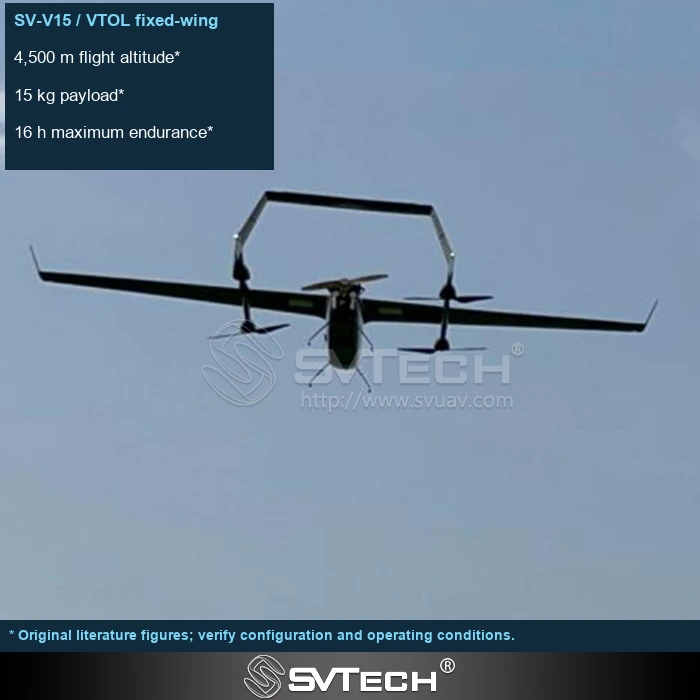
Hover Time and Cruise Range Determine the Design Focus
Fixed-wing cruise and multirotor hover have different advantages, and VTOL fixed-wing designs also involve transition phases and corresponding site conditions. Selection should be based on the mission profile, not merely a comparison of maximum flight time.
Large-area collection typically requires continuous route coverage, while close-range equipment inspection often requires repeated hovering and viewpoint adjustment. VTOL fixed-wing designs also involve transition phases and corresponding control requirements, and should not be simplistically understood as having all the advantages of both platform types at once. Takeoff and landing, transit, collection and recovery should be placed within a complete mission to observe the proportion of each phase.
Large-area route collection and close-range fixed-point observation may require different platforms. A small takeoff and landing space does not mean all VTOL models are suitable; environmental and operational boundaries must also be verified.
Technical Principles and Engineering Boundaries
The capability of an industrial drone is jointly constituted by the flight platform, propulsion, perception payload, communications and data workflow. The phenomena addressed in "Multirotor vs. VTOL Fixed-Wing: How the Two Flight Modes Divide the Work" often occur at the interfaces between these elements: a platform flying stably does not mean the data is necessarily deliverable; an algorithm being able to identify a target does not mean the mission can operate without human supervision. Placing performance back into the complete mission chain is what distinguishes a demonstration, repeatable verification and long-term operation.
Application Scenarios and Implementation Paths
Drone inspection, 3D modeling, emergency response and asset management are all driving the low-altitude economy into industrial settings. Different applications require different flight paths, data quality, on-site coordination and compliance preparation. If the target object, deliverable format, operating frequency, site constraints and exception handling can be clearly defined early in a project, industrial drone applications can more easily select suitable platforms and payloads and establish a sustainable data collection workflow.
Project Validation and Continuous Optimization
To ground this technical discussion of "Multirotor vs. VTOL Fixed-Wing: How the Two Flight Modes Divide the Work" in real projects, the verification phase should record configuration versions, environmental conditions, measurement positions and mission results together. Describe the proportions of hover, cruise and transition in the mission; verify payload, takeoff/landing and recovery requirements; and use complete mission trials for comparison, avoiding the substitution of no-load endurance figures for one another. This information is not supplementary documentation, but the shared basis for interpreting results, reproducing performance and continuous optimization.
Related Support from SVTECH
SVTECH provides product documentation, project requirement communication and configuration boundary verification for industrial drones and related industry applications. For topics such as "Multirotor vs. VTOL Fixed-Wing: How the Two Flight Modes Divide the Work," mission conditions, target deliverables, on-site environment and existing equipment can be described together, with Mr. Liu (+86 18688194199, lhc1983@gmail.com) assisting with coordination; specific models, performance and delivery scope are subject to confirmed documentation and project verification.
Comparison can proceed from route range, hover requirements, takeoff and landing space, and transport and maintenance conditions. Different configurations each have suitable missions and cannot be ranked by single-flight endurance alone. Demonstrations should include the customer's actual work cycle and data delivery, with particular confirmation of whether the transition phase, site and operational capabilities meet project conditions.
Platform configuration is a response to the mission. Making the flight mode adapt to the work content is more likely to yield a good user experience than requiring a single model to cover all scenarios.

