
Increasing battery capacity may appear to directly extend endurance, but the added weight also requires more energy to carry. Mission payloads not only add mass but may also draw continuous power and change airframe drag. Endurance improvement is therefore a system optimization: battery, power, payload and flight profile must find a balance together.
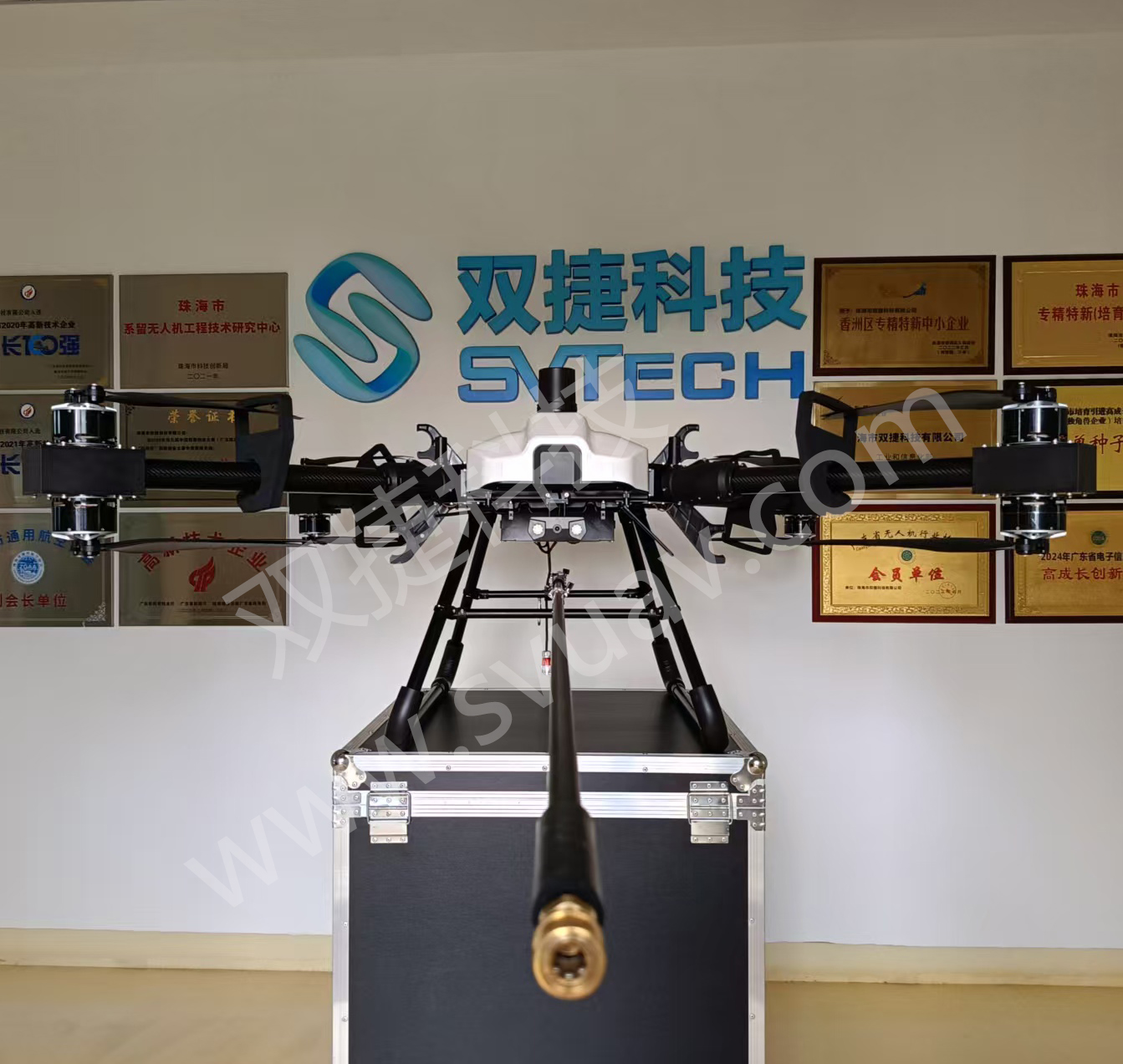
Endurance is determined by the energy consumption of the entire mission
Endurance is affected by total mass, power efficiency, flight speed, payload power consumption and environment, and the relationship is usually not linear. Payloads of the same mass but different shapes may also have different drag.
Comparing only no-load flight time is hard to reflect the actual mission capability after installation. The continuous power consumption of cameras, communication equipment and computing units must be included in the budget together with propulsion power. If the mission involves long-distance transits or frequent hovering, the optimization direction also differs. Breaking down the energy consumption of each phase can sometimes reveal that reducing drag or eliminating unnecessary hovering is worth trying before adding battery.
Even if cameras and communication equipment have similar weight, their continuous power draw and mounting method will change mission energy. Subtracting a fixed percentage from the no-load demo time lacks a reliable basis.
Technical Principles and Engineering Boundaries
The capability of an industrial drone is jointly constituted by the flight platform, power, perception payload, communication and data flow. The phenomena discussed in 'The Next Step in Drone Endurance: Co-Optimizing Battery, Power and Payload' often occur at the interfaces of these links: a platform flying stably does not mean data is necessarily deliverable; an algorithm being able to recognize a target does not mean the mission can operate without human supervision. Putting performance back into the complete mission chain is what allows distinguishing a demo, repeatable verification and long-term operations.
Application Scenarios and Implementation Paths
Drone inspection, 3D modeling, emergency response and asset management are all driving the low-altitude economy into industrial settings. Different applications require different flight paths, data quality, on-site coordination and compliance preparation. If the target object, deliverable format, operating frequency, site constraints and exception handling can be clearly defined early in a project, industrial drone applications can more easily select suitable platforms and payloads and establish a sustainable data collection workflow.
Project Validation and Continuous Optimization
To ground this technical discussion on 'The Next Step in Drone Endurance: Co-Optimizing Battery, Power and Payload' in real projects, the verification phase should record configuration version, environmental conditions, measurement positions and mission results simultaneously. Provide payload mass, dimensions, power consumption and mounting information; request data corresponding to the mission profile; retain return-to-home and environmental margins. Endurance claims should state the complete configuration. This information is not supplementary documentation, but the shared basis for interpreting results, reproducing performance and continuous optimization.
Related Support from SVTECH
SVTECH provides product documentation, project requirement communication and configuration boundary verification for industrial drones and related industry applications. For topics such as 'The Next Step in Drone Endurance: Co-Optimizing Battery, Power and Payload', mission conditions, target outcomes, site environment and existing equipment can be described together, and Mr. Liu (+86 18688194199, lhc1983@gmail.com) can assist with coordination; specific models, performance and delivery scope are subject to confirmed documentation and project verification.
Payloads not only increase mass but may also change drag, center of gravity and power consumption. Actual measurement or verification documentation for the corresponding configuration should be requested, and weather and energy status should be noted. If only no-load flight time is currently available, the procurement table should be marked as pending confirmation, and a simple linear deduction by weight cannot be treated as a committable mission time.
Long endurance comes from understanding energy flow. Optimizing gradually around real missions is what gives every added gram of weight and every watt of power consumption a clear purpose.
