
As drones enter factories, energy facilities and infrastructure sites, the focus of customer concern is shifting from "how long can it fly" to "what work can it complete." A flight only generates business value when it is connected to inspection findings, surveying results or transport services. Therefore, understanding the mission helps you choose a suitable platform better than chasing individual parameters.
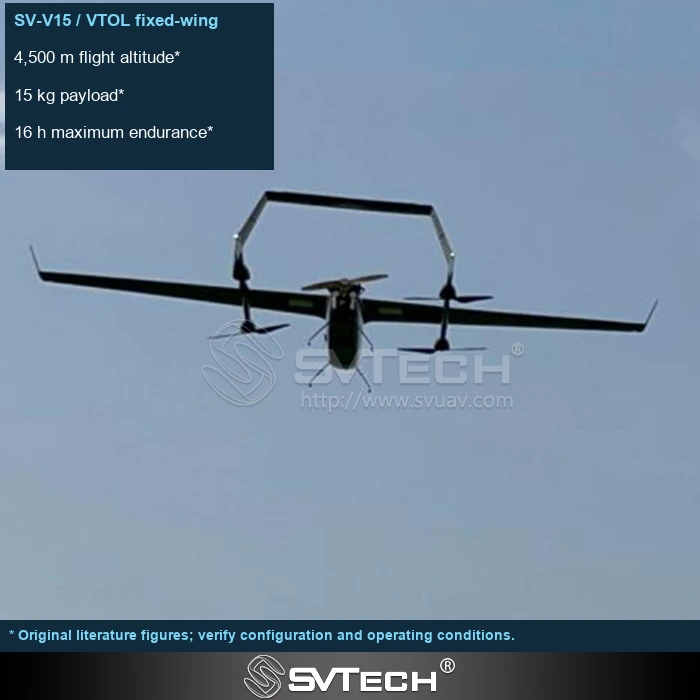
Turn flight capability into business results
The model is determined jointly by mission distance, payload, takeoff and landing conditions, data requirements and environment. Choosing a platform first based on maximum endurance or appearance may lead to extra costs later in interfaces, deployment and deliverable quality.
Even with the same camera, line inspection cares more about abnormal locations and details, while area modeling cares more about coverage and geometric accuracy. They require different flight methods and data workflows. When planning, first clarify the final deliverable, then work backward to payload, route and platform; this reduces the chance of discovering after the equipment arrives that the working method does not match. The maturity of low-altitude applications is reflected in this increasingly clear chain from mission to result.
Area surveying and fixed-point observation require different flight methods, and heavy-lift transport requires separate assessment of weight and takeoff/landing conditions. The same platform should not be assumed suitable for all operations.
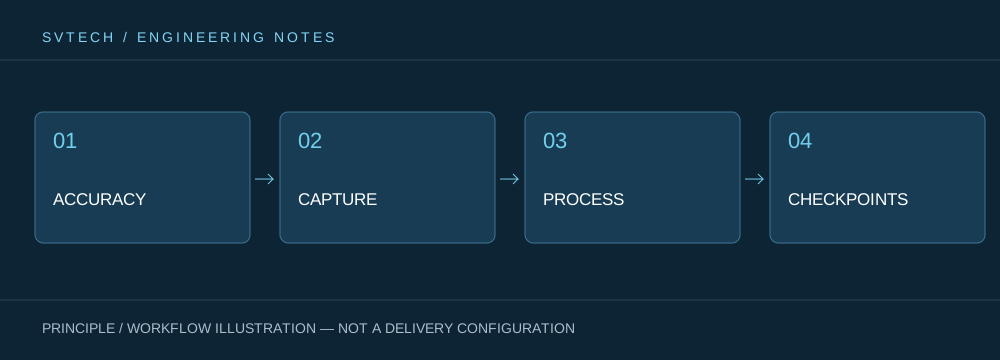
Technical Principles and Engineering Boundaries
The capability of an industrial drone is formed jointly by the flight platform, power, perception payload, communications and data workflow. The phenomena covered by "Low-Altitude Applications Move into Industrial Sites: The Value of Industrial Drones Starts with the Mission" often occur at the intersections of these links: a platform flying stably does not mean the data is necessarily deliverable; an algorithm being able to identify a target does not mean the mission can be separated from human supervision. Only by putting performance back into the complete mission chain can you distinguish between a demonstration, repeatable verification and long-term operations.
Application Scenarios and Implementation Paths
Drone inspection, 3D modeling, emergency response and asset management are all driving the low-altitude economy into industrial settings. Different applications require different flight paths, data quality, on-site coordination and compliance preparation. If the target object, deliverable format, operating frequency, site constraints and exception handling can be clearly defined early in a project, industrial drone applications can more easily select suitable platforms and payloads and establish a sustainable data collection workflow.
Project Validation and Continuous Optimization
To make this technical discussion about "Low-Altitude Applications Move into Industrial Sites: The Value of Industrial Drones Starts with the Mission" applicable to real projects, the verification stage should record configuration versions, environmental conditions, measurement positions and mission results together. Use a one-page mission statement to list the required deliverables, site constraints and acceptance methods; then check candidate platforms and configurations with SVTECH. Keep target values, measured values and items to be confirmed separate. This information is not supplementary documentation, but the shared basis for explaining results, reproducing performance and continuous optimization.
Related Support from SVTECH
SVTECH provides product materials, project requirement communication and configuration boundary checks for industrial drones and related industry applications. For topics such as "Low-Altitude Applications Move into Industrial Sites: The Value of Industrial Drones Starts with the Mission," you can describe the mission conditions, target deliverables, site environment and existing equipment together, and Mr. Liu (+86 18688194199, lhc1983@gmail.com) will assist with coordination; specific models, performance and delivery scope are subject to confirmed materials and project verification.
Requirements can be written as "obtain a certain type of deliverable under specified conditions," then broken down into coverage, quality, time and site constraints. Separate mandatory items from negotiable ones so the supplier can recommend a suitable platform. Directly specifying maximum payload and longest endurance may result in a solution with good-looking parameters that does not suit data or deployment needs.
The competitiveness of industrial drones lies not only in the sky, but also in business processes. Solutions that can clearly explain how the mission is completed and how the results are used are more likely to form sustainable applications.

