
Vertical takeoff and landing reduces dependence on runways, but it does not mean that any open patch of ground is suitable for deployment. Terrain, obstacles, personnel flow lines and equipment placement all affect preparation and recovery. For industrial missions, a takeoff and landing site is a continuously used workspace that must work in concert with the entire operating workflow.
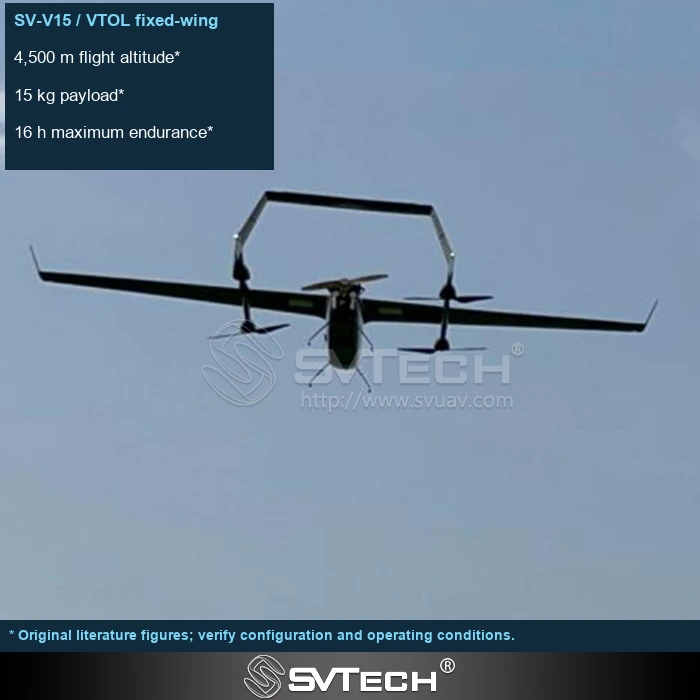
Spatial conditions affect how a mission begins and ends
A site must also meet requirements for obstacles, ground conditions, personnel segregation and operating procedures. Missions for fixed-wing VTOL platforms may involve transition and entry/exit space, so space cannot be allocated based on airframe dimensions alone.
Payload loading and unloading, power checks, communications and contingency recovery each require their own positions and access routes. If the only confirmation is that the aircraft can lift off, subsequent operations may be repeatedly disrupted. Mapping these actions onto a site plan during the first survey usually reveals spatial conflicts earlier and makes it easier for multiple roles to coordinate.
Loose material on the ground, slope and nearby tall structures can all change deployment conditions. Judging openness remotely from a map requires on-site verification.
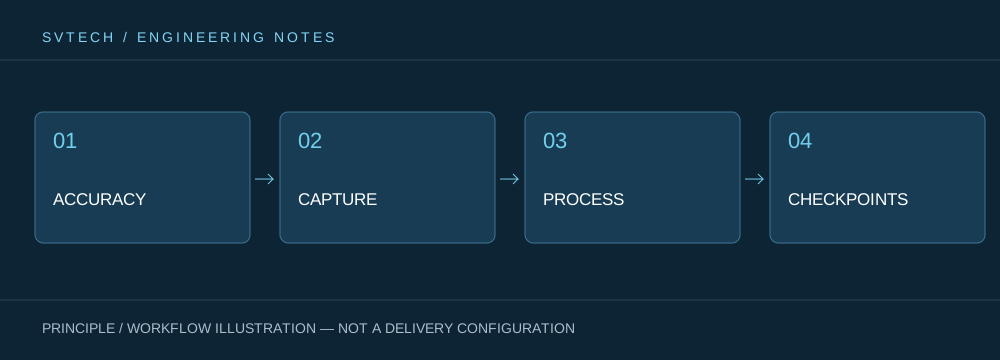
Technical principles and engineering boundaries
The capability of an industrial UAV is formed jointly by the flight platform, propulsion, perception payloads, communications and data workflows. The phenomena discussed in "System Design Behind a Takeoff and Landing Site: Ground Deployment Space for UAVs" often occur at the interfaces between these elements: stable flight does not guarantee deliverable data, and an algorithm that can identify a target does not mean the mission can proceed without human supervision. Only by placing performance back into the full mission chain can one distinguish between a demonstration, repeatable verification and long-term operations.
Application scenarios and implementation pathways
UAV inspection, 3D modeling, emergency response and asset management are all driving the low-altitude economy into industrial sites. Different applications require different flight paths, data quality, on-site coordination and compliance preparation. If the target objects, deliverable formats, operating frequency, site constraints and exception handling can be clearly defined early in a project, industrial UAV applications can more easily select suitable platforms and payloads and establish a sustainable data collection process.
Project verification and continuous optimization
To ground this technical discussion of "System Design Behind a Takeoff and Landing Site: Ground Deployment Space for UAVs" in real projects, the verification phase should record configuration versions, environmental conditions, measurement locations and mission results together. Conduct surveys in accordance with manufacturer and operating specifications, and clearly define takeoff/landing and exit areas; check ground equipment and personnel routes; and have a qualified team confirm. A platform name cannot replace a site-specific suitability assessment. This information is not supplementary documentation but the shared basis for interpreting results, reproducing performance and continuously optimizing.
Related support from SV Tech
Zhuhai SV Tech Co. Ltd. provides product documentation, project requirement discussions and configuration boundary checks for industrial UAVs and related industry applications. For topics such as "System Design Behind a Takeoff and Landing Site: Ground Deployment Space for UAVs", mission conditions, target deliverables, on-site environment and existing equipment can be described together, with Mr. Liu (+86 18688194199, lhc1983@gmail.com) assisting with coordination; specific models, performance and delivery scope are subject to confirmed documentation and project verification.
A site inspection should cover ground flatness, surrounding obstacles, personnel segregation, access routes and airflow conditions. Some platforms also require specific transition and recovery space. Having the solution provider review site photos and dimensioned drawings reveals deployment problems more effectively than simply saying "there is an open patch of ground".
Deployment efficiency comes from clear spatial organization. A well-designed takeoff and landing site allows flight capability to enter actual operations more smoothly.
