
When adding payload, weight is often the first topic of discussion, while position is easily overlooked. Installing the same equipment in different locations changes the center of gravity and moment of inertia, which in turn affects control allocation. For industrial UAVs to flexibly carry a variety of equipment, payload layout must be designed as a shared concern of both propulsion and control.
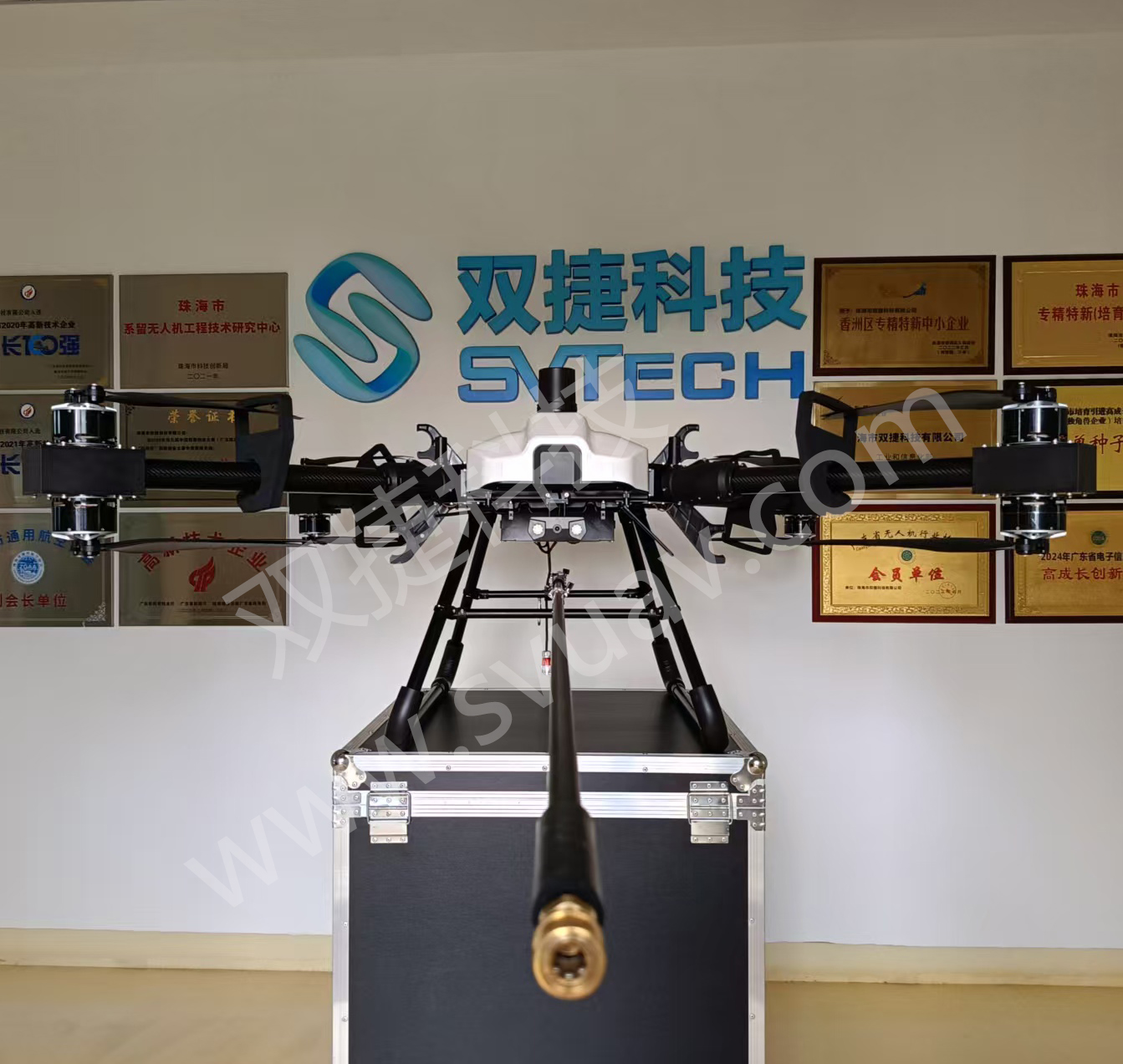
Layout changes how the individual propulsion units share the load
The center of gravity affects trim, power distribution, and control margin. Even if total mass remains unchanged, changes in payload position and mounting height alter moments and inertia; weighing the payload alone is not enough.
A center-of-gravity offset may cause certain motors to carry more load continuously and may also affect response during maneuvers. Brackets, wiring harnesses, and liquid payload changes should all be included in the final state. Keeping a record for each configuration change helps distinguish payload-induced changes from equipment anomalies and avoids repeated blind adjustments of control parameters.
Replacing a camera with a device of the same weight but greater length may change wind resistance and mounting loads. The platform's payload capacity does not mean installation is permitted at any position.
Technical principles and engineering boundaries
The capabilities of an industrial UAV are shaped jointly by the flight platform, propulsion, perception payloads, communications, and data workflows. The phenomena discussed in “Where You Place the Payload Matters Just as Much: UAV Center of Gravity and Handling Quality” often occur at the interfaces between these elements: stable flight does not guarantee deliverable data, and an algorithm's ability to identify a target does not mean the mission can proceed without human oversight. Only by placing performance back into the complete mission chain can one distinguish between a demonstration, repeatable verification, and long-term operations.
Application scenarios and implementation pathways
UAV inspection, 3D modeling, emergency response, and asset management are all driving the low-altitude economy into industrial settings. Different applications require different flight paths, data quality, on-site coordination, and compliance preparation. If target objects, deliverable formats, operating frequency, site constraints, and exception handling can be clarified early in a project, it becomes easier to select appropriate platforms and payloads for industrial UAV applications and to establish a sustainable data collection process.
Project verification and continuous improvement
To ground this technical discussion on “Where You Place the Payload Matters Just as Much: UAV Center of Gravity and Handling Quality” in real projects, the verification phase should record configuration versions, environmental conditions, measurement locations, and mission results together. Confirm the center-of-gravity range and mounting method against the interface documentation; update the installation checklist; and complete verification under the approved configuration. Unconfirmed modifications should not be put directly into operation. This information is not supplementary documentation but a shared basis for interpreting results, reproducing performance, and continuous improvement.
Related support from SV Tech
Zhuhai SV Tech Co. Ltd. (SVTECH) provides product documentation, project requirement discussions, and configuration boundary verification for industrial UAVs and related industry applications. For topics such as “Where You Place the Payload Matters Just as Much: UAV Center of Gravity and Handling Quality,” you can describe mission conditions, target deliverables, on-site environment, and existing equipment together, and Mr. Liu (+86 18688194199, lhc1983@gmail.com) will assist with coordination; specific models, performance, and delivery scope are subject to confirmed documentation and project verification.
After installation, the mass and position of the complete payload, including wiring harnesses and brackets, should be verified. Eccentricity may cause some propulsion units to carry higher loads continuously and also affects control margin. Payload change records should be linked to verified configurations; system checks must not be omitted once the physical installation appears complete.
Good layout allows weight to be distributed more reasonably. For multi-mission platforms, clearly defining permissible payload positions is an important foundation for consistent flight quality.
