
Winter and summer missions pose different battery challenges. Low temperatures can affect output performance, while high temperatures increase thermal management pressure; charging, discharging and storage also place different demands on the battery. For teams operating across regions, temperature should be part of mission preparation and equipment management, not merely weather background.
Environmental effects run from before takeoff to after landing
Low temperatures can reduce available power and increase voltage drop, while high temperatures affect service life and operational safety; the specific limits are determined by battery design and manufacturer requirements. Ambient air temperature and the battery's internal state do not always match.
The battery's starting temperature, the load profile and its state after landing together determine the conditions experienced during a given mission. Endurance measured under one set of environmental conditions cannot be applied directly to another season. Following the relevant product requirements and continuously logging voltage and temperature changes during missions helps build operating experience suited to the local environment.
Transport, waiting and pre-flight preparation all change battery temperature. A battery just taken from an air-conditioned environment and one left in sunlight cannot be compared as if they had the same initial conditions.
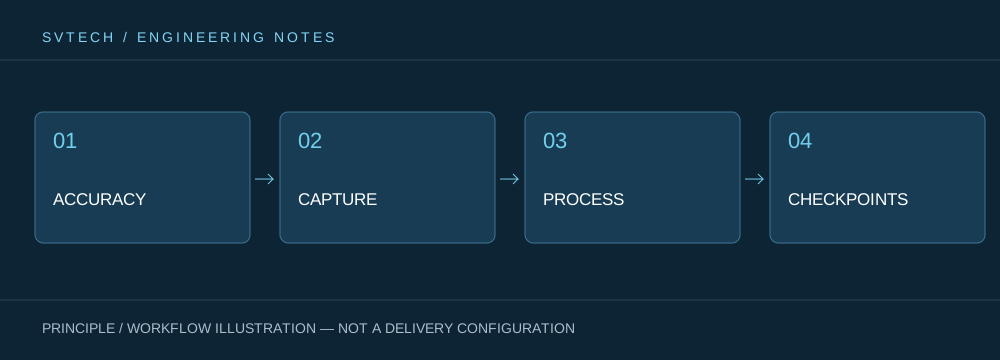
Technical principles and engineering boundaries
The capability of an industrial drone is formed jointly by the flight platform, propulsion, sensing payload, communications and data workflow. The phenomena discussed in "Flying Across Seasons: How Temperature Changes Drone Battery Performance" often occur at the interfaces between these elements: a platform that flies stably does not guarantee that the data is deliverable, and an algorithm that can recognize targets does not mean the mission can proceed without human supervision. Only by placing performance back into the complete mission chain can one distinguish between a demonstration, repeatable verification and long-term operation.
Application scenarios and implementation paths
Drone inspection, 3D modeling, emergency response and asset management are all driving the low-altitude economy into industrial sites. Different applications require different flight paths, data quality, on-site coordination and compliance preparation. If the target objects, deliverable formats, operating frequency, site constraints and exception handling can be clarified early in a project, industrial drone applications can more easily select suitable platforms and payloads and establish a sustainable data collection process.
Project verification and continuous optimization
To ground this technical discussion of "Flying Across Seasons: How Temperature Changes Drone Battery Performance" in real projects, the verification phase should record the configuration version, environmental conditions, measurement locations and mission results together. Store, inspect and prepare according to approved procedures; log temperatures and anomalies; use the matching charging equipment. Do not heat or cool the battery yourself or modify protection settings to extend the applicable range. This information is not supplementary documentation but the common basis for interpreting results, reproducing performance and continuous optimization.
Related support from SV Tech
Zhuhai SV Tech Co. Ltd (SVTECH) provides product documentation, project requirement discussions and configuration boundary checks for industrial drones and related industry applications. For topics such as "Flying Across Seasons: How Temperature Changes Drone Battery Performance", you can describe the mission operating conditions, target deliverables, site environment and existing equipment together; Mr. Liu (+86 18688194199, lhc1983@gmail.com) will assist with coordination. Specific models, performance and delivery scope are subject to confirmed documentation and project verification.
Low temperatures can limit available power and capacity, while high temperatures affect thermal state and aging; the two require different management. Activation, charging and storage should follow battery and platform requirements. Normal ambient temperature does not mean the battery's internal temperature is suitable, especially after transport, sun exposure or continuous missions; check according to procedure.
Reliable operation across seasons depends on understanding how conditions change. Combining battery state management with flight planning can reduce last-minute surprises and make performance comparisons fairer.
