
Special-purpose robots extend human reach out of high-risk, hard-to-access or repetitive work positions. Putting the question back into the task site, as “Robots in Wet and Slippery Environments: Braking, Steering and Controllable Motion” does, often reveals the links between equipment, environment and personnel.
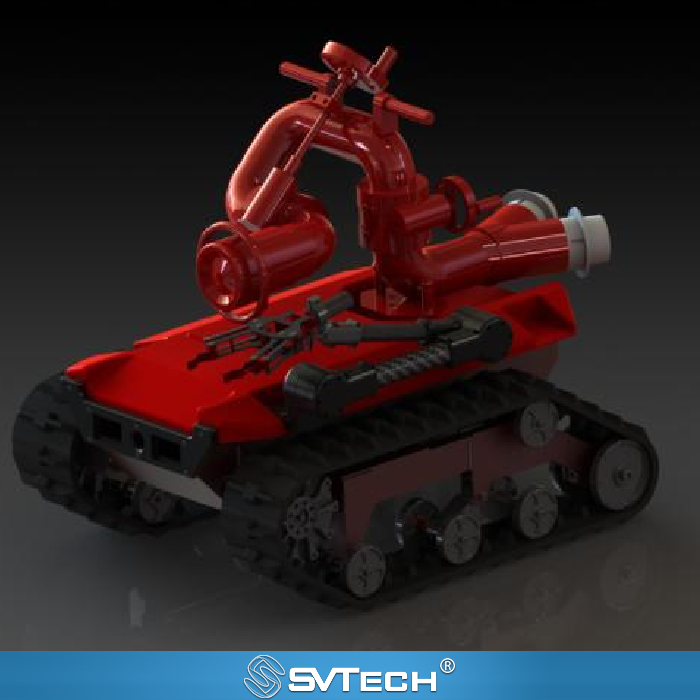
Robots in Wet and Slippery Environments: Braking, Steering and Controllable Motion
Reduced ground friction changes acceleration, braking and steering, and water-spray tasks can gradually wet areas that were originally dry. A no-load demonstration on dry ground cannot cover these changes.
Genuinely usable robot capability comes from the coordination of mechanics, perception, control and on-site personnel. Starting from this point, technical choices come closer to the outcomes users actually care about. Verify stopping and steering under actual load in safely controlled conditions; record the surface and its wetness state; let the operating plan define speed and area boundaries rather than expanding limits by rule of thumb.
During steering, hose pull and centre-of-gravity shifts can superimpose on each other and must be observed as a whole. Measuring only top speed is not enough to demonstrate controllability.
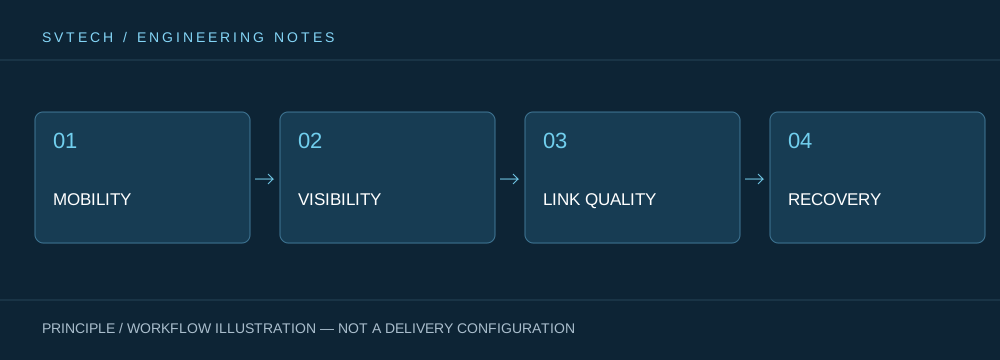
Technical principles and engineering boundaries
Special-purpose robots bring the mobile chassis, actuators, sensors, communications and human-machine interface into a single on-site system. “Robots in Wet and Slippery Environments: Braking, Steering and Controllable Motion” reminds us that product parameters must be understood together with ground conditions, load state, operator position and task duration. Speed, climbing ability, endurance and ingress protection are not absolute conclusions detached from the environment; a robot's capability boundary only has engineering meaning along a specified route, with defined obstacles, temperature and control method.
Application scenarios and implementation path
Firefighting, hazardous-environment inspection, industrial inspection and emergency rescue are the application areas where special-purpose robots are most valuable. Their common goal is to extend personnel perception and operating range and, under suitable conditions, to reduce the risk of direct approach. Before deployment, the task area, communication conditions, entry and recovery paths, personnel responsibilities and information handover should all be designed together, so that robot intelligence truly serves on-site decisions rather than merely demonstrating isolated actions.
Project validation and continuous improvement
To ground this technical discussion of “Robots in Wet and Slippery Environments: Braking, Steering and Controllable Motion” in real projects, the validation stage should record the configuration version, environmental conditions, measurement positions and task results together. Verify stopping and steering under actual load in safely controlled conditions; record the surface and its wetness state; let the operating plan define speed and area boundaries rather than expanding limits by rule of thumb. This information is not supplementary documentation but the shared basis for interpreting results, reproducing performance and continuously improving.
Related support from SV Tech
Zhuhai SV Tech Co. Ltd. (SVTECH) provides product documentation, project requirement discussions and configuration boundary checks for special-purpose robots and related industry applications. For a topic such as “Robots in Wet and Slippery Environments: Braking, Steering and Controllable Motion”, the task conditions, target outcomes, site environment and existing equipment can be described together, and Mr. Liu (+86 18688194199, lhc1983@gmail.com) will assist with the connection; specific models, performance and delivery scope are subject to confirmed documentation and project validation.
Smooth coatings and rough concrete behave differently under friction even on the same wet ground. Test reports should state the material and whether oil contamination is present, rather than simply writing “wet and slippery”. Water spraying may gradually change the state of the route, so areas already traversed must be re-observed during the task; the return conditions cannot be assumed to match those of the outbound leg.
Only by continuously accumulating this experience can teams make similar tasks increasingly reliable.
