
Specialized robots extend people out of high-risk, hard-to-reach or repetitive work positions. Understanding the boundaries in "After the Water Cannon Fires: How Reaction Force Changes Firefighting Robot Posture" helps bring new technology from demonstration into daily work.
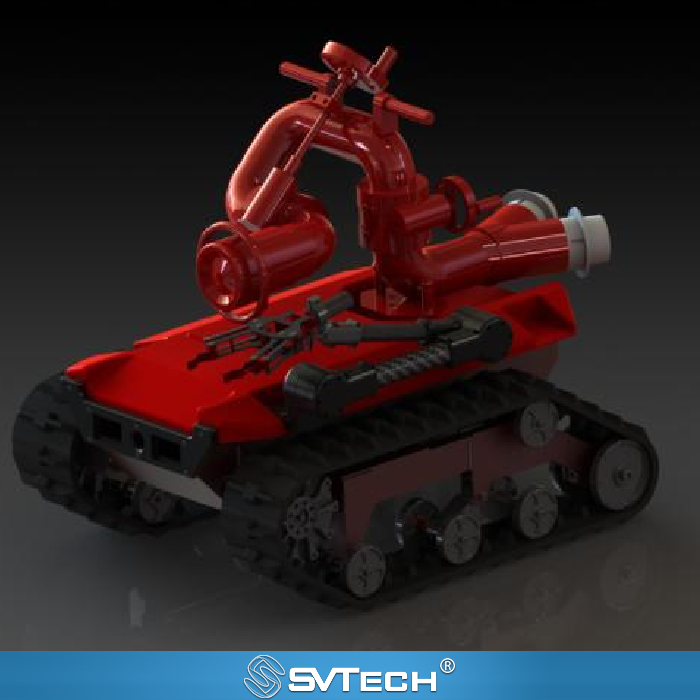
After the Water Cannon Fires: How Reaction Force Changes Firefighting Robot Posture
Spray reaction force depends on flow rate, spray direction and mounting position, and imposes forces and moments on the chassis. High-position or lateral spraying may change the load distribution, and static load-bearing capacity cannot fully represent the working state.
Truly usable robot capability comes from coordination among mechanics, perception, control and on-site personnel. What matters is not a single parameter but whether consistent performance can be maintained under different conditions. Accept according to manufacturer-approved configurations and operating conditions; define the actions permitted while moving and while stationary; have a professional team carry out controlled testing, and do not increase water supply parameters without authorization.
Testing should not only check how far the water sprays, but also observe the condition of the chassis, supports and piping. After changing nozzles or increasing flow rate, previous verification may no longer apply.
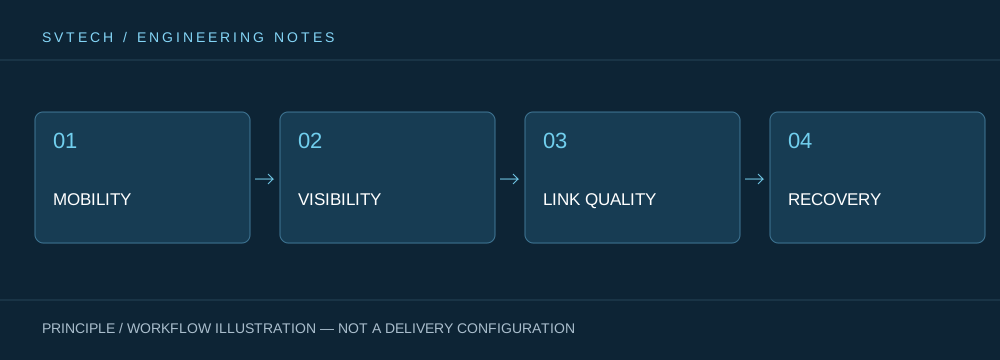
Technical Principles and Engineering Boundaries
Specialized robots bring the mobile chassis, actuators, sensors, communications and human-machine interface into a single on-site system. "After the Water Cannon Fires: How Reaction Force Changes Firefighting Robot Posture" reminds us that product parameters must be understood in combination with ground conditions, load state, operator position and task duration. Speed, gradeability, endurance or ingress protection are not absolute conclusions detached from the environment; only under specified routes, obstacles, temperatures and control methods do a robot's capability boundaries take on engineering meaning.
Application Scenarios and Implementation Paths
Firefighting, hazardous-environment inspection, industrial inspection and emergency rescue are the most valuable application directions for specialized robots. Their common goal is to extend personnel perception and operating range and, under suitable conditions, reduce the risk of direct approach. Before deployment, the task area, communication conditions, entry and recovery paths, personnel responsibilities and information handover should be designed together, so that robot intelligence truly serves on-site decision-making rather than merely demonstrating individual actions.
Project Verification and Continuous Optimization
To make this technical discussion on "After the Water Cannon Fires: How Reaction Force Changes Firefighting Robot Posture" applicable to real projects, the verification stage should record the configuration version, environmental conditions, measurement positions and task results together. Accept according to manufacturer-approved configurations and operating conditions; define the actions permitted while moving and while stationary; have a professional team carry out controlled testing, and do not increase water supply parameters without authorization. This information is not supplementary documentation but the common basis for interpreting results, reproducing performance and continuously optimizing.
Related Support from SV Tech
Zhuhai SV Tech Co. Ltd. provides product documentation, project requirement communication and configuration boundary verification for specialized robots and related industry applications. For topics such as "After the Water Cannon Fires: How Reaction Force Changes Firefighting Robot Posture", task conditions, target outcomes, on-site environment and existing equipment can be described together, with Mr. Liu (+86 18688194199, lhc1983@gmail.com) assisting with coordination; specific models, performance and delivery scope are subject to confirmed documentation and project verification.
The report should preserve the correspondence among nozzle, water supply and posture. Stability changes may come from spray direction, or from the ground or hose traction. Keeping other conditions constant before comparing helps locate the cause. When new operating conditions are needed, an engineering review should come first, followed by verification, rather than gradually increasing output on site.
Placing a local issue within a complete understanding of the task makes every step of the project better grounded.
