
Special-purpose robots extend people out of high-risk, hard-to-reach or repetitive working positions. Starting from this point, the discussion of Advancing While Towing a Hose: System-Level Mobility for Firefighting Robots moves closer to the outcomes users actually care about.
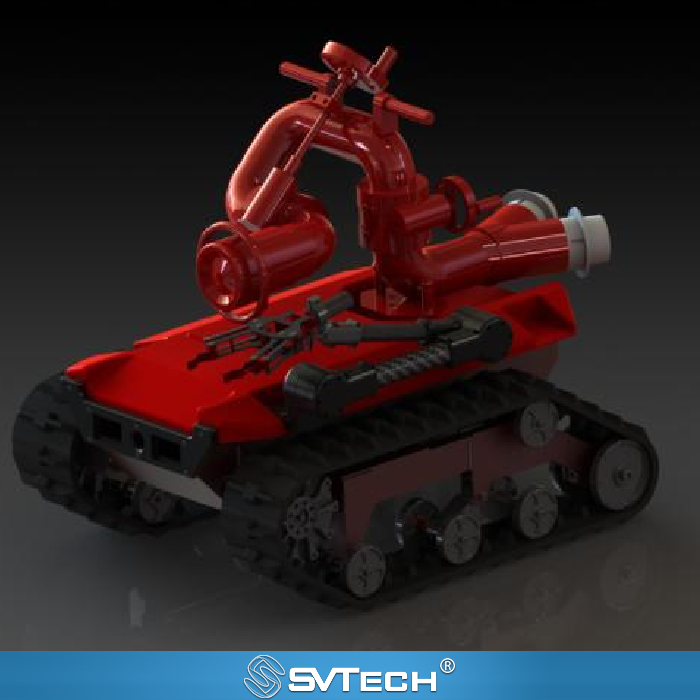
Advancing While Towing a Hose: System-Level Mobility for Firefighting Robots
Once the hose is filled with water, its mass, bending, friction and couplings all affect traction. A straight-line floor test cannot represent the actual load at corners, doorways and slopes.
Truly usable robot capability comes from coordination among mechanics, perception, control and on-site personnel. Understanding where the boundaries lie helps bring new technology from demonstrations into daily work. Validate with the final hose on a site-representative route; plan the guidance and observe; record the locations of anomalies. Traction capacity depends on configuration and conditions, and no-load speed should not be taken as hose-towing capability.
A longer path does not necessarily increase resistance linearly; a local snag may become the main limitation. The robot must be able to move forward, and it must also be confirmed as controllable during retreat.
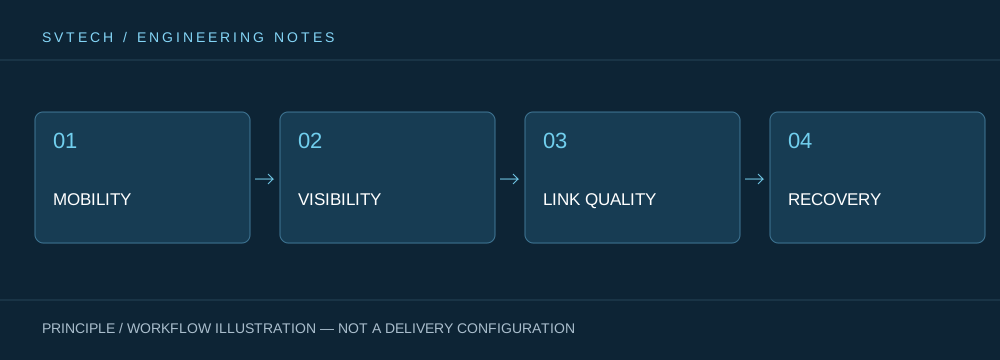
Technical Principles and Engineering Boundaries
Special-purpose robots bring the mobile chassis, actuators, sensors, communications and human-machine interface into a single on-site system. “Advancing While Towing a Hose: System-Level Mobility for Firefighting Robots” reminds us that product specifications must be understood in light of ground conditions, load state, operator position and task duration. Speed, gradeability, endurance or ingress protection are never absolute conclusions detached from the environment; a robot's capability boundary only becomes engineering-meaningful under a specified route, obstacles, temperature and control method.
Application Scenarios and Implementation Paths
Firefighting, hazardous-environment inspection, industrial inspection and emergency rescue are the application areas where special-purpose robots deliver the most value. Their shared goal is to extend personnel perception and operating range, and under suitable conditions to reduce direct exposure risk. Before deployment, the task area, communication conditions, entry and recovery paths, personnel responsibilities and information handover should be designed together, so that robot intelligence truly serves on-site decisions rather than merely demonstrating a single action.
Project Validation and Continuous Optimization
To ground this technical discussion of “Advancing While Towing a Hose: System-Level Mobility for Firefighting Robots” in real projects, the validation phase should record the configuration version, environmental conditions, measurement positions and task results together. Validate with the final hose on a site-representative route; plan the guidance and observe; record the locations of anomalies. Traction capacity depends on configuration and conditions, and no-load speed should not be taken as hose-towing capability. This information is not supplementary documentation but the shared basis for interpreting results, reproducing performance and continuously optimizing.
Related Support from SV Tech
SV Tech (双捷科技) provides product documentation, project requirement discussions and configuration-boundary checks for special-purpose robots and related industry applications. For topics such as “Advancing While Towing a Hose: System-Level Mobility for Firefighting Robots”, you can describe the task conditions, target outcomes, site environment and existing equipment together, and Mr. Liu (+86 18688194199, lhc1983@gmail.com) will assist with the coordination; specific models, performance and delivery scope are subject to confirmed documentation and project validation.
Before testing, the route can be divided into three categories — straight sections, corners, and elevation changes — and problems recorded section by section. If snagging always occurs at a particular corner, improving hose guidance may be more effective than increasing chassis traction. Any guidance equipment should have its load-bearing, fixing and personnel-access conditions confirmed; a hose must never be held back temporarily with the body.
When facts, conditions and objectives are clearly recorded, technical choices can withstand later review.
