
Specialized robots extend people beyond high-risk, hard-to-reach, or repetitive work positions. Establishing a common language around the theme "Vision in Dense Smoke: Why Firefighting Robots Need Multiple Sensing Methods" can reduce misunderstandings and rework during subsequent integration.
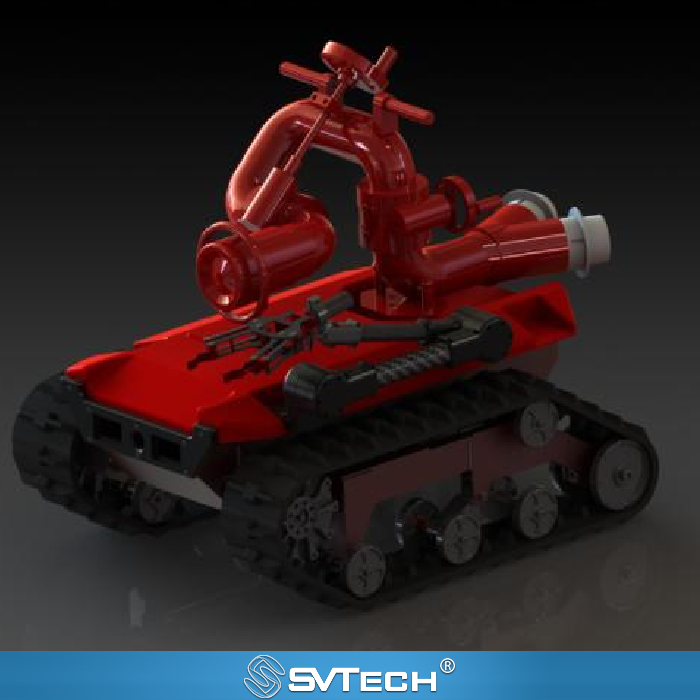
Vision in Dense Smoke: Why Firefighting Robots Need Multiple Sensing Methods
Visible-light imaging is affected by smoke, lighting, reflections, and lens contamination; the presence of an image does not mean the target is identifiable. Payloads such as thermal imaging also have their own limitations, and no blanket claim can be made about seeing through all smoke.
Truly usable robot capability comes from coordination among mechanics, perception, control, and on-site personnel. Putting this question back into the task site often reveals the connections among equipment, environment, and people. Define the targets and distances that need to be identified, test representative environments and cleaning measures; retain raw imagery; have professionals interpret sensor information rather than relying solely on camera specifications.
Water droplets or accumulated dust on the lens surface can cause localized blindness, and strong lighting in particulate environments may also increase scattering. Usable information should be evaluated according to the actual task.
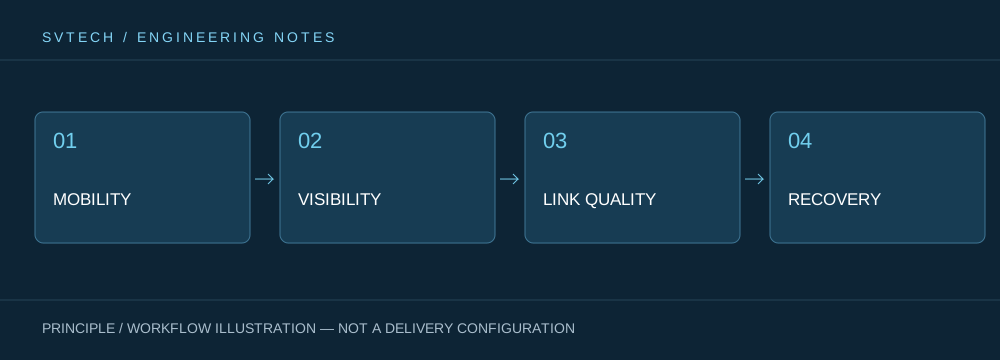
Technical Principles and Engineering Boundaries
Specialized robots bring the mobile chassis, actuators, sensors, communications, and human-machine interface into a single on-site system. "Vision in Dense Smoke: Why Firefighting Robots Need Multiple Sensing Methods" reminds us that product specifications must be understood in combination with ground conditions, payload status, operator position, and task duration. Speed, gradeability, endurance, or ingress protection ratings are not absolute conclusions divorced from the environment; only under specified routes, obstacles, temperatures, and control methods do a robot's capability boundaries have engineering significance.
Application Scenarios and Implementation Paths
Firefighting, hazardous environment inspection, industrial inspection, and emergency rescue are the most valuable application directions for specialized robots. Their common goal is to extend personnel perception and operational range and, under suitable conditions, reduce the risk of direct approach. Before deployment, the task area, communication conditions, entry and recovery paths, personnel responsibilities, and information handover should be designed together, so that robot intelligence truly serves on-site decision-making rather than merely demonstrating individual actions.
Project Validation and Continuous Optimization
To ground this technical discussion on "Vision in Dense Smoke: Why Firefighting Robots Need Multiple Sensing Methods" in real projects, the validation phase should record the configuration version, environmental conditions, measurement positions, and task results together. Define the targets and distances that need to be identified, test representative environments and cleaning measures; retain raw imagery; have professionals interpret sensor information rather than relying solely on camera specifications. This information is not supplementary documentation but the common basis for interpreting results, reproducing performance, and continuous optimization.
Related Support from SV Tech
Zhuhai SV Tech Co. Ltd. provides product documentation, project requirement communication, and configuration boundary verification for specialized robots and related industry applications. For topics such as "Vision in Dense Smoke: Why Firefighting Robots Need Multiple Sensing Methods," task conditions, target outcomes, on-site environment, and existing equipment can be described together, with Mr. Liu (+86 18688194199, lhc1983@gmail.com) assisting with coordination; specific models, performance, and delivery scope are subject to confirmed documentation and project validation.
Task requirements can be written as "identify a specific marker or read specified information within an agreed distance," making actual value easier to verify. Showing only an image with thermal contrast cannot demonstrate whether the operator can make the required judgment. Test targets and observation results should be agreed upon by both parties in advance.
This on-site-oriented understanding is the prerequisite for turning equipment capability into customer value.
