
Specialized robots extend people beyond high-risk, hard-to-reach, or repetitive work positions. Building a shared vocabulary around "Stopping on a Slope: Braking Capability of Mobile Robots" reduces misunderstandings and rework during later integration.
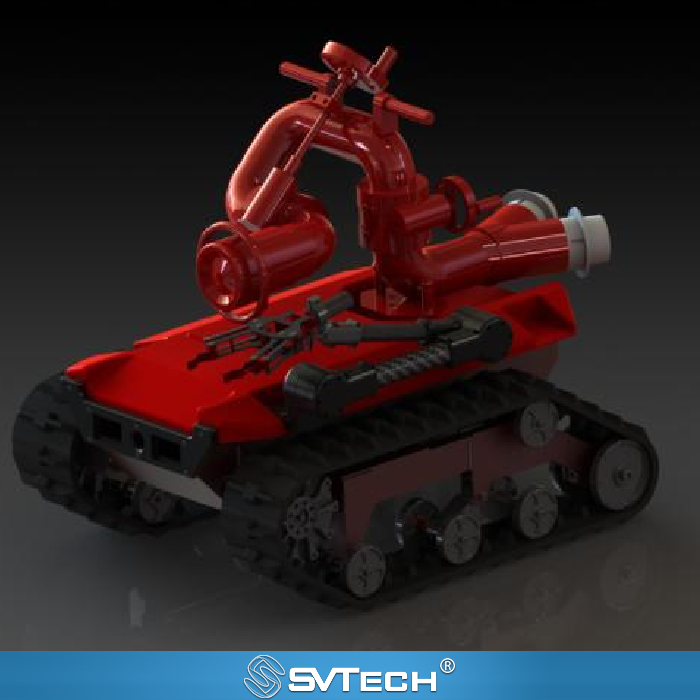
Stopping on a Slope: Braking Capability of Mobile Robots
A robot's ability to travel up a slope does not mean it can hold position after power loss or loss of communication. Braking structure, ground friction, load, and control logic all affect stopping and holding.
Truly usable robot capability comes from coordination among mechanics, perception, control, and on-site personnel. Putting this question back into the task site often reveals the connections among equipment, environment, and people. Verify uphill and downhill stopping and fault states within the manufacturer's permitted range; record the configuration and surface; confirm the mechanical and control boundaries. Any limit testing should be organized by a professional team.
When towing a hose, external forces may vary with direction, and traction can persist after stopping. Testing only in an unloaded state would miss actual task conditions.
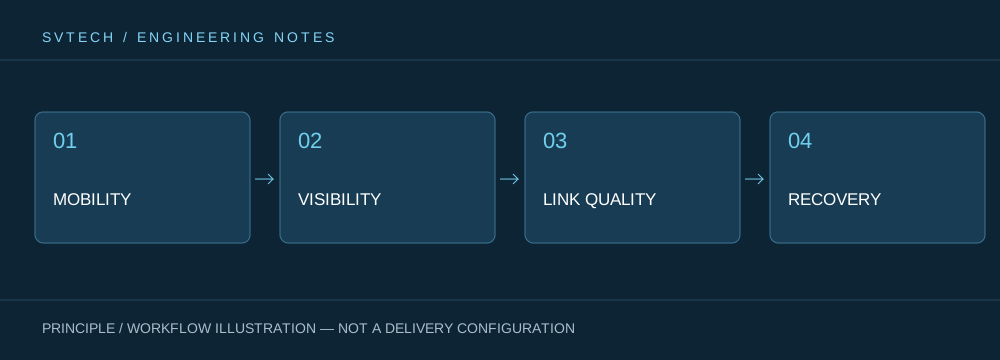
Technical Principles and Engineering Boundaries
Specialized robots bring the mobile chassis, actuators, sensors, communications, and human-machine interface into a single on-site system. "Stopping on a Slope: Braking Capability of Mobile Robots" reminds us that product parameters need to be understood in combination with ground conditions, load state, operator position, and task duration. Speed, climbing, endurance, or ingress protection ratings are not absolute conclusions detached from the environment; a robot's capability boundary has engineering meaning only under a specified route, obstacles, temperature, and control method.
Application Scenarios and Implementation Path
Firefighting, hazardous-environment inspection, industrial inspection, and emergency rescue are the most valuable application directions for specialized robots. Their common goal is to extend personnel perception and operating range and, under suitable conditions, reduce direct exposure to risk. Before deployment, the task area, communication conditions, entry and recovery paths, personnel responsibilities, and information handover should be designed together, so that robot intelligence truly serves on-site decision-making rather than merely demonstrating a single action.
Project Verification and Continuous Optimization
To make this technical discussion of "Stopping on a Slope: Braking Capability of Mobile Robots" applicable to real projects, the verification stage should record the configuration version, environmental conditions, measurement positions, and task results together. Verify uphill and downhill stopping and fault states within the manufacturer's permitted range; record the configuration and surface; confirm the mechanical and control boundaries. Any limit testing should be organized by a professional team. This information is not supplementary documentation but the common basis for interpreting results, reproducing performance, and continuous optimization.
Related Support from Zhuhai SV Tech Co. Ltd.
Zhuhai SV Tech Co. Ltd. (SVTECH) provides product documentation, project requirement communication, and configuration boundary verification for specialized robots and related industry applications. For topics such as "Stopping on a Slope: Braking Capability of Mobile Robots," describe the task conditions, target outcomes, site environment, and existing equipment together, and Mr. Liu (+86 18688194199, lhc1983@gmail.com) will assist with coordination; specific models, performance, and delivery scope are subject to confirmed documentation and project verification.
At acceptance, record the motion before stopping, the slope surface condition, and the load, rather than only photographing the robot standing still on a slope. A static placement may not have verified the actual braking process. For holding capability after a fault, it should also be clear which structural or control function provides it, and its applicable conditions should be checked.
This on-site-oriented understanding is the prerequisite for turning equipment capability into customer value.
