
The temperature of a motor's outer housing is easy to observe, but the thermal state of the windings inside is far less obvious. Heat must travel from the copper wire to the housing and then into the surrounding air along different paths. A housing that is not yet hot to the touch does not prove that heat is not building up inside. For drones that operate continuously, understanding how heat is generated and transferred is as important as understanding the thrust curve.
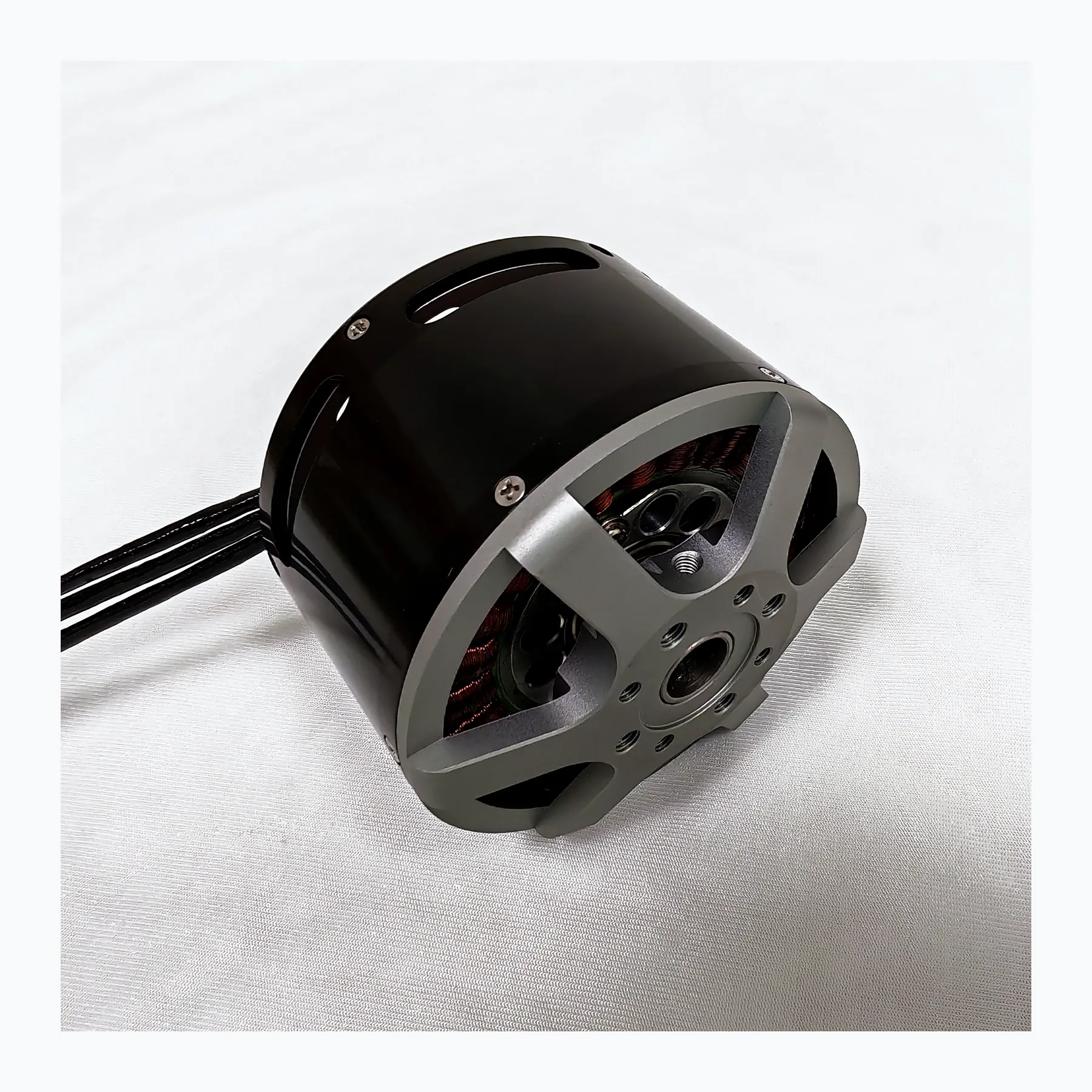
Temperature rise varies across space and lags in time
There is thermal resistance and a time delay between the housing temperature and the winding hot spot; the difference between the two can be pronounced, especially under brief high-current events or when the heat dissipation path is poor. Judging by touch is neither accurate nor appropriate for live high-voltage equipment. Surface temperatures read by a thermal camera are also affected by emissivity and reflection.
Winding losses change with the operating state, while structural materials, mounting contact and airflow affect how quickly heat is dissipated. A short test may not yet have reached thermal equilibrium; only a long-duration mission reveals the limits of continuous output. Adding temperature monitoring can improve judgement, but the sensor location and response speed must be clearly explained. A reading has engineering meaning only when it is considered together with its measurement location and load profile.
During a test, if the housing temperature is still climbing slowly, the current reading cannot be taken as the final steady-state temperature rise. Past test values may also lose their representativeness once the mounting method, airspeed or nearby heat sources change. Use a permitted temperature-sensing method and specify the measurement points.
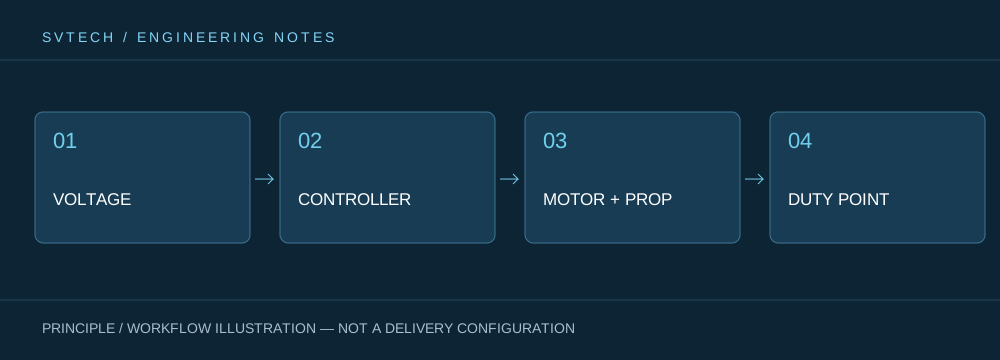
Technical principles and engineering boundaries
A drone motor is not an isolated actuator. The battery, ESC, windings, propeller and frame together determine how electrical energy is converted into lift and attitude-control force. When discussing "Invisible Heat: Brushless Motor Winding Temperature and Continuous Output Capability", the continuous operating point, short-term peak, heat dissipation path and mounting loads should be viewed on the same mission curve: no-load speed, maximum current or a single thrust value each describe only one aspect. For industrial drone propulsion systems, reliably completing inspection, transport or hover missions is usually more important than an extreme figure from a single bench test.
Application scenarios and implementation paths
In applications such as surveying, inspection, logistics and tethered platforms, propulsion requirements change with payload, flight phase and ambient temperature. Engineering teams can first define the target thrust, the typical cruise or hover range and the permissible temperature rise, then check whether the supply voltage, KV, propeller and control strategy match. This drone propulsion selection process also preserves clear technical boundaries for subsequent spare parts, maintenance and upgrades.
Project validation and continuous optimization
To ground this technical discussion of "Invisible Heat: Brushless Motor Winding Temperature and Continuous Output Capability" in real projects, the validation phase should record the configuration version, environmental conditions, measurement locations and mission results together. Record the ambient temperature, measurement points, measurement tools and time curves. Evaluate against the manufacturer's permitted temperatures and shutdown criteria, and obtain an internal temperature measurement solution where necessary. Do not install probes on the windings yourself that could damage the insulation. This information is not supplementary documentation; it is the shared basis for interpreting results, reproducing performance and continuously optimizing.
Related support from SV Tech
SV Tech (双捷科技) provides product documentation, project requirement discussions and configuration boundary checks for drone motors and related industry applications. For topics such as "Invisible Heat: Brushless Motor Winding Temperature and Continuous Output Capability", you can describe the mission conditions, target outcomes, site environment and existing equipment together, and Mr. Liu (+86 18688194199, lhc1983@gmail.com) will assist with the coordination; specific models, performance and delivery scope are subject to the confirmed documentation and project validation.
If there is no built-in winding temperature measurement, housing temperature can only serve as an indirect observation. Housing temperature changes can be recorded at a fixed location, while the supplier should be asked about its applicable relationship to the internal temperature. Ending a test while the temperature is still climbing slowly cannot prove that thermal stability has been reached; the test duration and stopping criteria should be written down before starting.
Continuous power capability is, in essence, also thermal management capability. Combining temperature changes with mission time, rather than recording only a single reading at the end, helps teams understand more accurately the operating boundaries of the motor under real conditions.
