
Industrial UAVs need to resist continuous vibration and also to be easily disassembled and reassembled during maintenance. Anti-loosening measures therefore cannot aim solely for “the tighter the better”; they must also consider materials, temperature, reuse, and maintenance conditions. Only by evaluating the connection method over the entire service life can we avoid a situation where production is convenient but on-site maintenance is difficult.
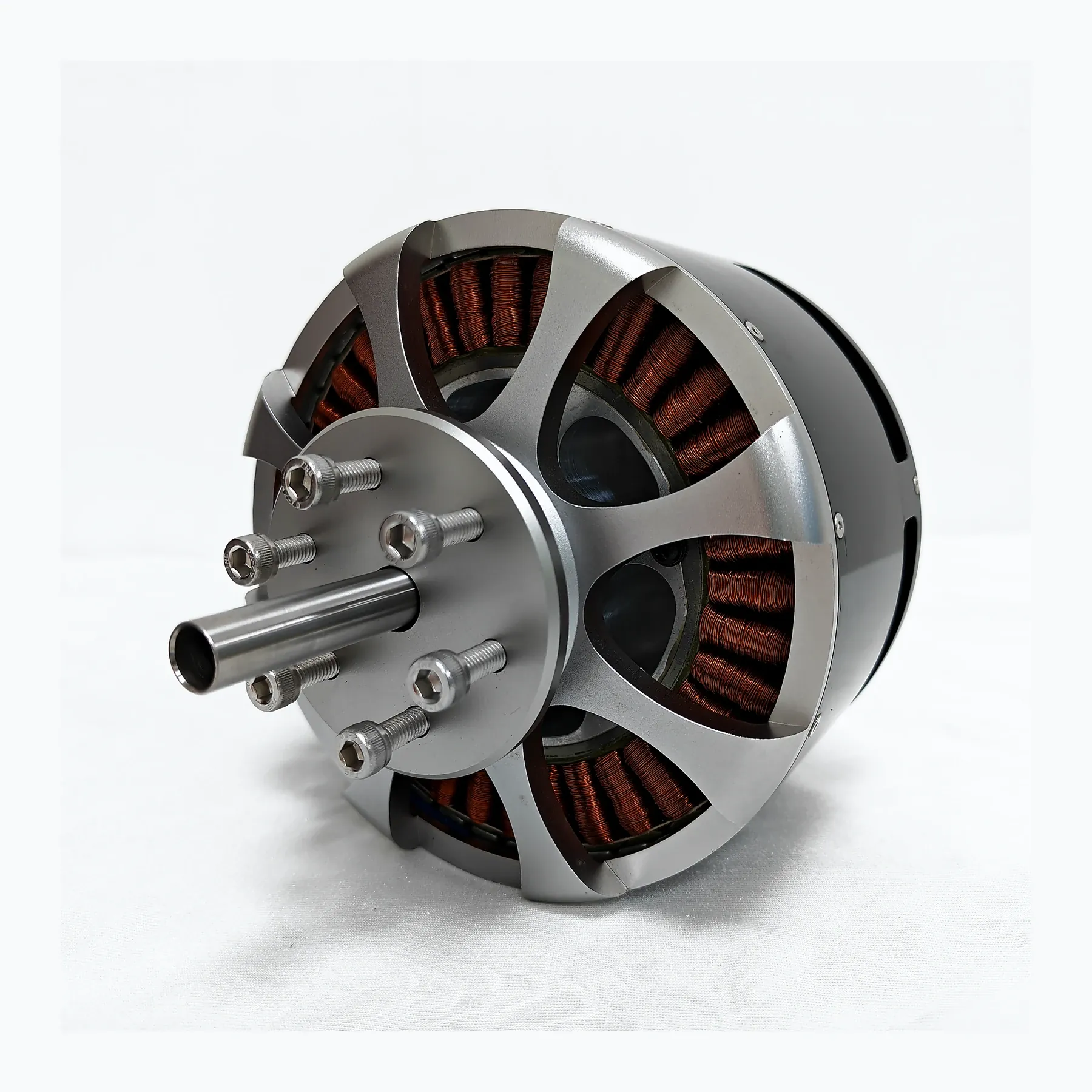
Connection reliability must balance the entire service life
Thread locking must simultaneously consider vibration, temperature, thread material, and later disassembly. Threadlocker is not “the stronger the better”: excessive strength may damage threads during maintenance or force the use of heat, while excess adhesive may migrate into unintended locations. It also cannot compensate for incorrect torque, damaged threads, or uneven brackets.
Threadlocker, mechanical locking, and preload control serve different conditions and cannot be arbitrarily substituted for one another. The surface condition of materials affects assembly results, and the disassembly process may alter threads and contact surfaces. For operating teams that frequently replace power components, specifying which parts can be reused and which steps require re-treatment is often more practically valuable than adding another anti-loosening material.
For propeller mounts and retaining screws that require periodic disassembly and inspection, the assembly specification should specify the adhesive type, application amount, cleaning method, and curing time. If the ambient temperature is low, the curing process may change, and it is not advisable to immediately perform high-load testing after assembly.
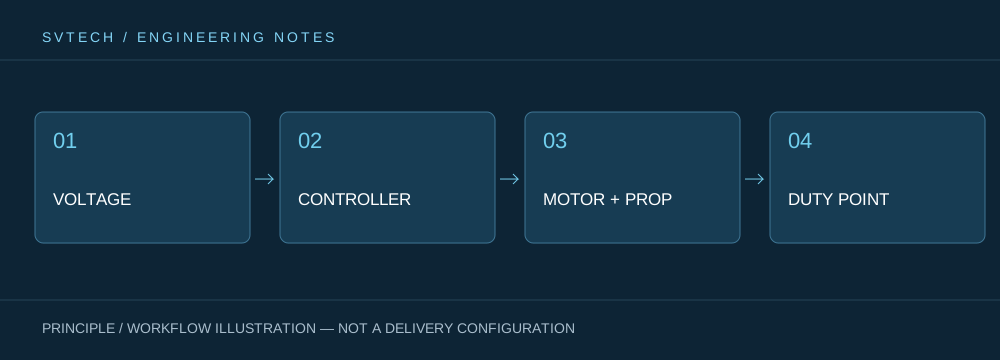
Technical principles and engineering boundaries
A UAV motor is not an isolated actuator. The battery, ESC, windings, propeller, and frame together determine how electrical energy is converted into lift and attitude control forces. When discussing “From Assembly to Maintenance: Balancing Anti-Loosening and Serviceability in Motor Connection Design,” the continuous operating point, short-term peaks, heat dissipation paths, and installation loads should be viewed on the same mission profile: no-load speed, maximum current, or single-item thrust can each describe only one aspect. For industrial UAV power systems, reliably completing inspection, transport, or hover missions is usually more important than a one-off extreme figure in a bench test.
Application scenarios and implementation paths
In applications such as surveying, inspection, logistics, and tethered platforms, power requirements change with payload, flight phase, and ambient temperature. Engineering teams can first determine the target thrust, common cruise or hover range, and allowable temperature rise, then review whether the supply voltage, KV, propeller, and control strategy match. This UAV power system selection process also preserves clear technical boundaries for subsequent spare parts, maintenance, and upgrades.
Project verification and continuous optimization
To make this technical discussion on “From Assembly to Maintenance: Balancing Anti-Loosening and Serviceability in Motor Connection Design” applicable to real projects, the verification phase should record the configuration version, environmental conditions, measurement locations, and mission results together. Follow the assembly documents from the motor and connector suppliers; record torque tool calibration and adhesive batch; inspect threads after disassembly before reassembly. Do not use anti-loosening experience from other models as the acceptance basis for current assembly. This information is not supplementary documentation but the common basis for interpreting results, reproducing performance, and continuous optimization.
Related support from SV Tech
Zhuhai SV Tech Co. Ltd. provides product documentation, project requirement communication, and configuration boundary verification for UAV motors and related industry applications. For topics such as “From Assembly to Maintenance: Balancing Anti-Loosening and Serviceability in Motor Connection Design,” you can describe the mission conditions, target outcomes, on-site environment, and existing equipment together, and Mr. Liu (+86 18688194199, lhc1983@gmail.com) will assist with coordination; specific models, performance, and delivery scope are subject to confirmed documentation and project verification.
When anti-loosening is required, the process specified in the product assembly requirements should be followed first, and compatibility of the adhesive with plastics, coatings, and thread materials should be confirmed. The amount of adhesive applied, curing time, and disassembly method all affect maintainability. Do not allow excess adhesive to enter bearings or electrical areas, and do not treat “already glued” as a reason to skip checking the fastening status.
A mature connection solution will specify both the assembly method and the restoration requirements after maintenance. Making anti-loosening, inspection, and disassembly form a consistent process can both reduce abnormal loosening and shorten on-site recovery time.
