
A propeller is not an accessory at the end of the motor that can be replaced at will. A change in pitch alters how the blades do work on the air, and also changes the load on the motor. For teams wanting to increase thrust or improve cruise efficiency, changing the propeller may be more direct than changing the motor, but the resulting current, temperature rise and handling changes also need to be understood.
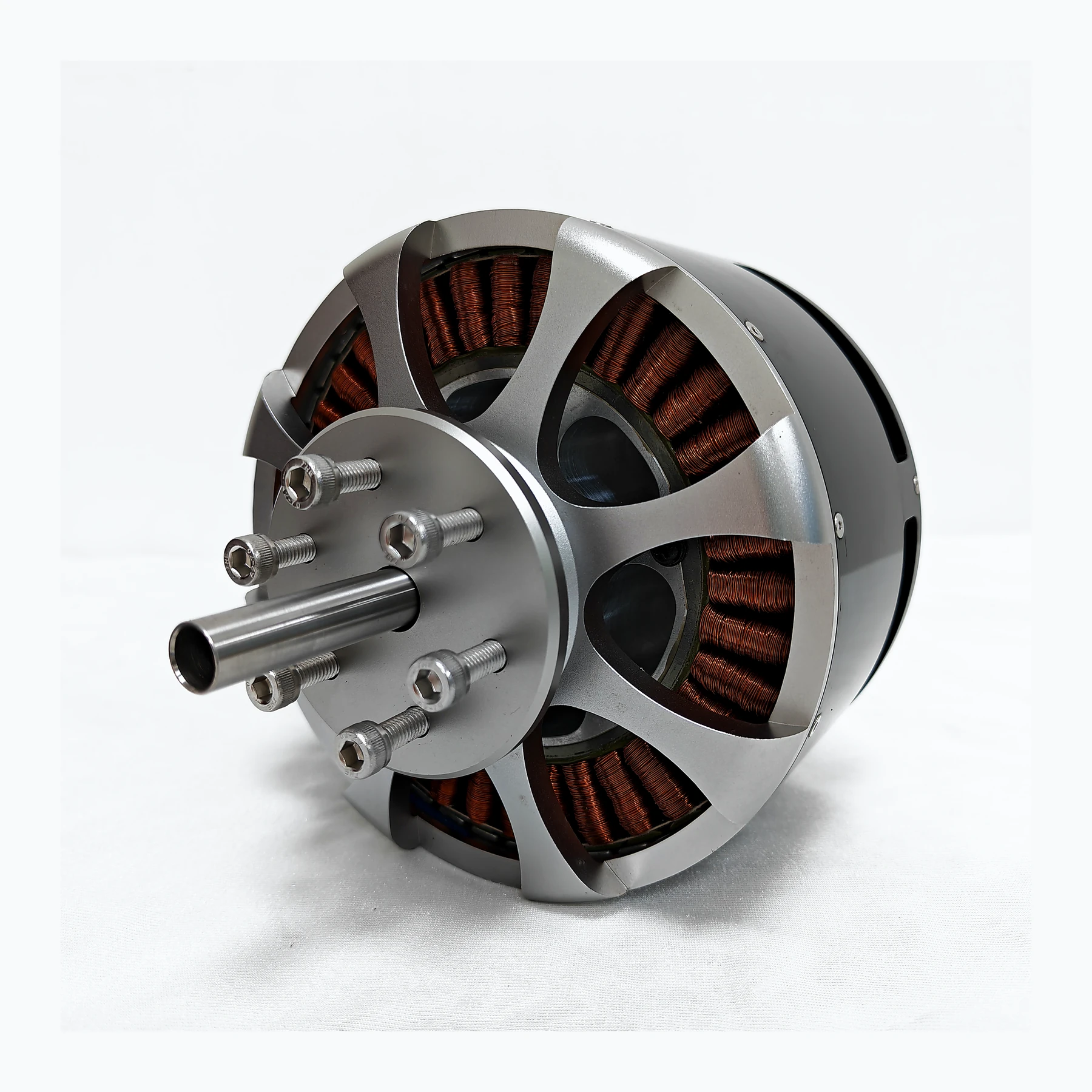
Pitch brings aerodynamic and electrical loads together
A larger pitch changes the way the blades absorb torque, and may increase the load at the same RPM, but whether effective thrust increases depends on the flow field and operating state. The motor may therefore fail to reach its original RPM, while current and heat rise noticeably. Pitch changes cannot be judged independently of propeller diameter, RPM and flight speed.
A larger pitch can be understood as the blades making different propulsion demands during rotation, but real airflow has slip and interference, so geometric pitch cannot be directly treated as aircraft speed. The inflow conditions in static hover and forward flight differ, and the merits of the same propeller also change with the mission. If the goal is logistics transport, observe both the loaded cruise and the takeoff/landing phases; if the goal is fixed-point lighting, sustained hover matters more. This mission-based comparison reduces misjudgments caused by looking only at a single thrust table.
When comparing two propellers on the same motor, compare by "input power required to reach the same target thrust" rather than by a fixed throttle percentage. Different controllers may map throttle differently, and a fixed-throttle test does not guarantee identical RPM or power.
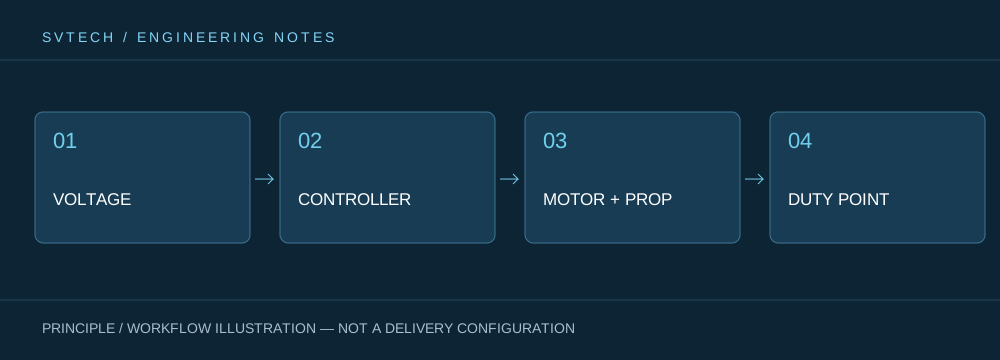
Technical Principles and Engineering Boundaries
A drone motor is not an isolated actuator. The battery, ESC, windings, propeller and frame together determine how electrical energy is converted into lift and attitude control force. When discussing "The Other Side of the Propeller: How Pitch Changes Drone Thrust and Energy Consumption", the continuous operating point, short-term peak, heat dissipation path and mounting loads should be viewed on the same mission curve: no-load RPM, maximum current or a single thrust value each describe only one side. For industrial drone power systems, reliably completing inspection, transport or hover missions is usually more important than an extreme figure from a single bench test.
Application Scenarios and Implementation Paths
In applications such as surveying, inspection, logistics, and tethered platforms, power requirements change with payload, flight phase, and ambient temperature. Engineering teams can first determine the target thrust, the common cruise or hover range, and the allowable temperature rise, then review whether the supply voltage, KV, propeller, and control strategy match. This drone power selection process can also preserve clear technical boundaries for subsequent spare parts, maintenance, and upgrades.
Project Validation and Continuous Optimization
To make this technical discussion of "The Other Side of the Propeller: How Pitch Changes Drone Thrust and Energy Consumption" applicable to real projects, the validation stage should record configuration version, environmental conditions, measurement locations and mission results together. Change only one propeller parameter at a time, and record RPM, thrust, voltage, current and temperature. Stop testing if abnormal vibration, protection or signs of stall appear. Final selection uses the complete propeller-motor combination, without separately promising the gain of any single propeller. This information is not supplementary documentation, but the shared basis for interpreting results, reproducing performance and continuous optimization.
Related Support from SVTECH
SVTECH provides product information, project requirement communication and configuration boundary checking for drone motors and related industry applications. For topics such as "The Other Side of the Propeller: How Pitch Changes Drone Thrust and Energy Consumption", you can describe the mission conditions, target outcomes, site environment and existing equipment together, and Mr. Liu (+86 18688194199, lhc1983@gmail.com) will assist with the connection; specific models, performance and delivery scope are subject to confirmed documentation and project validation.
You can start by selecting two propeller types with existing matching documentation for a small-scale comparison, to avoid losing the baseline after changing multiple parameters in succession. For each test, save the propeller model, rotation direction and mounting state. If a combination achieves more thrust at higher current, record the added thrust and added energy consumption separately, and do not select only the maximum value favorable to promotion.
Pitch optimization is well suited to a set of controlled comparison tests: keep the key conditions consistent, then see how thrust, power consumption and temperature rise interact. The propeller finally selected should suit the entire mission better, not merely make one test point higher.
