
"Waterproof" is easy to understand, but it is far too broad a description. Raindrops, splashes, humid air and immersion represent different environments, and the motor body, lead wires and connectors may each have different protection boundaries. For industrial UAVs, meaningful environmental capability must be tied to a specific configuration rather than replaced by a generic label.
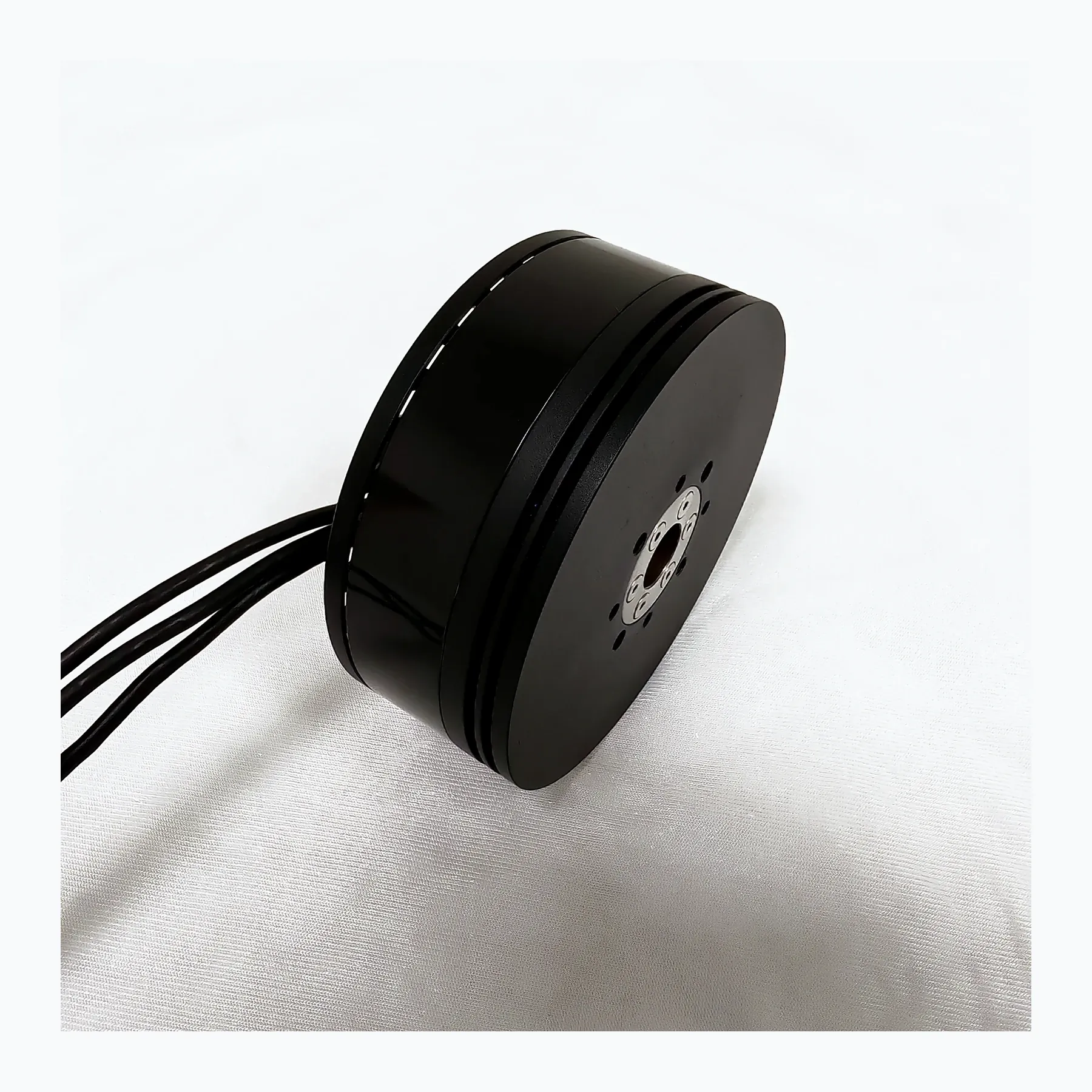
Protection capability is built along the entire interface chain
An ingress protection rating describes test results under specified conditions and depends on the specific structure, sealing and assembly state. The motor body, ESC, connectors and complete system may each carry different ratings. A generic marketing claim of "waterproof" cannot answer whether water spray, prolonged humidity or a particular cleaning method is permitted.
Adding seals may affect heat dissipation, and changing the cable exit may alter the original protection path. Even if a component carries a defined rating, the assembled system must still account for interfaces and installation conditions. Cleaning, firefighting and coastal applications each impose different water environments. Making these distinctions explicit moves product selection from vague adjectives to verifiable operating conditions.
If a connector was tested with a matching sealing cap but a different connection method is used on site, the original test conditions may no longer apply. The sealing state must also be rechecked after maintenance or disassembly. Even with an ingress protection rating, the product is not thereby suitable for operation in any corrosive liquid.
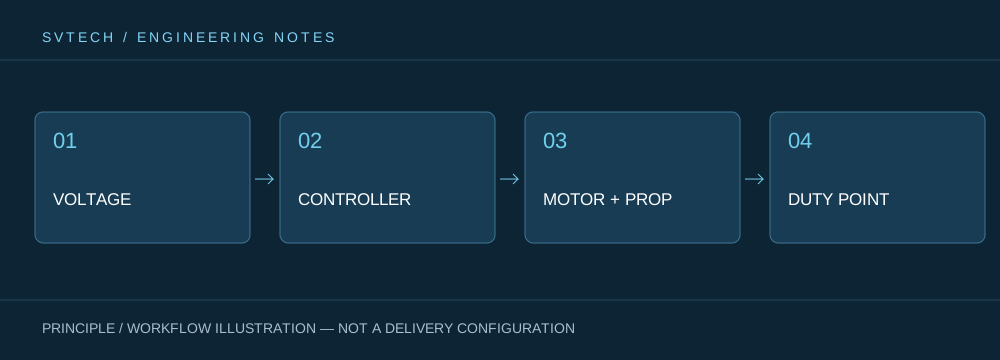
Technical principles and engineering boundaries
A UAV motor is not an isolated actuator. The battery, ESC, windings, propeller and frame together determine how electrical energy is converted into lift and attitude-control force. When discussing "From 'Waterproof' to Environmental Adaptability: The Real Meaning of Power-Protection Claims for Industrial UAVs," continuous operating points, short-term peaks, heat-dissipation paths and installation loads should be viewed on the same mission curve: no-load speed, maximum current or single-point thrust each describe only one aspect. For an industrial UAV propulsion system, reliably completing inspection, transport or hover missions is usually more important than an extreme figure from a single bench test.
Application scenarios and implementation paths
In applications such as surveying, inspection, logistics and tethered platforms, power requirements change with payload, flight phase and ambient temperature. Engineering teams can first define the target thrust, the usual cruise or hover range and the permissible temperature rise, then check whether the supply voltage, KV, propeller and control strategy match. This UAV propulsion selection process also preserves clear technical boundaries for subsequent spare parts, maintenance and upgrades.
Project validation and continuous optimization
To ground this technical discussion of "From 'Waterproof' to Environmental Adaptability: The Real Meaning of Power-Protection Claims for Industrial UAVs" in real projects, the validation phase should record the configuration version, environmental conditions, measurement locations and mission results together. Request documents for the corresponding model, version and test conditions; confirm whether lead wires and connectors are included in the certification scope; and record sealing maintenance requirements. Procurement acceptance should verify the actual assembly state rather than relying only on screenshots of marketing pages. This information is not supplementary documentation but the common basis for interpreting results, reproducing performance and driving continuous improvement.
Related support from SV Tech
Zhuhai SV Tech Co. Ltd. (SVTECH) provides product documentation, project requirement discussions and configuration-boundary checks for UAV motors and related industry applications. For topics such as "From 'Waterproof' to Environmental Adaptability: The Real Meaning of Power-Protection Claims for Industrial UAVs," you can describe the mission conditions, target outcomes, site environment and existing equipment together, and Mr. Liu (+86 18688194199, lhc1983@gmail.com) will assist with coordination; specific models, performance and delivery scope are subject to confirmed documentation and project validation.
When requesting evidence, check the test object, installation state and standard version. A connector with an ingress protection rating does not mean the system connected to the motor has the same rating. Cleaning, salt-water immersion and operation while rotating cannot be automatically inferred from a static water-ingress test; the water source, direction and duration in an actual project should be specified separately.
Good protection design lets equipment work reliably in the target environment and also makes clear to users which conditions require inspection or shutdown. Defining boundaries does not weaken product value; it reduces misuse and builds trust over long-term use.
