
Hot weather narrows the temperature difference available for a motor to dissipate heat to its surroundings, and an airframe parked in direct sunlight may already have warmed up before takeoff. For sustained hovering and high-load operations, thermal management therefore has to start at the ground-preparation stage. It affects not only the motor but also the ESC, the battery and nearby electronics.
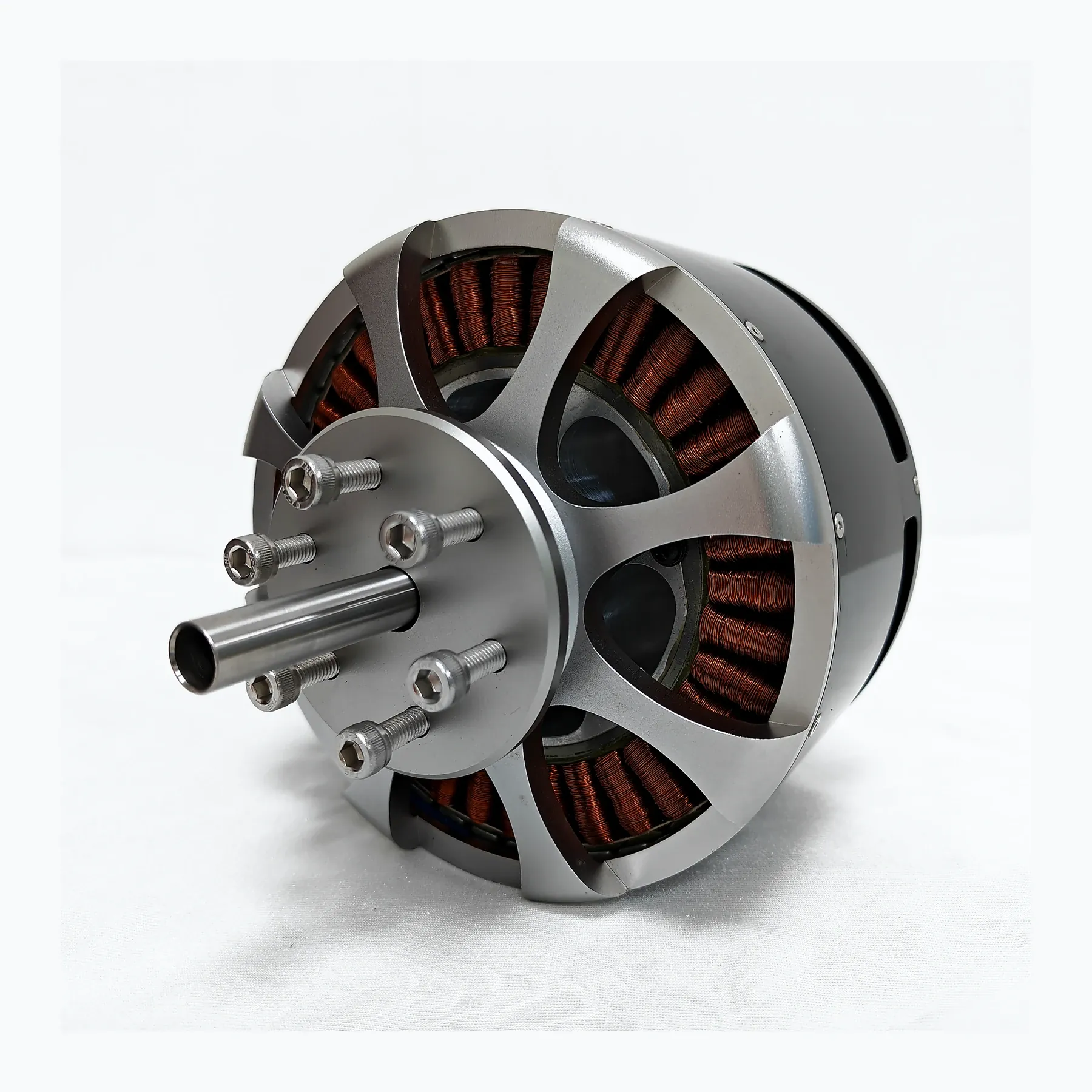
Ambient temperature shifts the continuous-operation boundary
Heat dissipation depends on the temperature difference between the component and its surroundings. At the same losses, a higher ambient temperature generally means less available temperature-rise margin. Sunlight radiation, adjacent ESCs and hot air inside the cowling also need to be considered; the weather-station temperature does not necessarily equal the temperature of the air drawn into the motor.
Temperature-rise behavior measured on a winter test bench cannot be taken directly as summer field capability. Airflow is affected by the installation, and external protection and accumulated dust can also alter the heat-dissipation path. Recording ambient temperature, starting state and the load profile helps determine whether heat is accumulating normally or whether the cooling conditions have changed. For equipment flying consecutive sorties, residual heat from the previous flight also deserves attention.
Applying winter bench results directly to a closed summer bay may change both ambient temperature and airflow conditions at the same time. A valid comparison should use the same measurement points and record temperature over time under a similar installation; simply reducing takeoff weight does not necessarily resolve a local cooling deficiency.
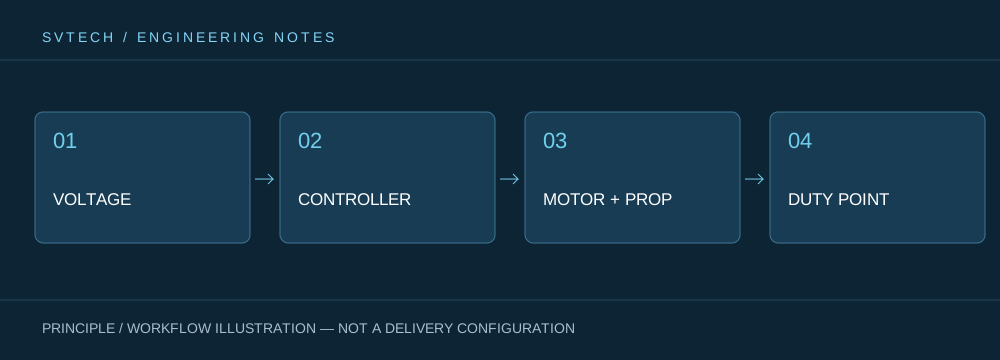
Technical principles and engineering boundaries
A UAV motor is not an isolated actuator. Battery, ESC, windings, propeller and frame together determine how electrical energy is converted into lift and attitude-control force. When discussing "Summer Long-Duration Operations: Thermal Margin Design for UAV Propulsion Systems", the continuous operating point, short-term peaks, heat-dissipation path and installation loads should be viewed on the same mission curve: no-load speed, maximum current or a single thrust value each describe only one facet. For industrial UAV propulsion systems, reliably completing inspection, transport or hover missions is usually more important than a limit figure from one bench test.
Application scenarios and implementation path
In applications such as surveying, inspection, logistics and tethered platforms, propulsion requirements change with payload, flight phase and ambient temperature. Engineering teams can first define the target thrust, the usual cruise or hover range and the permissible temperature rise, then check whether supply voltage, KV, propeller blades and control strategy match. This UAV propulsion selection process also leaves clear technical boundaries for subsequent spare parts, maintenance and upgrades.
Project validation and continuous optimization
To ground this technical discussion on "Summer Long-Duration Operations: Thermal Margin Design for UAV Propulsion Systems" in real projects, the validation phase should record the configuration version, environmental conditions, measurement locations and mission results together. Specify the design maximum ambient temperature and the worst-case ventilation state; check whether recirculated hot air is present during operation; and verify the temperature-protection and mission-abort procedures. Any derating recommendation should come from tests of the actual combination or from manufacturer documentation. This information is not supplementary paperwork but the shared basis for interpreting results, reproducing behavior and continuously optimizing.
Related support from SV Tech
Zhuhai SV Tech Co. Ltd. provides product documentation, project-requirement discussions and configuration-boundary checks for UAV motors and related industry applications. For topics such as "Summer Long-Duration Operations: Thermal Margin Design for UAV Propulsion Systems", mission conditions, target outcomes, site environment and existing equipment can be described together, with Mr. Liu (+86 18688194199, lhc1983@gmail.com) assisting with coordination; specific models, performance and delivery scope are subject to confirmed documentation and project validation.
Temperature rise and absolute temperature need to be recorded separately. For example, the same temperature rise at different ambient temperatures does not produce the same final thermal state. In the field, sunlight exposure, heat buildup in the bay and low wind speed may also have an effect. Procurement conditions can specify the expected environment in the hottest season, and continuous capability can then be confirmed using a measurement method accepted by the manufacturer.
Reliable summer operation comes from reserved margin and explainable data. Building the cooling process between consecutive missions into the schedule keeps the propulsion system in a more stable state and reduces the chance of temporary protection actions interrupting operations.
