
That a motor spins only proves the most basic drive relationship has been established. Smooth running, prompt response and reasonable temperature rise also depend on how the ESC determines rotor state and organizes the three-phase currents. Commutation timing is like a relay that requires coordination: if the timing is off, electrical energy may turn into heat and noise rather than being effectively converted into the required torque.
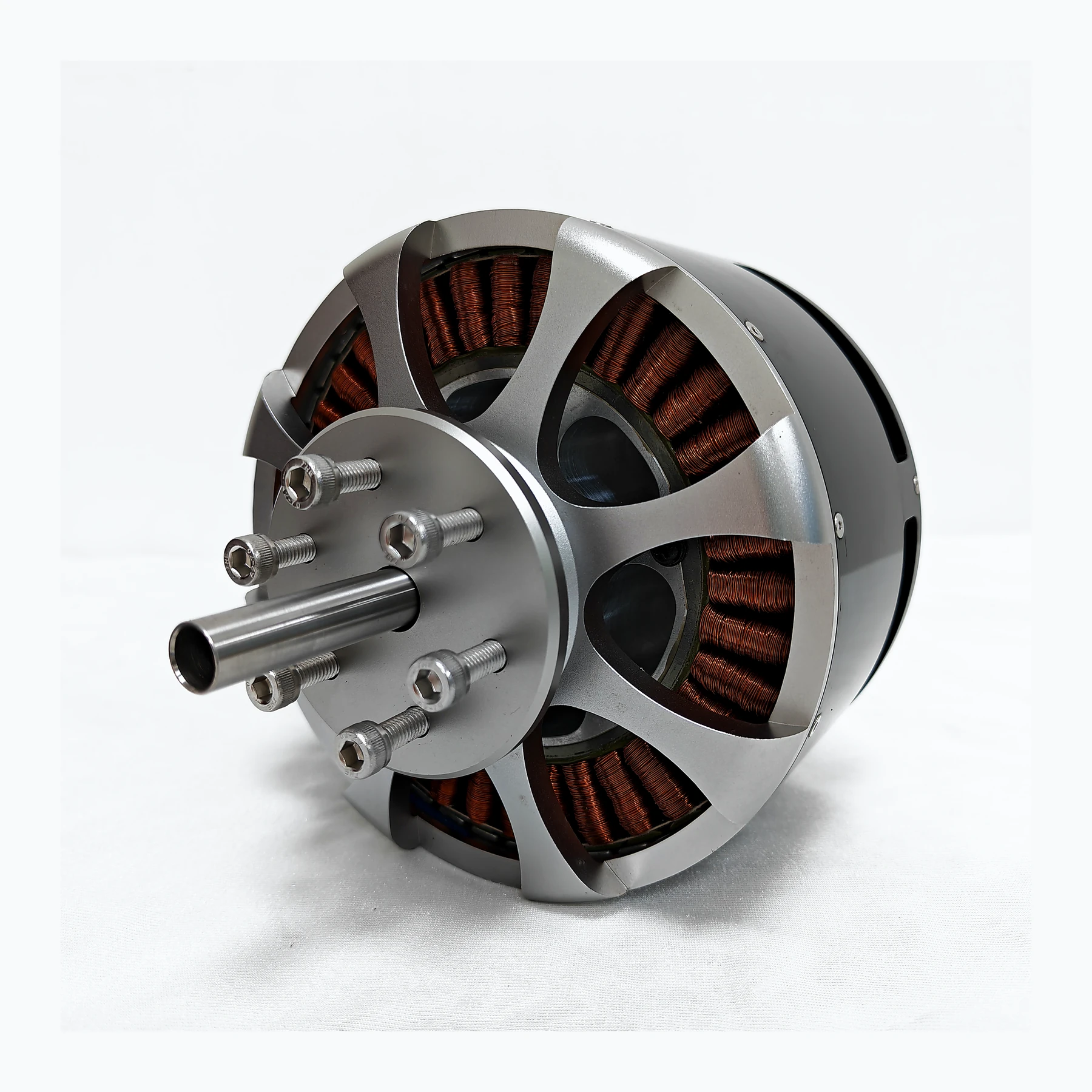
Control parameters change how the system feels in operation
A brushless controller must switch current according to rotor position. The commutation strategy and timing parameters interact with motor inductance, back EMF and rotational speed. A mismatch can show up as hesitant starting, abnormal noise, temperature rise or sudden loss of synchronization, and no-load “it turns” cannot cover the commutation conditions under load.
Motors differ in pole count, winding and back-EMF characteristics, so the same ESC settings do not necessarily produce the same result. Low-speed starting, sudden load changes and the high-speed range may also place different demands on the control strategy. In a project, parameter adjustments should be tied to waveforms, temperature rise and observed behavior rather than to a subjective feeling that “one setting is stronger.” Closed-loop control and richer telemetry provide tools for optimization, but these capabilities still need to match the actual hardware and firmware version.
If the hover current rises after the same motor is switched to a different controller, do not immediately change propellers. First confirm that the firmware version, control mode and manufacturer-recommended settings are consistent, then run a controlled step-load test. High-inertia propellers in particular require checking the start-up and rapid deceleration processes.
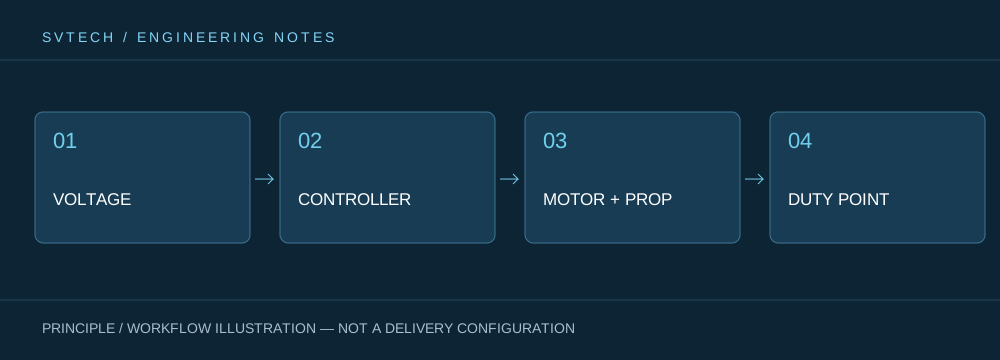
Technical principles and engineering boundaries
A drone motor is not an isolated actuator. Battery, ESC, windings, propeller and frame together determine how electrical energy is converted into lift and attitude-control force. When discussing “Getting Brushless Motors to Run More Smoothly: The Role of ESC Control and Commutation Timing,” the continuous operating point, short-term peak, heat-dissipation path and mounting loads should be viewed on the same mission curve: no-load speed, maximum current or a single thrust figure can each describe only one facet. For an industrial UAV propulsion system, reliably completing an inspection, transport or hover mission is usually more important than an extreme number from a single bench test.
Application scenarios and implementation paths
In applications such as surveying, inspection, logistics and tethered platforms, propulsion requirements change with payload, flight phase and ambient temperature. An engineering team can first define the target thrust, the usual cruise or hover range and the allowable temperature rise, then review whether the supply voltage, KV, propeller and control strategy match. This UAV propulsion selection process also preserves clear technical boundaries for later spare parts, maintenance and upgrades.
Project validation and continuous optimization
To bring this technical discussion of “Getting Brushless Motors to Run More Smoothly: The Role of ESC Control and Commutation Timing” into real projects, the validation phase should record configuration versions, environmental conditions, measurement locations and mission results together. Keep traceable controller configurations and record the speed and power state when an anomaly occurs. Change only one variable at a time. Without verification, do not apply generic timing values found online directly to high-power or high-voltage systems. This information is not supplementary documentation; it is the shared basis for interpreting results, reproducing behavior and continuously optimizing.
Related support from SV Tech
For topics such as “Getting Brushless Motors to Run More Smoothly: The Role of ESC Control and Commutation Timing,” you can describe the mission operating conditions, target outcomes, site environment and existing equipment together, and Mr. Liu (+86 18688194199, lhc1983@gmail.com) will assist with coordination; specific models, performance and delivery scope are subject to confirmed documentation and project validation.
When confirming timing, record the motor pole-pair count, controller firmware, starting parameters and test load, and avoid treating a single successful start as adaptation across all operating conditions. If synchronization is lost or abnormal heating occurs, first return to the supplier-approved baseline. Blindly increasing timing may change current and losses and cannot serve as a universal efficiency measure for all motors.
The value of a mature propulsion system is often reflected in the transition phases that are easy to overlook. Treating motor and ESC as a unit to be commissioned together reduces repeated trial and error on site and makes it easier to replicate prototype performance in volume production.
