
Large brushless motors typically do not reach the extremely high mechanical speeds of small high-speed motors, but that does not necessarily make things easier for the ESC. With every revolution, the magnetic poles force the control system through multiple electrical cycles. Only by multiplying mechanical speed by the number of pole pairs do you approach the pace the ESC must handle; this is also a factor easily overlooked when reading controller performance limits.
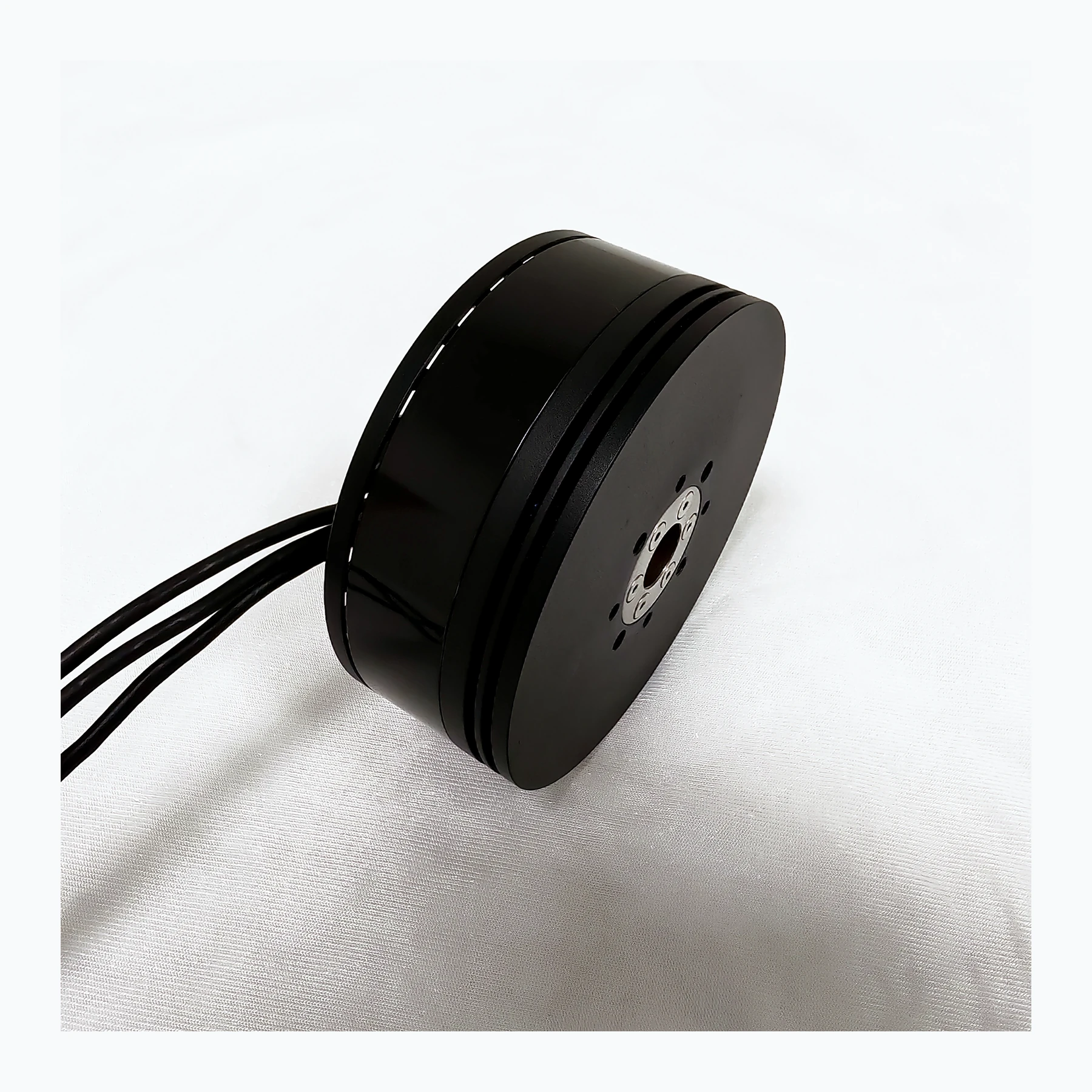
The number of magnetic poles changes the controller's operating pace
The electrical cycles handled by the controller depend on the motor's number of pole pairs: electrical speed equals mechanical speed multiplied by the number of pole pairs. Even if an outer-rotor multi-pole motor's mechanical speed is not particularly high, the controller may still approach its commutation or sampling capability limit. Comparing only mechanical rpm with an ESC's advertised rating will lead to misjudgment.
More magnetic poles can serve specific torque and structural design goals, but they simultaneously affect electrical frequency, sampling and commutation requirements. The controller must complete judgment and adjustment within a sufficiently short time to maintain stable drive. In engineering practice, compatibility should not be judged solely by "a few thousand revolutions per minute"; attention should also be paid to the manufacturer's definitions of electrical speed, pole count and firmware. For heavy-load low-speed platforms, this cross-check is especially valuable in avoiding the discovery of a control range mismatch only after the airframe has been assembled.
Assume a motor has 14 pole pairs and a mechanical speed of 6000 rpm; the electrical speed is then 84000 eRPM. The pole pair count here is a hypothetical example and does not represent any SVTECH model. In actual procurement, the pole count and the definition of rpm in the controller specifications must be verified.
Technical principles and engineering boundaries
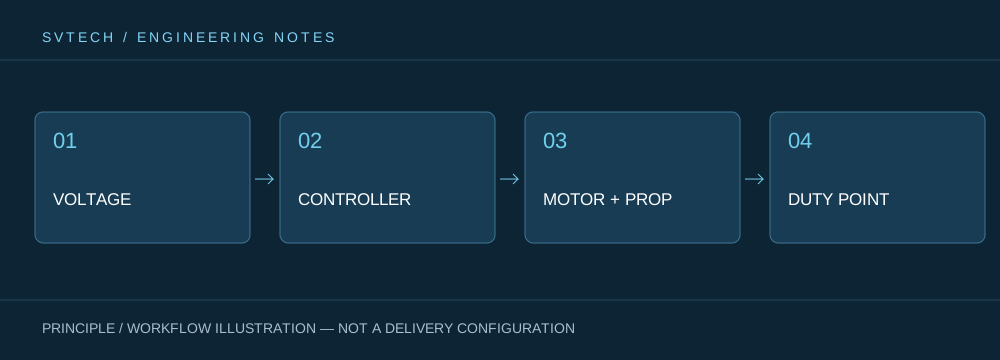
A drone motor is not an isolated actuator. Battery, ESC, windings, propeller and frame together determine how electrical energy is converted into lift and attitude control force. When discussing "The Speed Code of Multi-Pole Motors: Electrical Frequency Beyond Mechanical Speed," continuous operating points, short-term peaks, heat dissipation paths and installation loads should be viewed on the same mission curve: no-load speed, maximum current or single-point thrust can each describe only one aspect. For industrial UAV propulsion systems, reliably completing inspection, transport or hover missions is usually more important than an extreme figure from a single bench test.
Application scenarios and implementation paths
In applications such as surveying, inspection, logistics and tethered platforms, power requirements change with payload, flight phase and ambient temperature. Engineering teams can first determine target thrust, the commonly used cruise or hover range, and allowable temperature rise, then review whether supply voltage, KV, propeller and control strategy match. This UAV propulsion selection process also preserves clear technical boundaries for subsequent spare parts, maintenance and upgrades.
Project validation and continuous optimization
To ground this technical discussion of "The Speed Code of Multi-Pole Motors: Electrical Frequency Beyond Mechanical Speed" in real projects, the validation phase should record configuration version, environmental conditions, measurement locations and mission results together. Add pole pairs, target mechanical speed and calculated eRPM to the matching table. Consider the higher speeds that may occur at full charge and during load shedding; require the controller to have verified operating margin in the relevant range. This information is not supplementary documentation, but the shared basis for interpreting results, reproducing performance and continuously optimizing.
Related support from SVTECH
SVTECH provides product documentation, project requirement communication and configuration boundary verification for drone motors and related industry applications. For topics such as "The Speed Code of Multi-Pole Motors: Electrical Frequency Beyond Mechanical Speed," mission conditions, target outcomes, site environment and existing equipment can be described together, with Mr. Liu (+86 18688194199, lhc1983@gmail.com) assisting with coordination; specific models, performance and delivery scope are subject to confirmed documentation and project validation.
When calculating electrical speed, the pole pair count must come from reliable model documentation; the number of magnetic poles must not be directly treated as the number of pole pairs. It should also be confirmed whether the ESC's stated limit is electrical speed or mechanical speed. Write the calculated value, data source and required margin together into the selection table, so that when motors or firmware are changed, it is quickly apparent whether rechecking is needed.
Keeping mechanical and electrical quantities separate is an important step in understanding brushless propulsion. The conversion between them is simple, yet it connects magnetic circuit design with controller capability, and shows that motor matching cannot be determined by appearance dimensions or rated power alone.
