
The propeller generates lift and also transmits loads to the shaft, bearings and motor mount. A steady hover and a rapid attitude correction place quite different demands on these components. When discussing motor life, it is not enough to look at electrical performance; you also need to understand how force travels through the structure. This often-overlooked path determines whether the bearings can stay in good condition over the long term.
Tracing Real Forces from the Thrust Figure
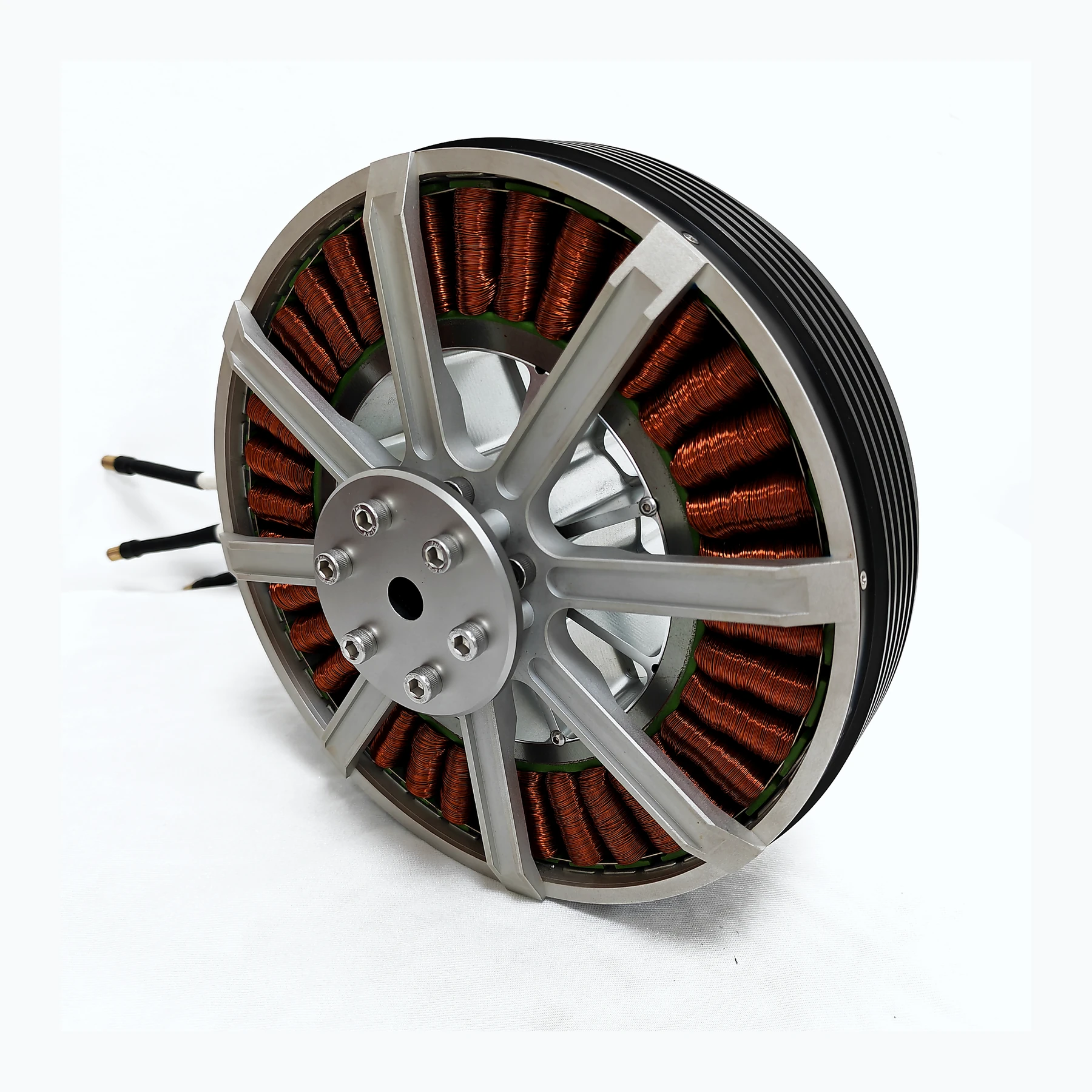
The axial and radial loads on a bearing depend on the blades, the shaft connection, the mounting orientation and external mechanisms. The pull force describes only part of the mechanical boundary; cantilever length, eccentricity and vibration also produce additional moments. Similar motor dimensions or power do not mean the bearing arrangement can carry the same loads.
Load direction, mounting preload, shock and vibration together affect bearing operation. Equating static pull force directly with total bearing load overlooks the complex combined forces present in flight. For transport platforms with frequently changing loads, the structural design must also consider the duty cycle; for long-endurance platforms, lubrication and temperature under sustained load matter more. Different missions therefore call for different verification priorities.
If an industrial drive has a long coupling mounted at the shaft end, the radial force changes with the cantilever conditions; for flight applications, the propeller's axial thrust and mounting stiffness must also be considered. A given thrust test value cannot be converted directly into an allowable bearing load in any direction.
Technical Principles and Engineering Boundaries
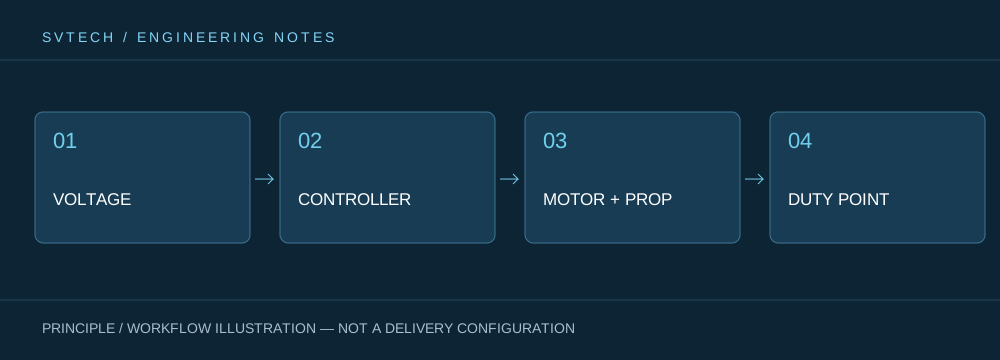
A drone motor is not an isolated actuator. The battery, ESC, windings, propeller and frame together determine how electrical energy is converted into lift and attitude-control force. When discussing "One Bearing's Flight Duty: Thrust, Motor Structure and Long-Life Design", the continuous operating point, short-term peaks, heat-dissipation path and mounting loads should be viewed on the same mission curve: no-load speed, maximum current or a single thrust figure each describe only one facet. For industrial UAV propulsion systems, reliably completing inspection, transport or hover missions is usually more important than an extreme number from a single bench test.
Application Scenarios and Implementation Paths
In applications such as surveying, inspection, logistics and tethered platforms, power requirements change with payload, flight phase and ambient temperature. Engineering teams can first define the target thrust, the typical cruise or hover range and the allowable temperature rise, then check whether the supply voltage, KV, propeller and control strategy match. This drone propulsion selection process also leaves clear technical boundaries for spare parts, maintenance and upgrades.
Project Verification and Continuous Optimization
To put this technical discussion of "One Bearing's Flight Duty: Thrust, Motor Structure and Long-Life Design" into practice in real projects, the verification stage should record the configuration version, environmental conditions, measurement locations and mission results together. Provide the supplier with the load direction, force application point and continuous duration, and confirm the allowable values and mounting drawings. Recheck vibration and temperature after changing a coupling or propeller mount; bearing life assessment requires a real load spectrum. This information is not supplementary paperwork but the shared basis for interpreting results, reproducing performance and continuously optimizing.
Related Support from SV Tech
SVTECH provides product documentation, project requirement discussions and configuration boundary checks for drone motors and related industry applications. For topics such as "One Bearing's Flight Duty: Thrust, Motor Structure and Long-Life Design", you can describe the mission conditions, target outcomes, site environment and existing equipment together, and Mr. Liu (+86 18688194199, lhc1983@gmail.com) will assist with coordination; specific models, performance and delivery scope are subject to confirmed documentation and project verification.
Industrial integration must also list coupling preload, assembly deviation and radial forces from external mechanisms. These additional loads may not appear in the product thrust table. Submitting the load direction, application location and load cycles to the supplier is more effective than simply asking "how many kilograms can it take", and it also helps clarify whether an independent support structure is needed.
Bearing reliability comes from the combined effect of electromagnetics, structure and maintenance. Only by incorporating the load variations of the mission into the design discussion can a long-life target acquire clear engineering meaning, rather than remaining just a cumulative operating-hour figure.
