
High-altitude conditions affect both propeller aerodynamics and motor heat dissipation. To achieve the target thrust, the system may need to operate in a different speed and power range, while thinner air also changes the cooling conditions. As a result, the generous margins seen in low-altitude test flights may not still be available on high-altitude missions.
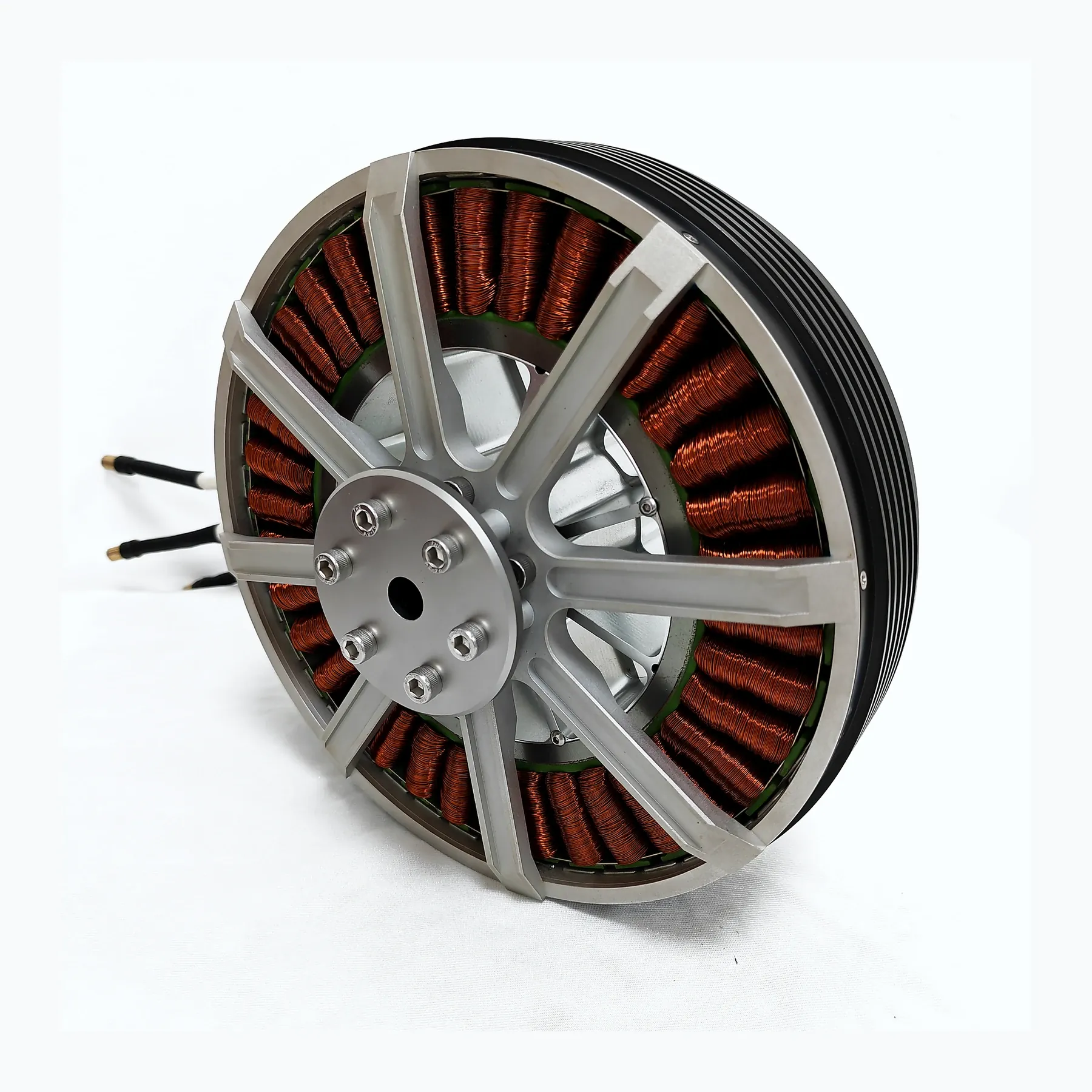
Air density links thrust and thermal management
Lower air density changes the conditions under which the rotor generates thrust and also affects air-cooling capacity. To maintain thrust, the system may need higher rotational speed or a different blade, but the electrical and mechanical limits do not increase automatically. Sea-level bench data therefore cannot be treated directly as a guarantee for high-altitude missions.
High-altitude selection cannot simply apply a fixed correction factor to rated power. Blade characteristics, ambient temperature, all-up weight and the actual cooling path all affect the result. For surveying and inspection teams, a more practical approach is to establish the corresponding operating points around the mission altitude and examine takeoff, continuous operation and return phases separately. High altitude and low temperature can also occur together, which requires the propulsion and battery to be evaluated jointly.
If the mission site is at high altitude, operating conditions should be established from local temperature and air conditions rather than from map elevation alone. Density and cooling conditions may differ between early morning and afternoon. Selection should also check whether the ESC, power supply and structure simultaneously meet the adjusted operating points.
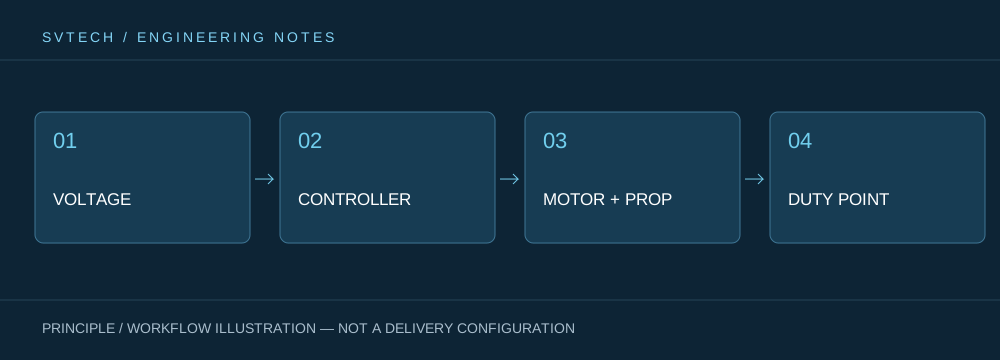
Technical principles and engineering boundaries
A drone motor is not an isolated actuator. The battery, ESC, windings, propeller and frame together determine how electrical energy is converted into lift and attitude-control force. When discussing “Power challenges for high-altitude drones: what thin air changes,” continuous operating points, short-term peaks, cooling paths and installation loads should be viewed on the same mission curve: no-load speed, maximum current or thrust at a single point can each describe only one aspect. For industrial drone propulsion systems, reliably completing inspection, transport or hover missions is usually more important than an extreme figure from a single bench test.
Application scenarios and implementation paths
In applications such as surveying, inspection, logistics and tethered platforms, propulsion requirements change with payload, flight phase and ambient temperature. Engineering teams can first define the target thrust, the usual cruise or hover range and the permissible temperature rise, then check whether the supply voltage, KV, propeller and control strategy match. This drone propulsion selection process also leaves clear technical boundaries for subsequent spare parts, maintenance and upgrades.
Project validation and continuous optimization
To ground this technical discussion of “Power challenges for high-altitude drones: what thin air changes” in real projects, the validation phase should record the configuration version, environmental conditions, measurement locations and mission results together. Submit the altitude, temperature, target payload and mission duration; obtain performance data for the applicable conditions and, where necessary, arrange environmental or on-site validation. Retain control margin and avoid compensating for unverified thrust shortfall by overspeeding. This information is not supplementary documentation but the shared basis for interpreting results, reproducing performance and continuous optimization.
Related support from SV Tech
Zhuhai SV Tech Co. Ltd. provides product documentation, project requirement discussions and configuration boundary checks for drone motors and related industry applications. For topics such as “Power challenges for high-altitude drones: what thin air changes,” mission conditions, target outcomes, site environment and existing equipment can be described together, with Mr. Liu (+86 18688194199, lhc1983@gmail.com) assisting with coordination; specific models, performance and delivery scope are subject to confirmed documentation and project validation.
The supplier needs to know the altitude, ambient temperature and target thrust before it can discuss suitability. Aerodynamic performance at the same rotational speed differs from that at low altitude, and increasing speed to make up thrust changes power consumption. Project plans should include validation in a representative environment; low-altitude bench data cannot simply be relabeled with a different location and used for delivery.
High-altitude capability must be described through the complete configuration. Recording altitude, temperature and mission weight in the performance records makes test results from different locations understandable and provides a more reliable basis for subsequent cross-regional deployments.
